17 Nights / 18 DaysPrivate tour with car & driverThe sacred NarmadaTaj Mahal at sunrise
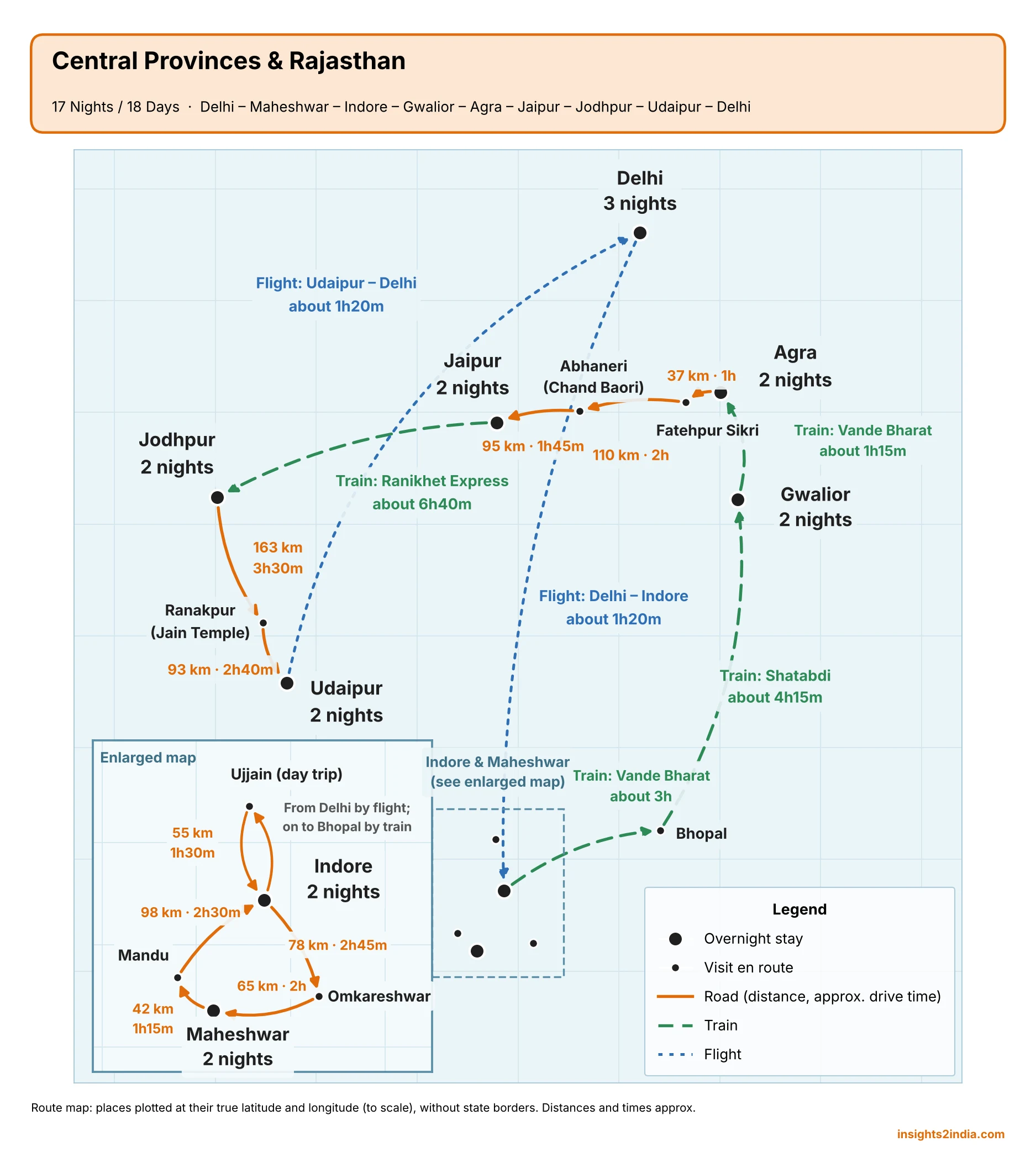
This journey goes off the usual tourist trail into the heart of India before joining the classic sights of the north. From Delhi, fly to Indore and discover the old Central Provinces: the holy island of Omkareshwar and the riverside temples and weavers of Maheshwar on the sacred Narmada, the romantic hilltop city of Mandu, the temple town of Ujjain, the mosques and bazaars of Bhopal, and the magnificent fort of Gwalior.
Then travel by fast train to Agra for the Taj Mahal at sunset and sunrise, and on into Rajasthan: Jaipur, the Pink City; Jodhpur, the Blue City, below Mehrangarh Fort; the marble Jain temple of Ranakpur; and romantic Udaipur, the City of Lakes. Every tour is private and can be tailored to your dates, hotels and interests.
Tour highlights
The holy island of Omkareshwar on the Narmada
Boat ride and the handloom weavers of Maheshwar
The palaces and pavilions of Mandu
Mahakaleshwar Temple, Ujjain, and the Glass Temple of Indore
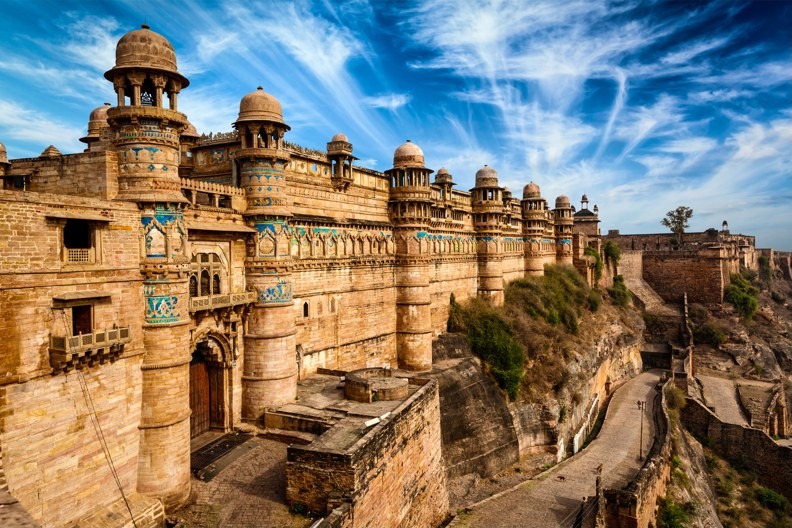
The painted Man Singh Palace in Gwalior Fort
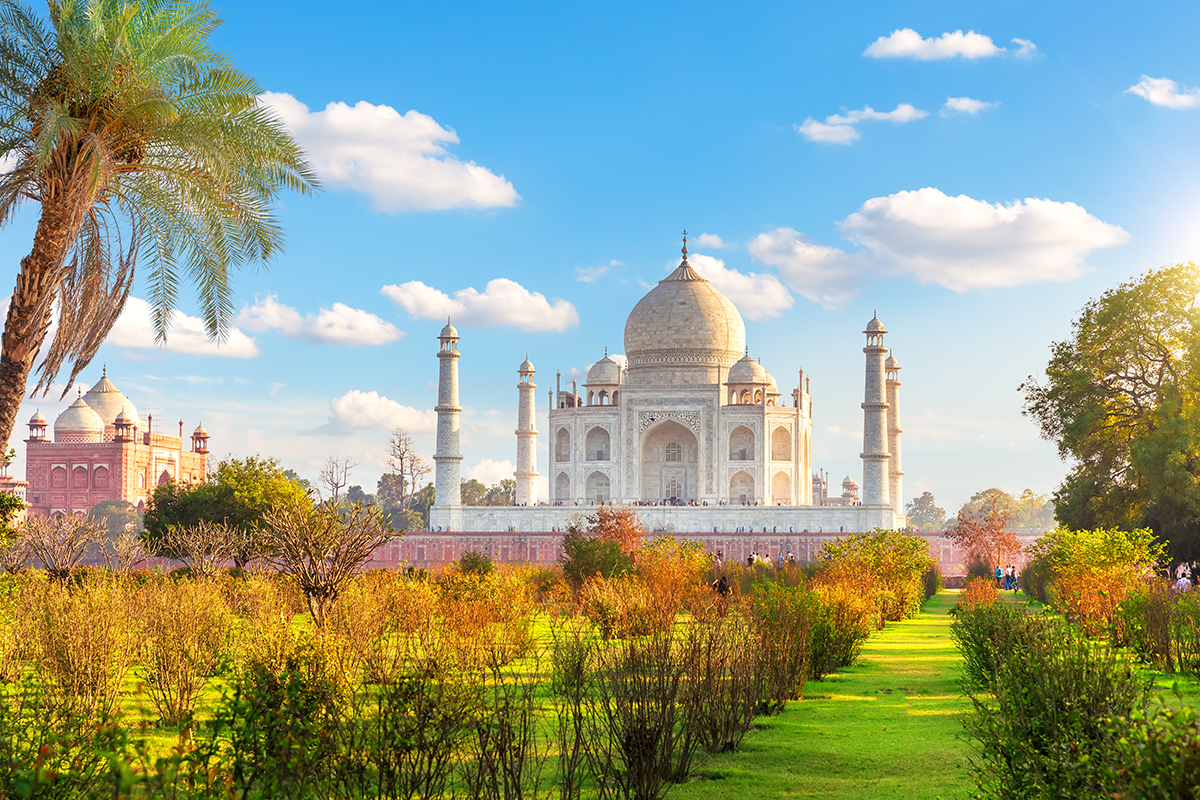
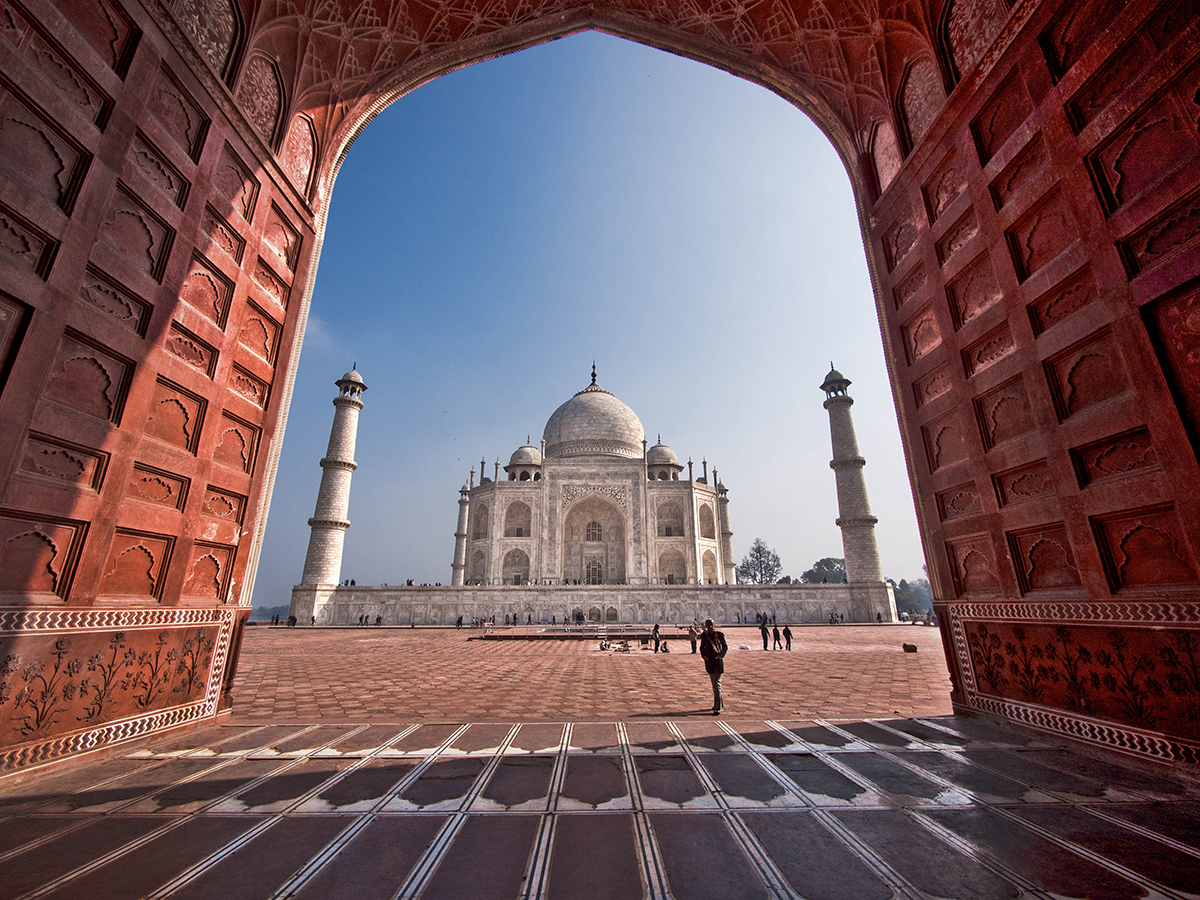
Taj Mahal at sunset from Mehtab Bagh, and at sunrise
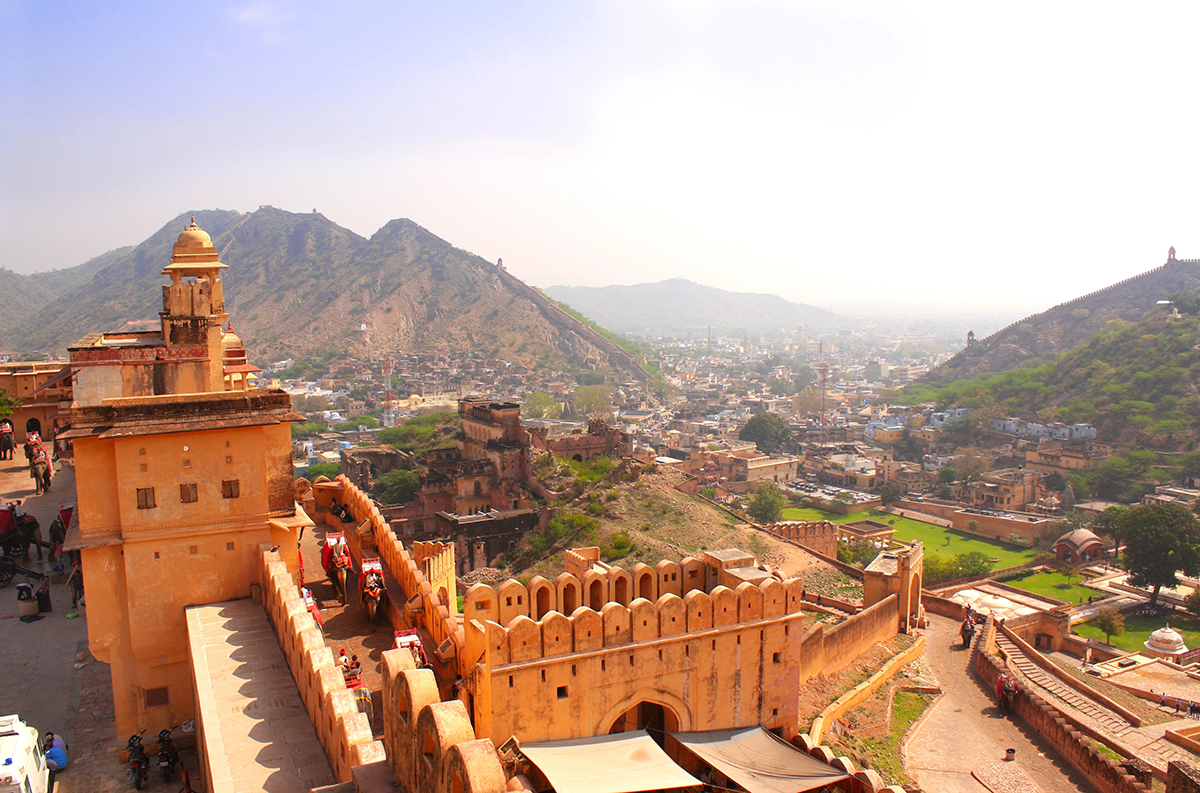
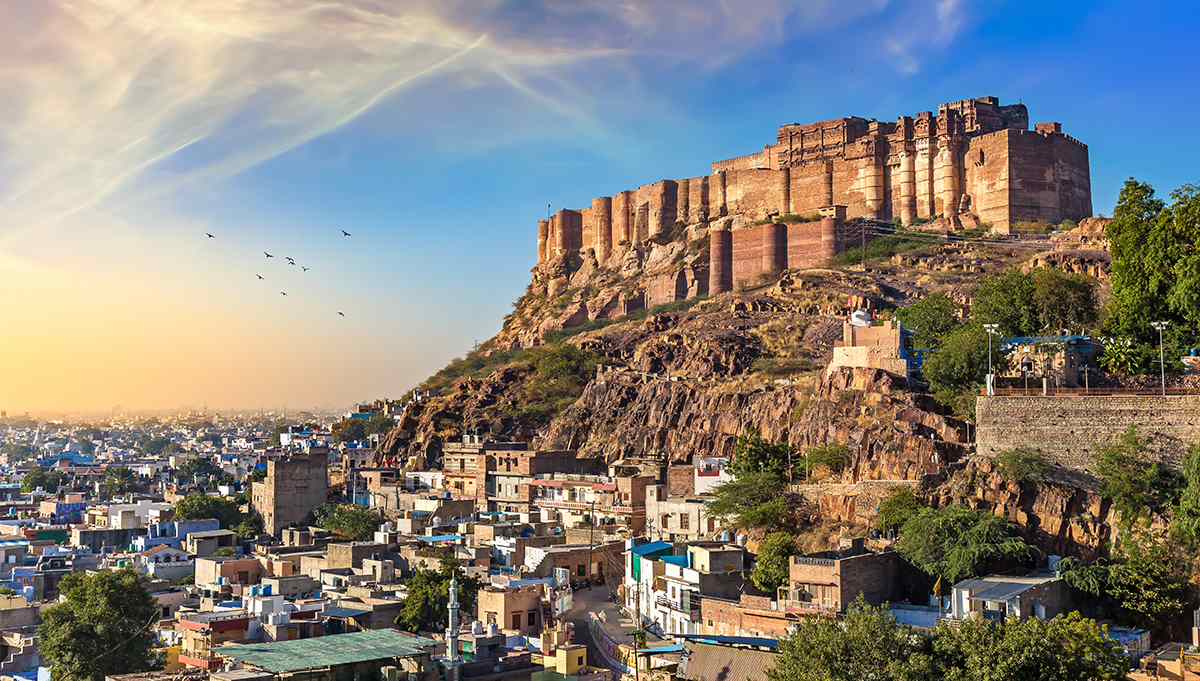
Amber Fort, Jaipur, and Mehrangarh Fort, Jodhpur
Boat ride on Lake Pichola and a folk dance show, Udaipur
Route Map (click to enlarge)
Day-by-day itinerary
Day 1
Arrive Delhi
Welcome to India! On arrival at Delhi's Indira Gandhi International Airport, our representative meets you after customs and escorts you to your hotel. The rest of the day is free to rest after your journey.
Overnight: DelhiVehicle: airport transfer onlyPlease note: this tour works best arriving on a Tuesday, Thursday, Saturday or Sunday, to fit the train days and the Taj Mahal’s Friday closing; other arrival days can be arranged with small changes
Day 2
Delhi – New Delhi and Old Delhi
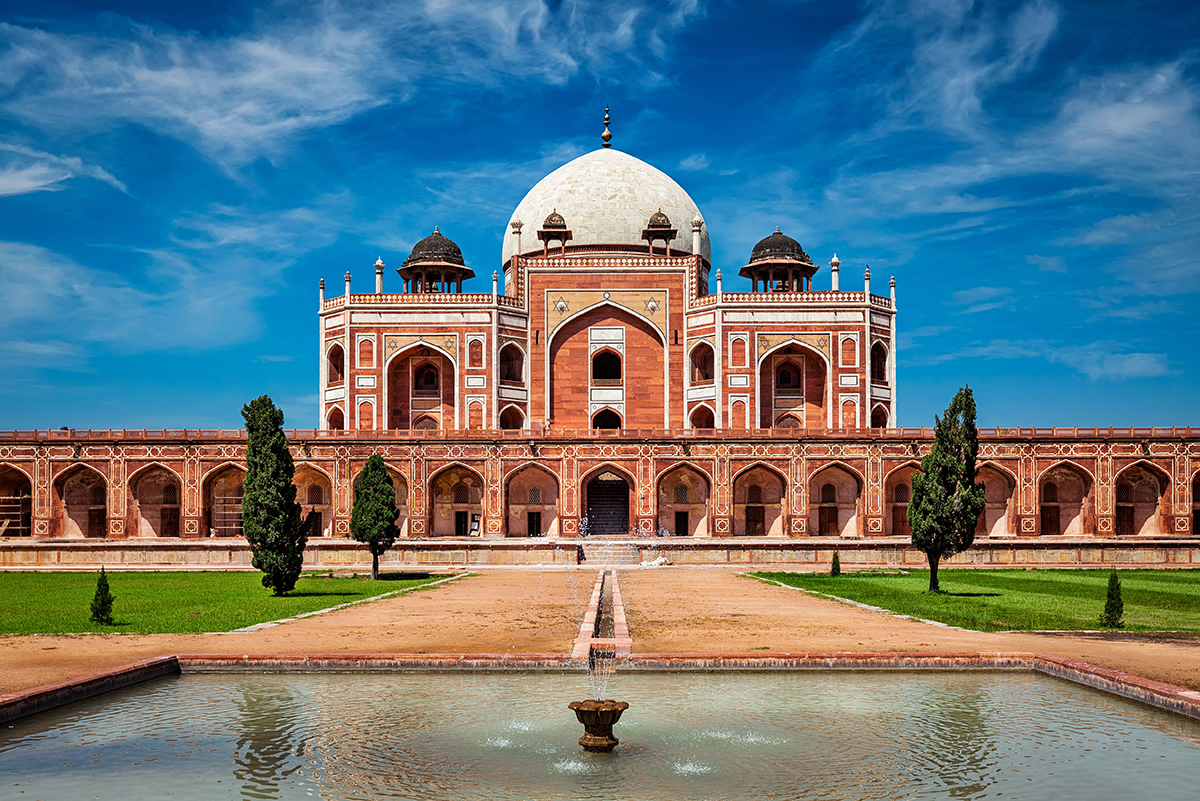
Photo: humayuns-tomb-delhi.jpg
Humayun's Tomb, Delhi
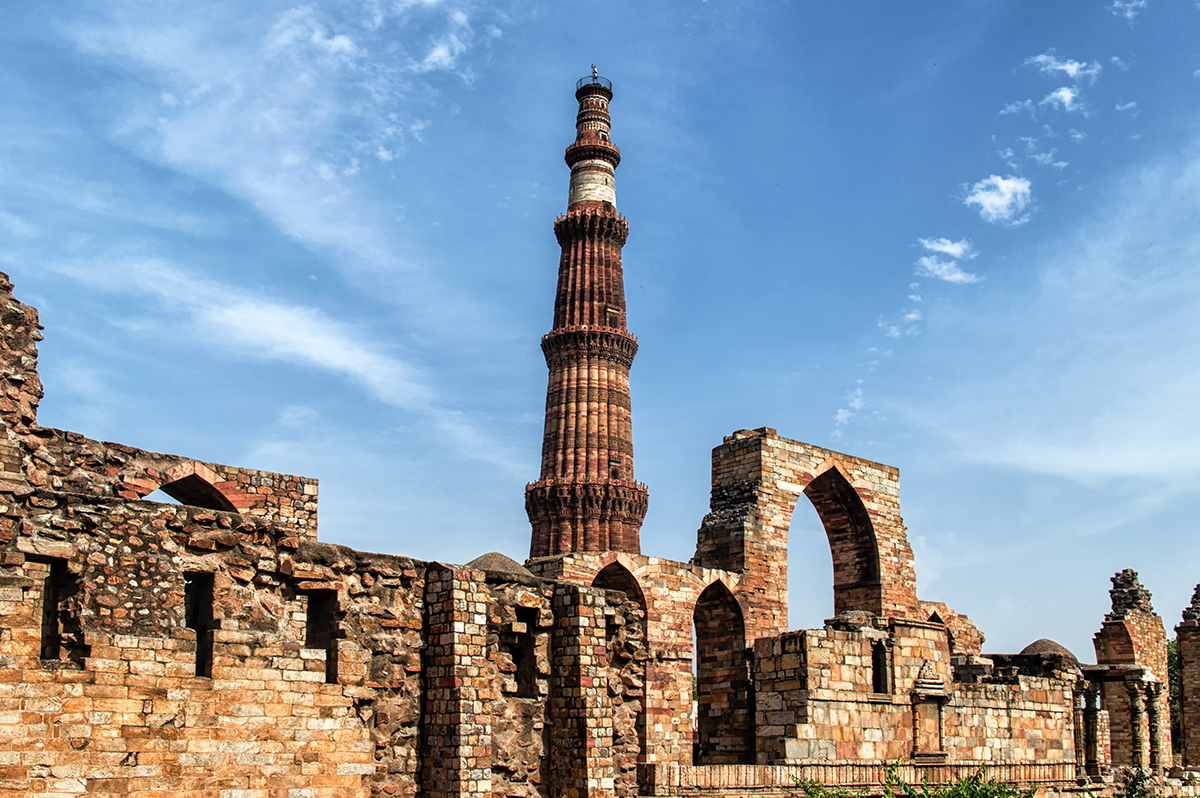
Photo: qutub-minar-delhi.jpg
Qutub Minar, Delhi
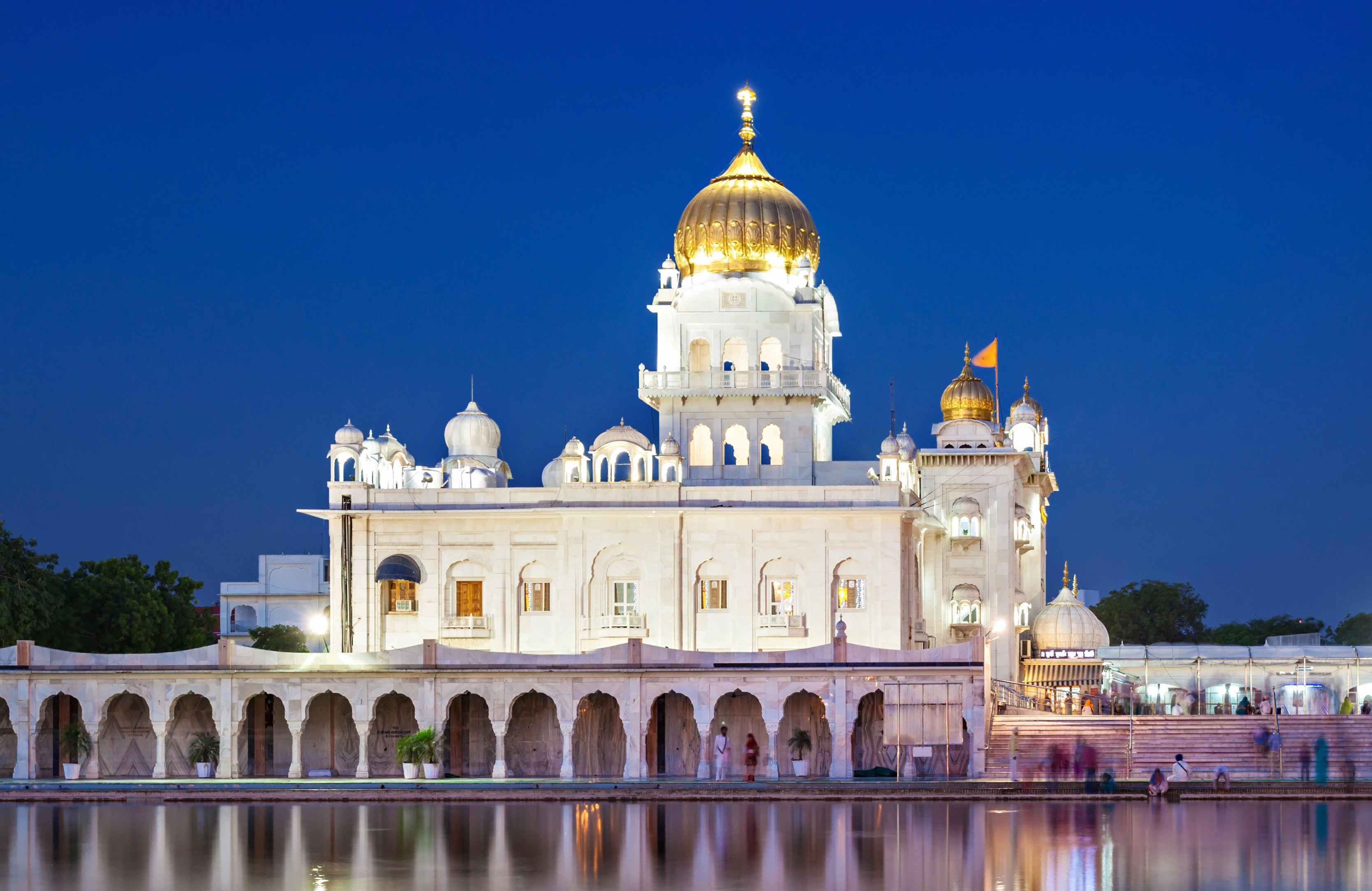
Photo: gurdwara-bangla-sahib-delhi.jpg
Gurdwara Bangla Sahib, Delhi
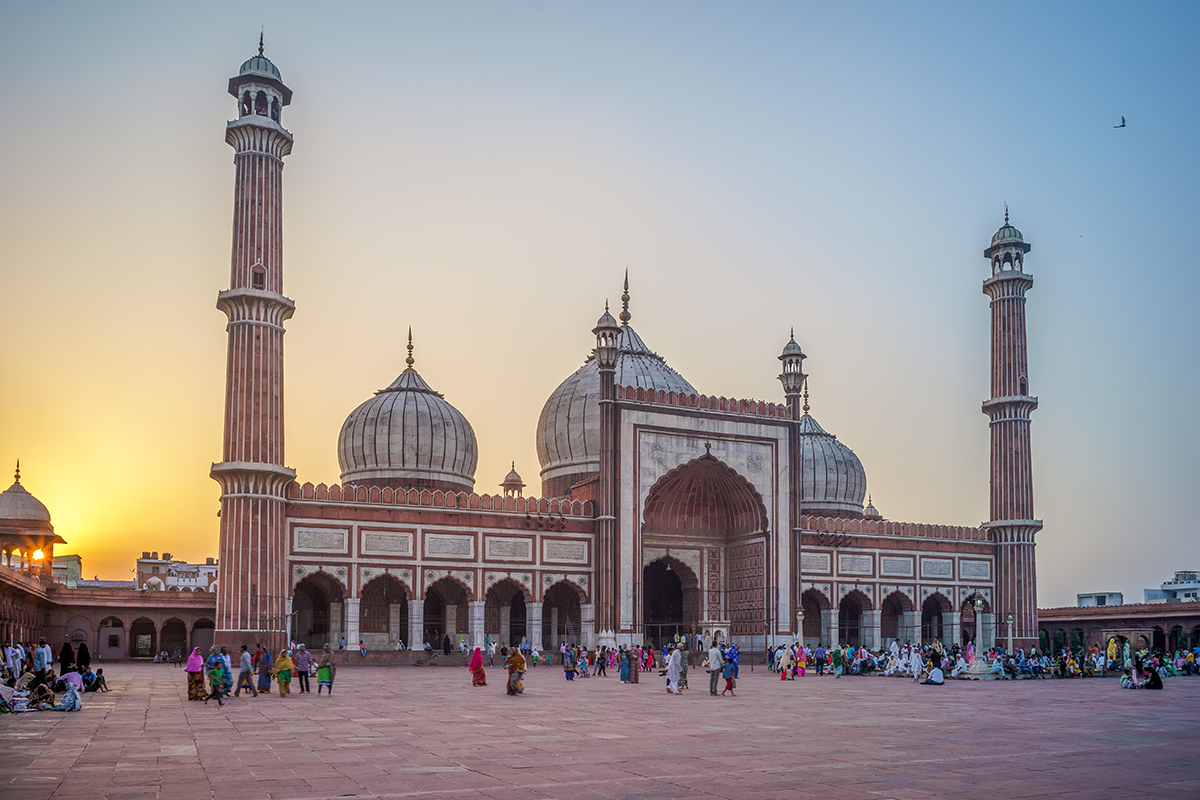
Photo: jama-masjid-delhi.jpg
Jama Masjid, Delhi
A full day with your guide exploring two very different Delhis. The morning is spent in New Delhi. Visit Humayun's Tomb, the 16th-century garden tomb that inspired the Taj Mahal, and the soaring Qutub Minar, a 73-metre tower begun in the 12th century. Drive along Kartavya Path past India Gate, Rashtrapati Bhavan and the Parliament buildings of Lutyens' Delhi.
Then visit Gurdwara Bangla Sahib, Delhi's most important Sikh shrine, with its golden dome and sacred pool. Here you can see the langar, the community kitchen where volunteers prepare free meals for thousands of visitors every day, whatever their faith. Please cover your head and remove your shoes before entering.
In the late afternoon and evening, discover Old Delhi, the walled city of Shahjahanabad built by the Mughal emperor Shah Jahan. Stop at Raj Ghat, the memorial to Mahatma Gandhi, and drive past the red sandstone walls of the Red Fort. Visit Jama Masjid, one of India's largest mosques, then board a cycle rickshaw for a ride through the lanes of Chandni Chowk, alive in the evening with spice sellers, sweet shops and centuries-old havelis.
Delhi to Indore by flight, Omkareshwar and on to Maheshwar
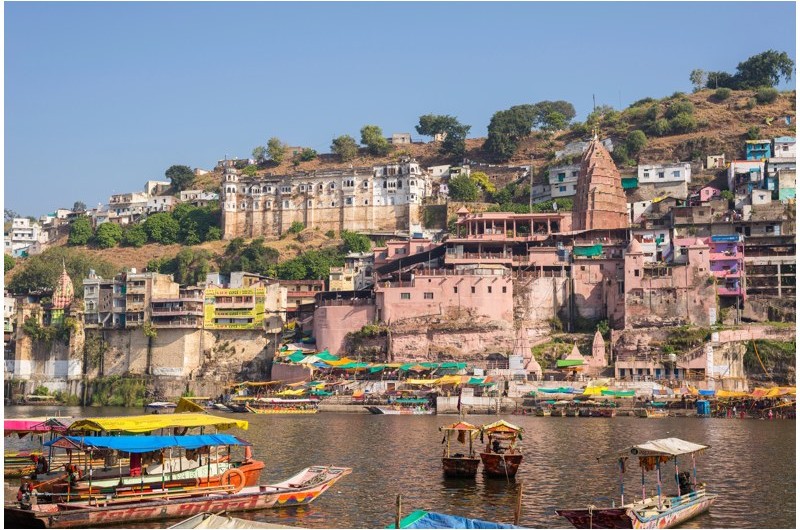
Photo: narmada-ghats-omkareshwar.jpg
Narmada Ghats, Omkareshwar
Transfer to Delhi airport for the morning flight to Indore (about 1 hour 20 minutes). On arrival, you are met and drive to Omkareshwar (78 km, about 2 hours 45 minutes).
Omkareshwar is a sacred island in the Narmada River, shaped, when seen from above, like the “Om” symbol, and one of the most revered pilgrimage sites in central India. The island is reached by a footbridge or by boat, and is dotted with temples, sadhus' caves and bathing ghats, with a pilgrim path running around it. Inside the tall white shikhara of the Omkar Mandhata Temple is a sacred lingam, one of the twelve jyotirlingas of Lord Shiva. At the eastern end of the island stands the 13th-century Siddhnath Temple, with finely carved apsaras.
Late in the afternoon, continue to Maheshwar (65 km, about 2 hours), on the banks of the Narmada.
Overnight: MaheshwarIncludes: airport transfers, guide, car
Day 4
Maheshwar – the Holkar fort and the Narmada
Photo: ahilya-fort-maheshwar.jpg
Ahilya Fort, Maheshwar
Maheshwar was a centre of culture and religion from ancient times, and is famous today for its fine cotton and silk handloom saris, a craft introduced about 250 years ago by Rani Ahilyabai Holkar. Explore the Holkar Fort that dominates the town, where a life-size statue of Rani Ahilyabai sits on a throne in the Rajgaddi, and a palace in the complex displays Holkar heirlooms.
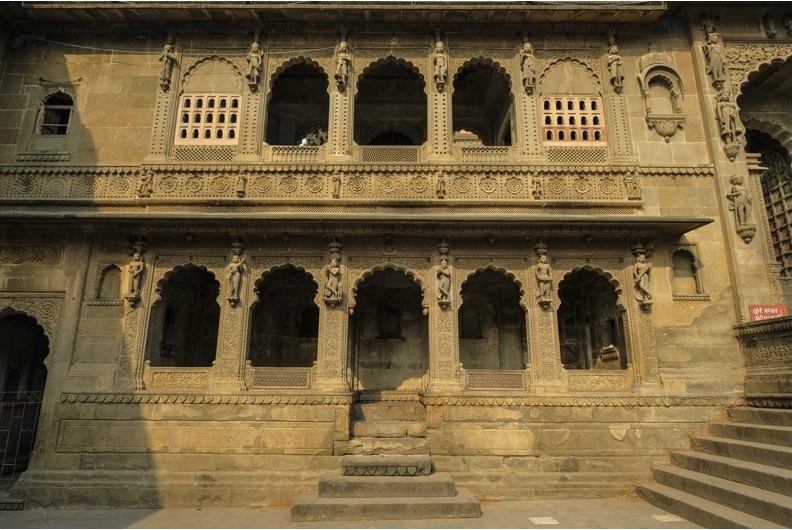
The many-tiered temples of Maheshwar, with their carved balconies and doorways, include the Kaleshwara, Rajarajeshwara, Vithaleshwara and Ahileshwara temples. Along the river, the Peshwa, Fanse and Ahilya Ghats are the best places to watch the daily rituals of town life, and a boat ride on the Narmada gives a lovely view of the fort and temples from the water.
Visit the Rehwa Society, started by the Holkar family to revive Maheshwar's hand-weaving tradition and give work to local women. Watch the weavers at their traditional wooden looms, and see how the sale of their textiles supports a school for the weavers' children.
Overnight: MaheshwarIncludes: guide, car, boat ride, visit to the Rehwa Society
Day 5
Maheshwar to Indore via Mandu
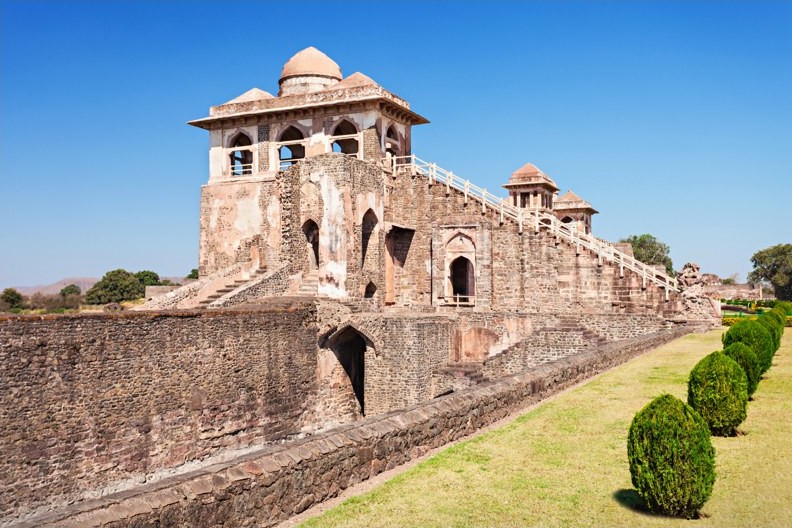
Photo: jahaz-mahal-mandu.jpg
Jahaz Mahal, Mandu
Drive to Mandu (42 km, about 1 hour 15 minutes), the 15th-century fortified city of the Malwa sultans on the edge of the Malwa plateau. One of India's most romantic sites, its palaces and mosques pre-date the arrival of the Mughals and lie scattered across forested hills, encircled by a parapet about 45 km long with twelve gateways.
Enter through the Delhi Darwaza and visit the Jahaz Mahal, the “ship palace”, a 120-metre-long palace built between two lakes, and the Hindola Mahal, the “swinging palace”, named for its sloping walls. See the grand Jami Masjid, inspired by the great mosque of Damascus, and the marble Tomb of Hoshang Shah, said to have served as a model for the Taj Mahal. End at Rani Roopmati's Pavilion, the queen's hilltop retreat, with views of Baz Bahadur's Palace and the Narmada plains far below.
Later, drive to Indore (98 km, about 2 hours 30 minutes) and check in to your hotel.
Overnight: IndoreIncludes: guide, car
Day 6
Indore city tour and Ujjain
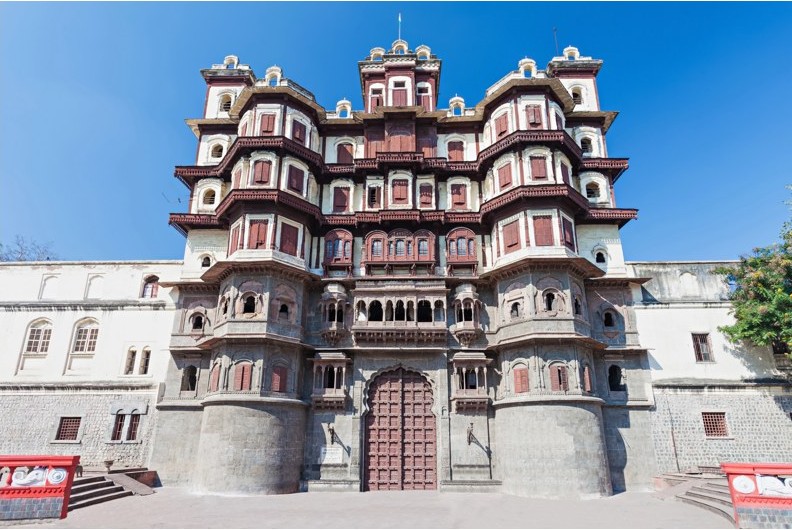
Photo: rajwada-indore.jpg
Rajwada, Indore
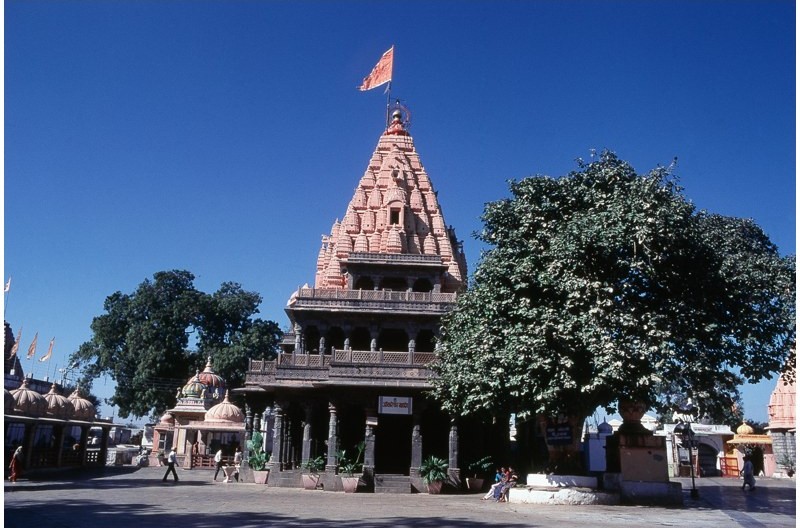
Photo: mahakaleshwar-temple-ujjain.jpg
Mahakaleshwar Temple, Ujjain
In the morning, discover Indore, the former capital of the Holkar rulers and today one of central India's busiest cities. See Rajwada, the seven-storey palace of the Holkars beside the bustling bazaar, built in a blend of French, Mughal and Maratha styles, and the Chhatri Bagh, the cenotaphs of the Holkar rulers beside the Kham River. Visit Kanch Mandir, the Glass Temple, a Jain temple whose walls, ceilings and floors are covered in mirror and glass work, and pass the Indo-Gothic Gandhi Hall with its clock tower.
In the afternoon, drive to Ujjain (55 km, about 1 hour 30 minutes), one of the seven sacred cities of India and a site of the Kumbh Mela. Its great landmark is the Mahakaleshwar Temple, with a tall tower above marble courtyards; its lingam is one of the twelve jyotirlingas, held to be especially powerful because it faces south. Ujjain was also the birthplace of Indian astronomy, and in 1725 Maharaja Jai Singh of Jaipur built the Vedha Shala observatory here, whose instruments are still used today. Return to Indore in the evening.
Overnight: IndoreIncludes: guide, car
Day 7
Indore to Bhopal and Gwalior by train
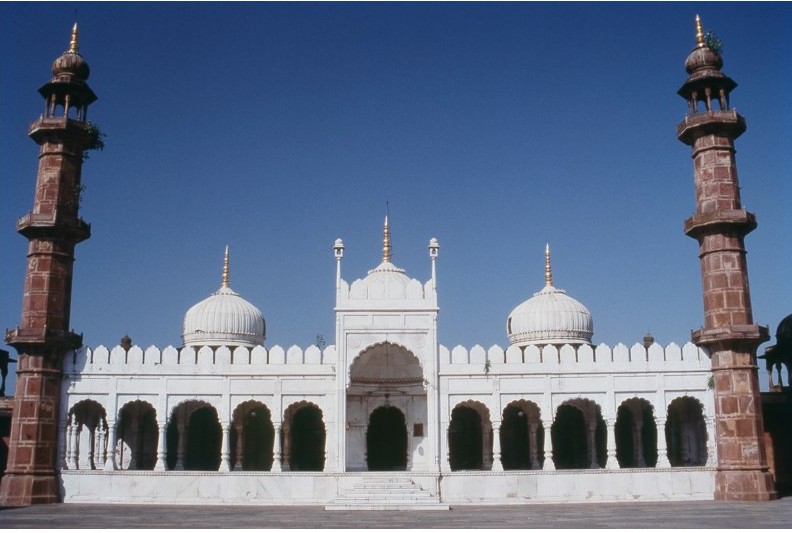
Photo: moti-masjid-bhopal.jpg
Moti Masjid, Bhopal
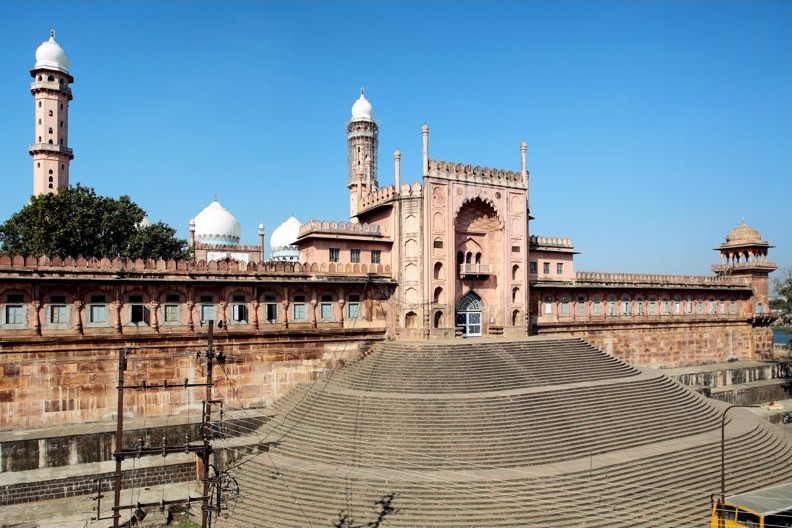
Photo: taj-ul-masajid-bhopal.jpg
Taj-ul-Masajid, Bhopal
Vande Bharat Express (20911) · Indore Jn 06:10 → Bhopal Jn 09:10 · AC Executive Chair Car · not on Sundays
Shatabdi Express (12001) · Bhopal Jn 15:25 → Gwalior Jn 19:40 · AC Executive Chair Car · runs daily
An early transfer, with a packed breakfast, to Indore station for the train to Bhopal. On arrival, you are met for a half-day tour of the city of lakes, named after the 11th-century Raja Bhoj and later ruled by a line of nawabs and powerful begums.
Wander through the old bazaar around the Chowk, where each lane specialises in a different trade, from Chanderi silk saris to silver jewellery and Bhopal's beaded purses. See the Moti Masjid, the Pearl Mosque, built by Sikander Begum in 1860 with slender gold-tipped minarets, and the Taj-ul-Masajid, with its two huge pink minarets, among the largest mosques in India.
In the afternoon, transfer to Bhopal station for the train to Gwalior, where you are met and transferred to your hotel.
Overnight: GwaliorIncludes: train tickets, guide and car in Bhopal
Day 8
Gwalior – the fort on the hill
Photo: gwalior-fort.jpg
Gwalior Fort, Gwalior
A full day exploring Gwalior Fort, which sprawls across a long sandstone ridge above the city, its turreted ramparts enclosing palaces, temples and water tanks. The finest of the palaces is the Man Singh Palace, built between 1486 and 1517 by the Tomar ruler Man Singh and known as the Painted Palace for the glazed tiles on its walls, with bands of turquoise, green and yellow showing tigers, elephants, peacocks and crocodiles.
On the south side of the plateau stands the 8th-century Teli-ka-Mandir, the oldest monument in the fort, with its tall, unusual vaulted roof. At the eastern edge, the two Sasbahu Temples, built late in the 11th century, look out over the city, and below the walls are huge rock-cut figures of the Jain tirthankaras, carved between the 7th and 15th centuries. Close to the Gwalior Gate, the Gujari Mahal, built by Man Singh for his beloved queen Mrignayani, now houses a museum of sculpture.
Overnight: GwaliorIncludes: guide, car
Day 9
Gwalior to Agra by Vande Bharat Express
Photo: itimad-ud-daulah-agra.jpg
Itimad-ud-Daulah's Tomb, Agra
Photo: taj-mahal-mehtab-bagh.jpg
Taj Mahal from Mehtab Bagh, Agra
Vande Bharat Express (20171) · Gwalior Jn 09:45 → Agra Cantt 11:01 · AC Executive Chair Car · not on Saturdays
Transfer to Gwalior station for the train to Agra. On arrival, you are met and transferred to your hotel.
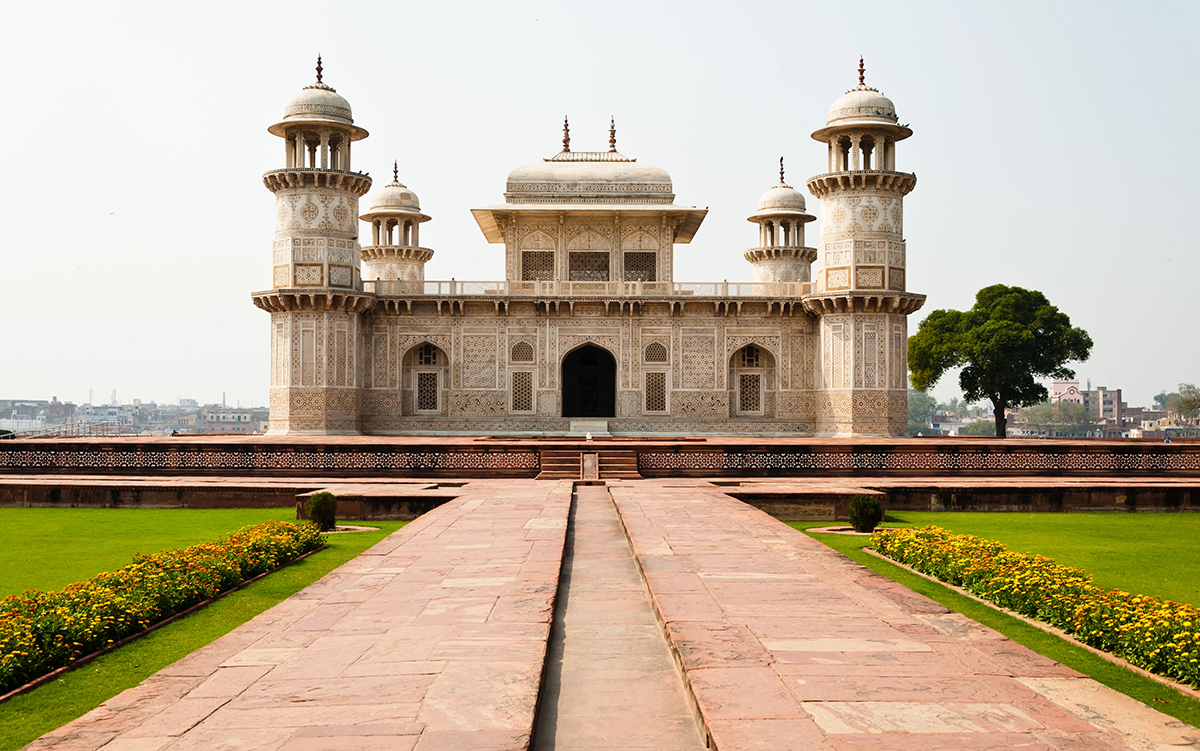
In the afternoon, visit the exquisite Tomb of Itimad-ud-Daulah, often called the “Baby Taj”. Built by Empress Nur Jahan for her father, it was the first Mughal building faced entirely in white marble inlaid with semi-precious stones. As the day ends, cross the Yamuna to Mehtab Bagh, the Moonlight Garden, for a peaceful view of the Taj Mahal as the sun sets behind it.
Overnight: AgraIncludes: train tickets, guide, car
Day 10
Agra – Taj Mahal at sunrise and Agra Fort
Photo: taj-mahal-agra.jpg
Taj Mahal, Agra
Photo: agra-fort.jpg
Agra Fort, Agra
Photo: akbars-tomb-sikandra.jpg
Akbar's Tomb, Sikandra
Rise early for the most magical moment of the tour: the Taj Mahal at sunrise, when the white marble glows soft pink and gold and the gardens are at their quietest. Built by Shah Jahan in memory of his wife Mumtaz Mahal, it took over 20 years and some 20,000 craftsmen to complete. Return to the hotel for breakfast.
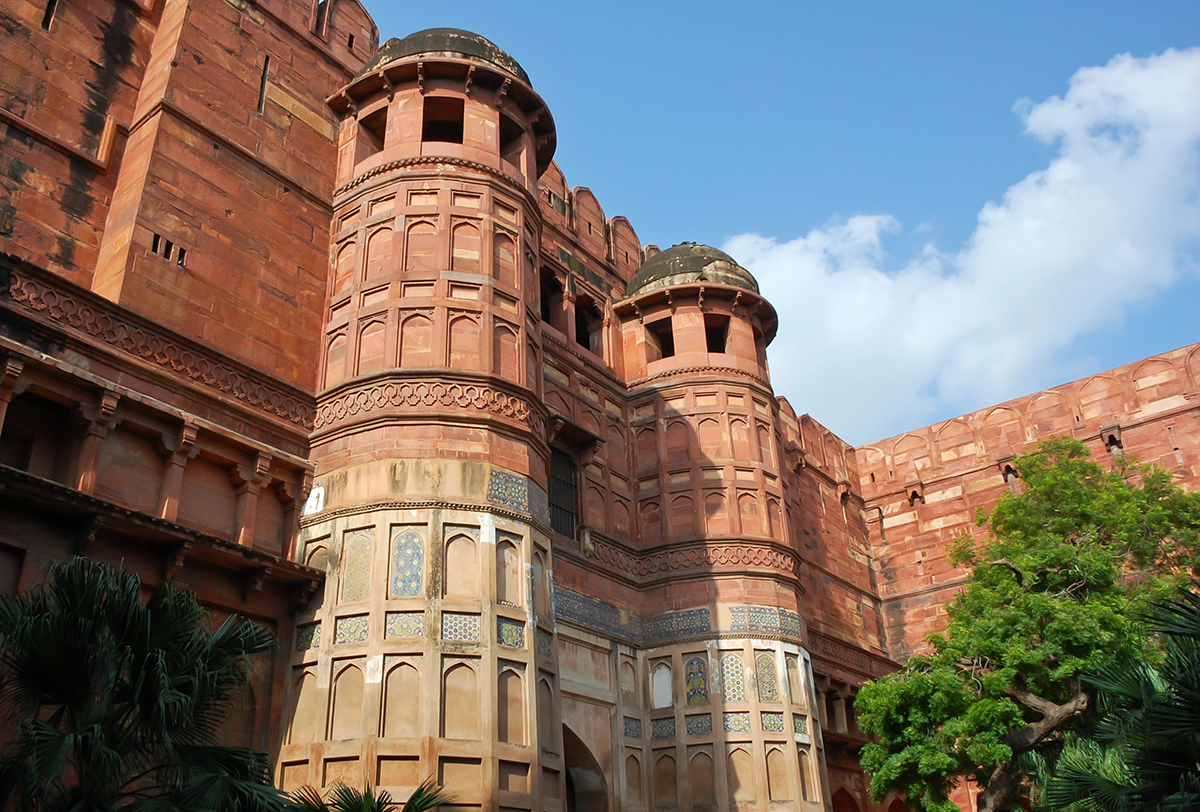
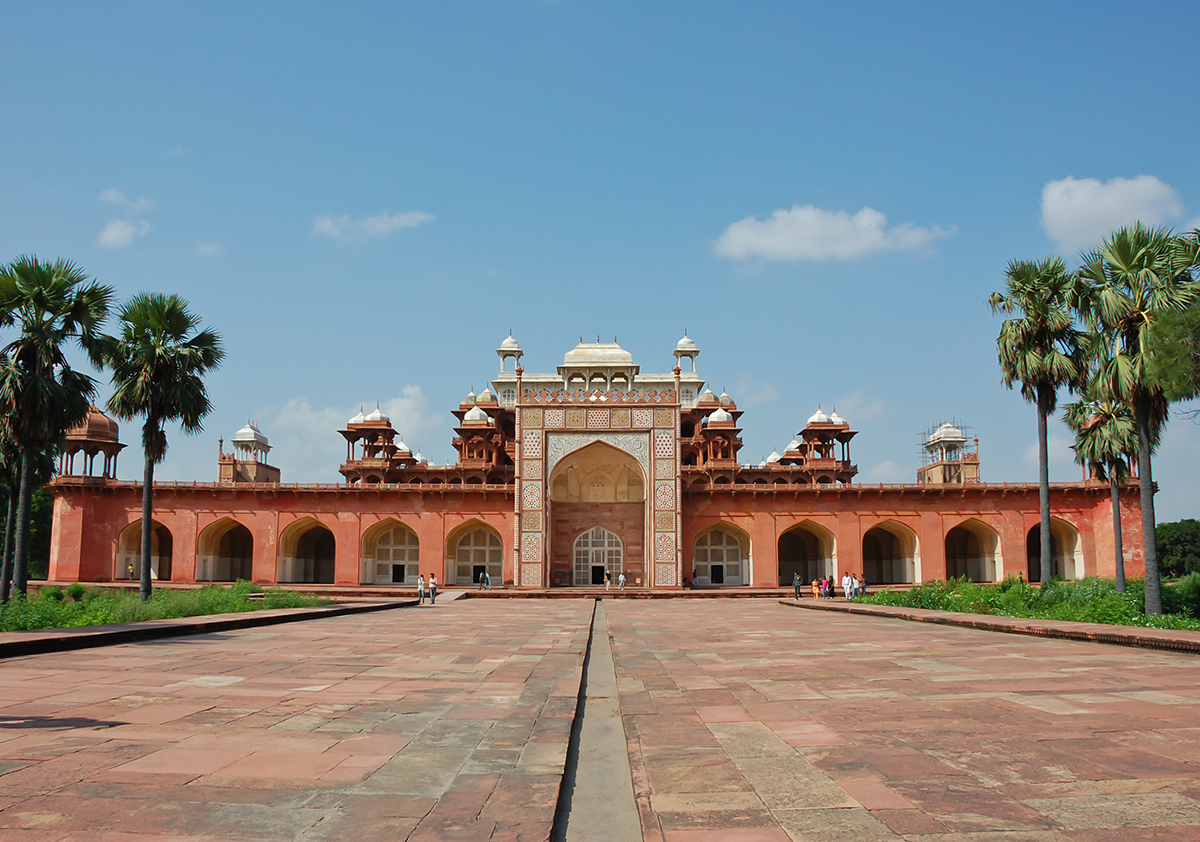
Later, visit Agra Fort, the massive red sandstone citadel of the Mughal emperors. Within its walls are marble palaces, audience halls and the octagonal tower where Shah Jahan spent his last years gazing across the river at the Taj. Then drive to Sikandra to see the tomb of the great emperor Akbar, set in gardens where deer roam freely.
Overnight: AgraIncludes: guide, carPlease note: the Taj Mahal is closed on Fridays
Day 11
Agra to Jaipur via Fatehpur Sikri and Abhaneri
Photo: fatehpur-sikri.jpg
Fatehpur Sikri, Agra
Photo: chand-baori-abhaneri.jpg
Chand Baori Stepwell, Abhaneri
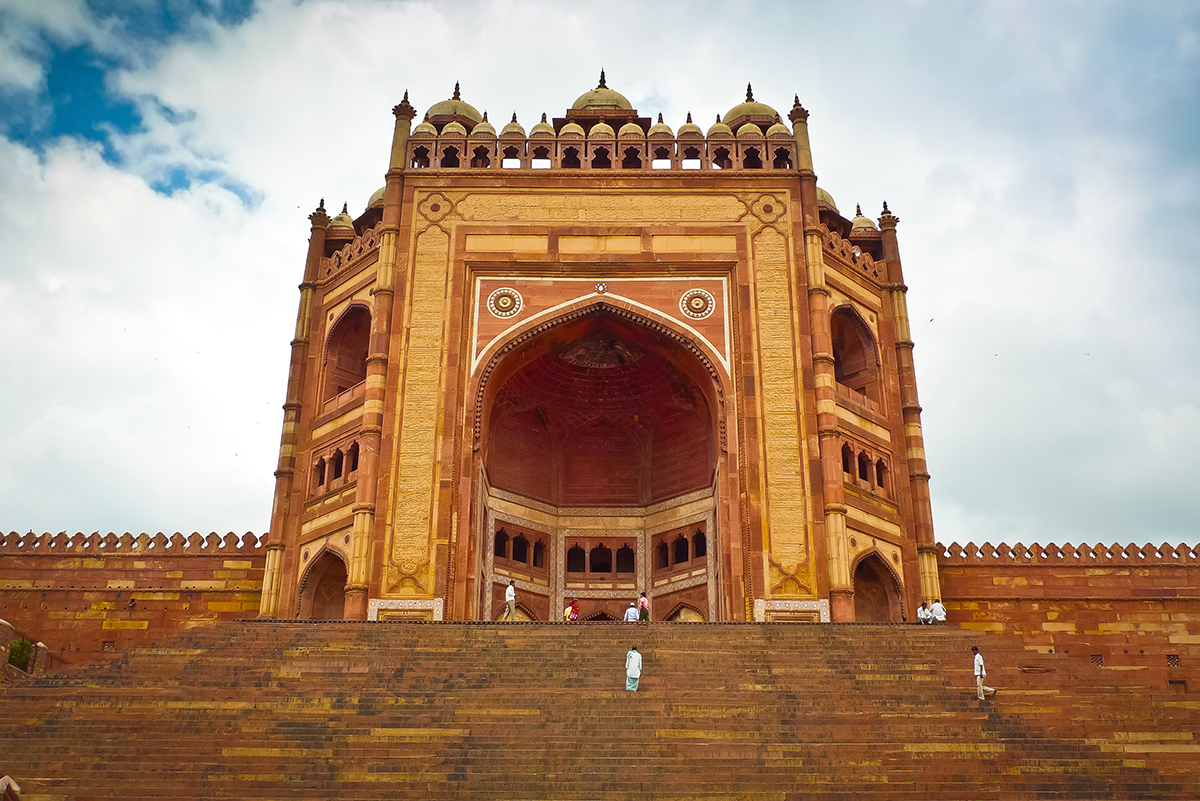
Drive west to Fatehpur Sikri, the red sandstone city built by Akbar as his capital in the 16th century and abandoned only a few years later. Its palaces, courtyards and the great Jama Masjid with the white marble tomb of Sufi saint Salim Chishti remain beautifully preserved.
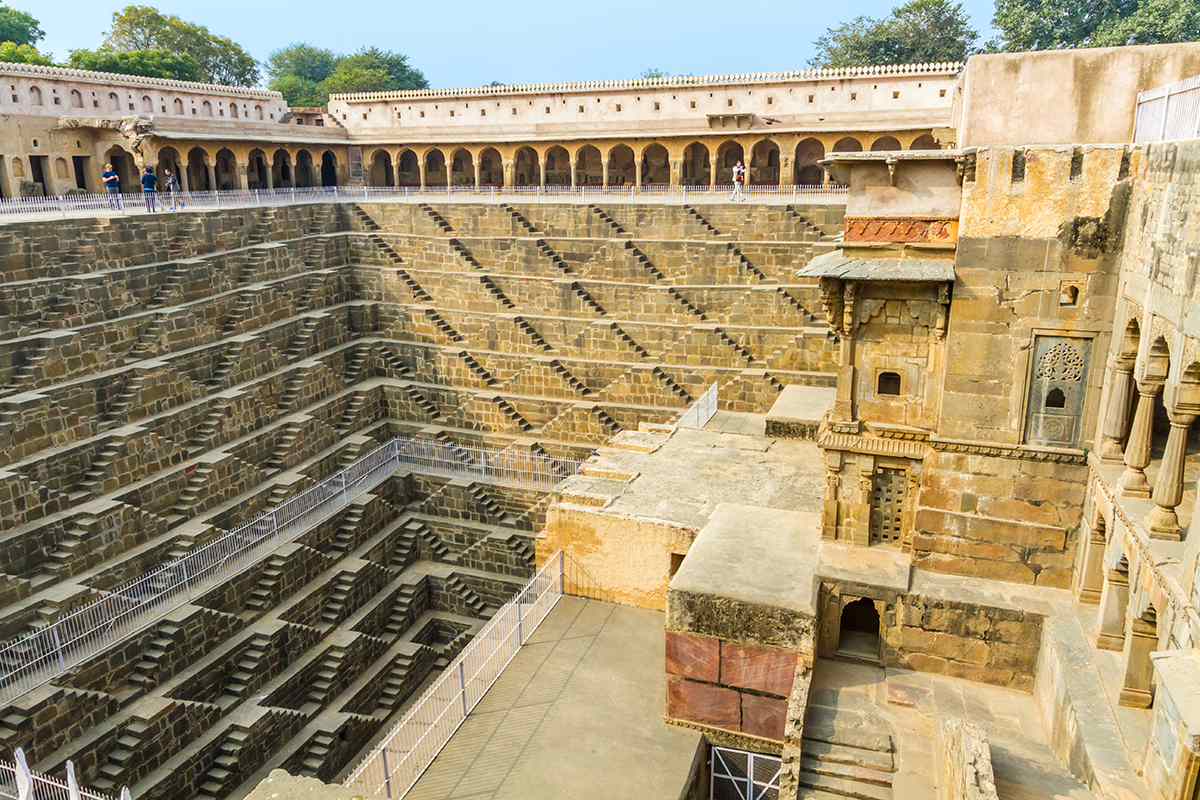
Continue to the village of Abhaneri to see Chand Baori, one of the deepest and most striking stepwells in India, with thousands of steps descending 13 storeys in perfect symmetry, and the nearby Harshat Mata Temple. Arrive in Jaipur in the late afternoon and check in. The evening is free, with the car at your disposal.
Overnight: JaipurDrive: about 240 km
Day 12
Jaipur – Amber Fort and the Pink City
Photo: amber-fort-jaipur.jpg
Amber Fort, Jaipur
Photo: hawa-mahal-jaipur.jpg
Hawa Mahal, Jaipur
Photo: city-palace-jaipur.jpg
City Palace, Jaipur
In the morning, drive out to Amber Fort, the hilltop palace-fortress of the Kachhwaha Rajput kings, and ride up to its gates by jeep. Inside, wander through courtyards, gateways and the dazzling Sheesh Mahal, the Hall of Mirrors. On the way back, stop to photograph the Jal Mahal water palace.
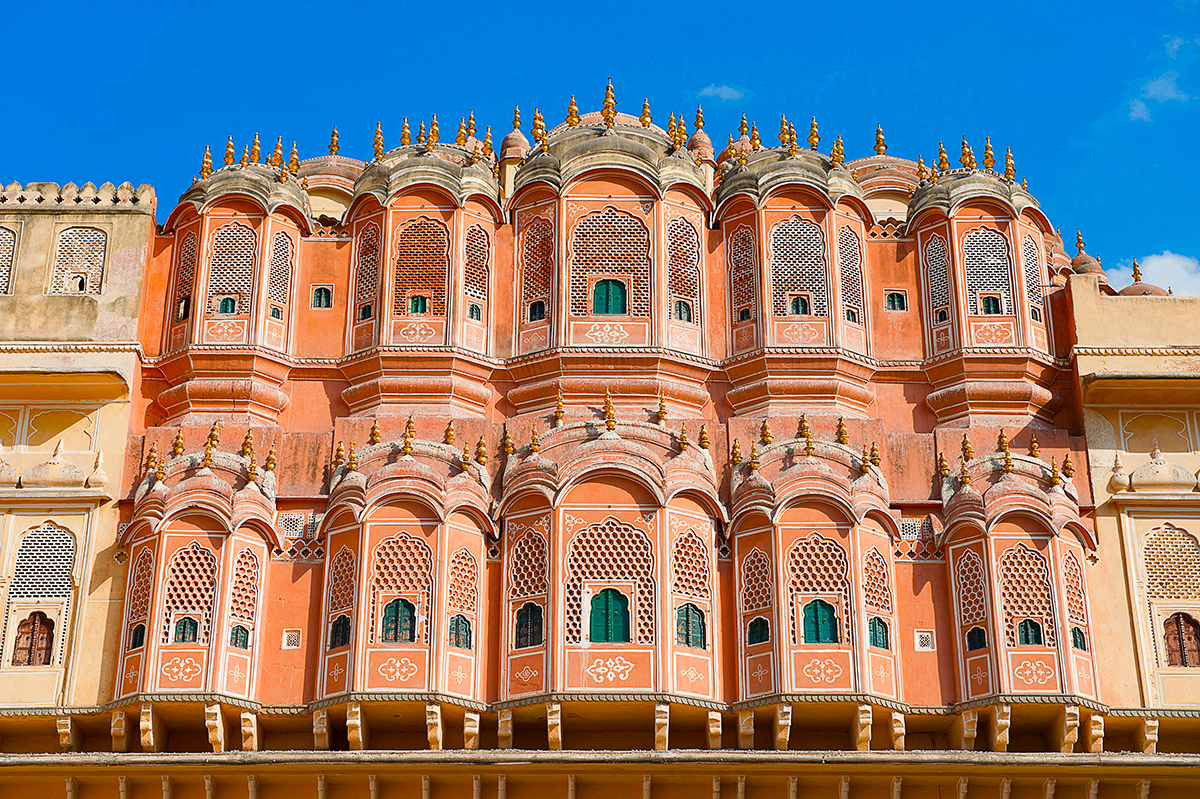
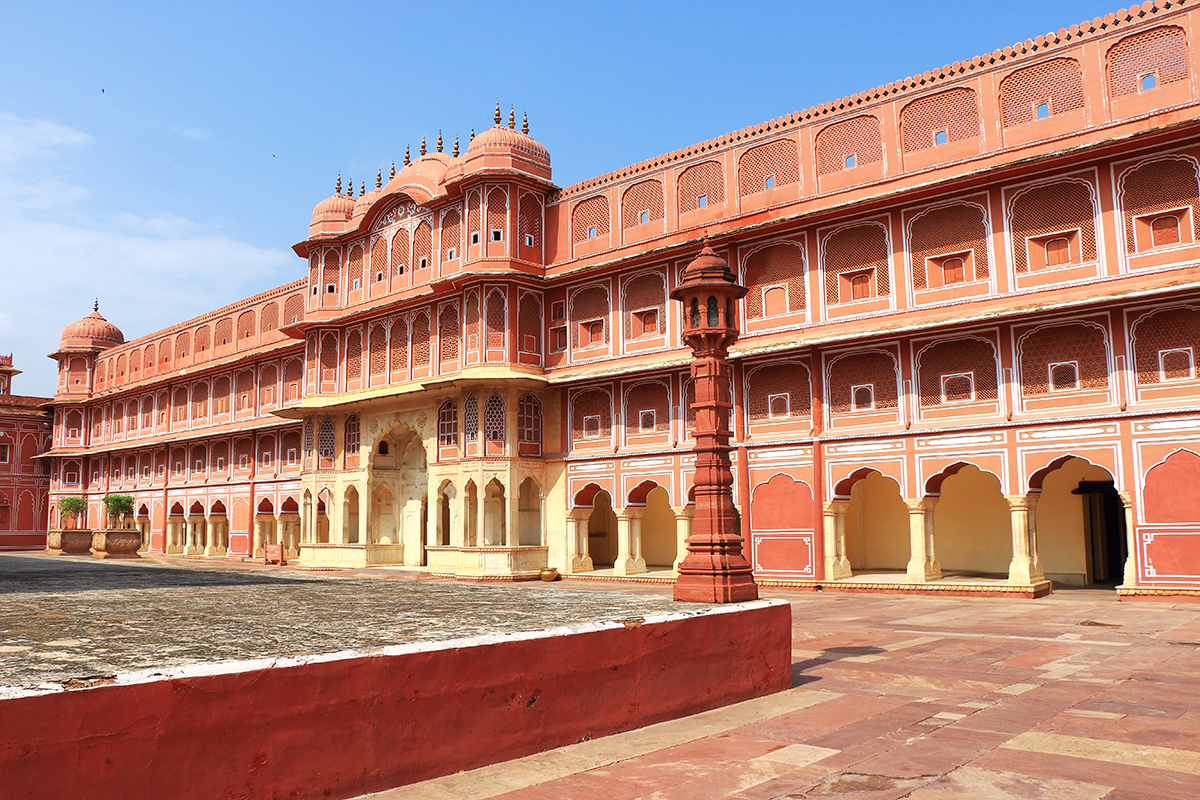
In the afternoon, tour the Pink City. Visit the City Palace, still home to the royal family, and Jantar Mantar, the 18th-century astronomical observatory and a UNESCO World Heritage Site, then stop for photos of the honeycombed façade of the Hawa Mahal, the Palace of the Winds. In the evening, join a guided walk through Jaipur's bazaars, tasting local food and meeting the craftsmen behind its famous jewellery, textiles and block prints.
Overnight: JaipurIncludes: guide, car, jeep at Amber Fort, evening walk
Day 13
Jaipur to Jodhpur by train
Ranikhet Express (15014) · Jaipur Jn 10:10 → Jodhpur Jn 16:50 · AC First Class · runs daily
After a relaxed breakfast, transfer to Jaipur station for the train to Jodhpur. The journey crosses the heart of Rajasthan, past villages, fields and the scrublands that lead towards the Thar Desert. On arrival in the late afternoon, you are met and transferred to your hotel.
Overnight: JodhpurIncludes: station transfers, train tickets
Day 14
Jodhpur – Mehrangarh Fort and the Bishnoi villages
Photo: mehrangarh-fort-jodhpur.jpg
Mehrangarh Fort, Jodhpur
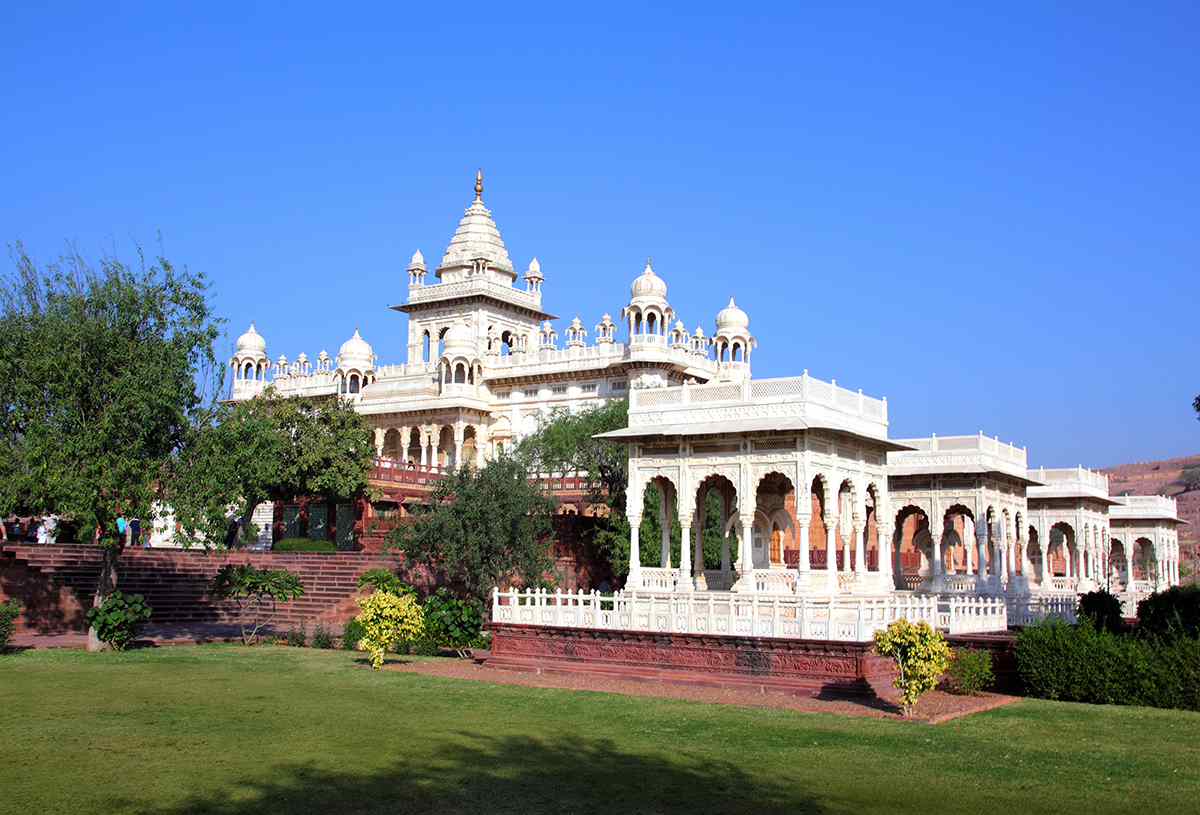
Photo: jaswant-thada-jodhpur.jpg
Jaswant Thada, Jodhpur
Photo: bishnoi-village-jodhpur.jpg
Bishnoi Village, Jodhpur
In the morning, tour Jodhpur, the Blue City, founded in 1459 by Rao Jodha of the Rathore clan. Visit the magnificent Mehrangarh Fort, rising sheer from a rocky hill, with richly decorated palaces and a museum of royal palanquins, armour and miniature paintings. From its ramparts the old city spreads out below in shades of blue. Nearby stands Jaswant Thada, a graceful white marble memorial to the Rathore rulers. End the morning amid the colourful stalls of Sardar Market around the Clock Tower.
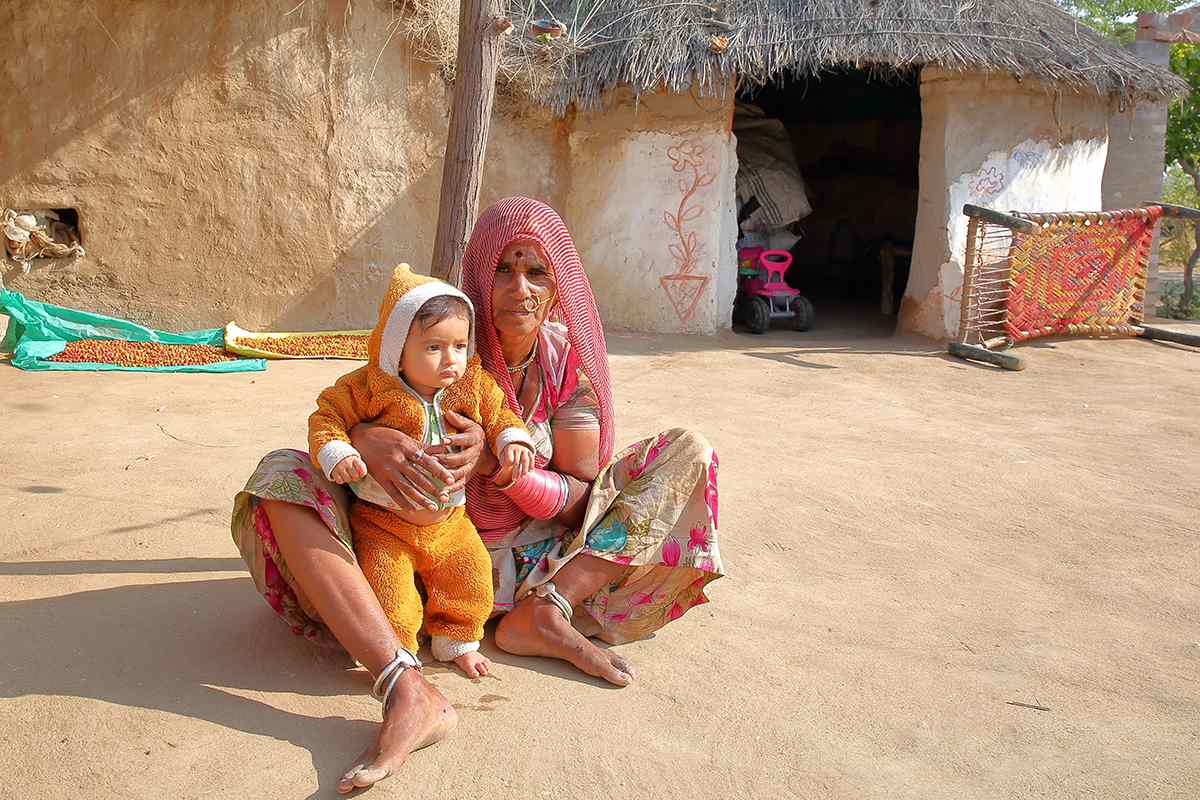
In the afternoon, drive out to the Bishnoi villages. The Bishnoi community has protected trees and wildlife for over five centuries, and you may spot blackbuck and chinkara roaming freely near the villages. Meet local families, see their traditional round huts, and watch potters and weavers at work.
Overnight: JodhpurIncludes: guide, car, village visit
Day 15
Jodhpur to Udaipur via Ranakpur
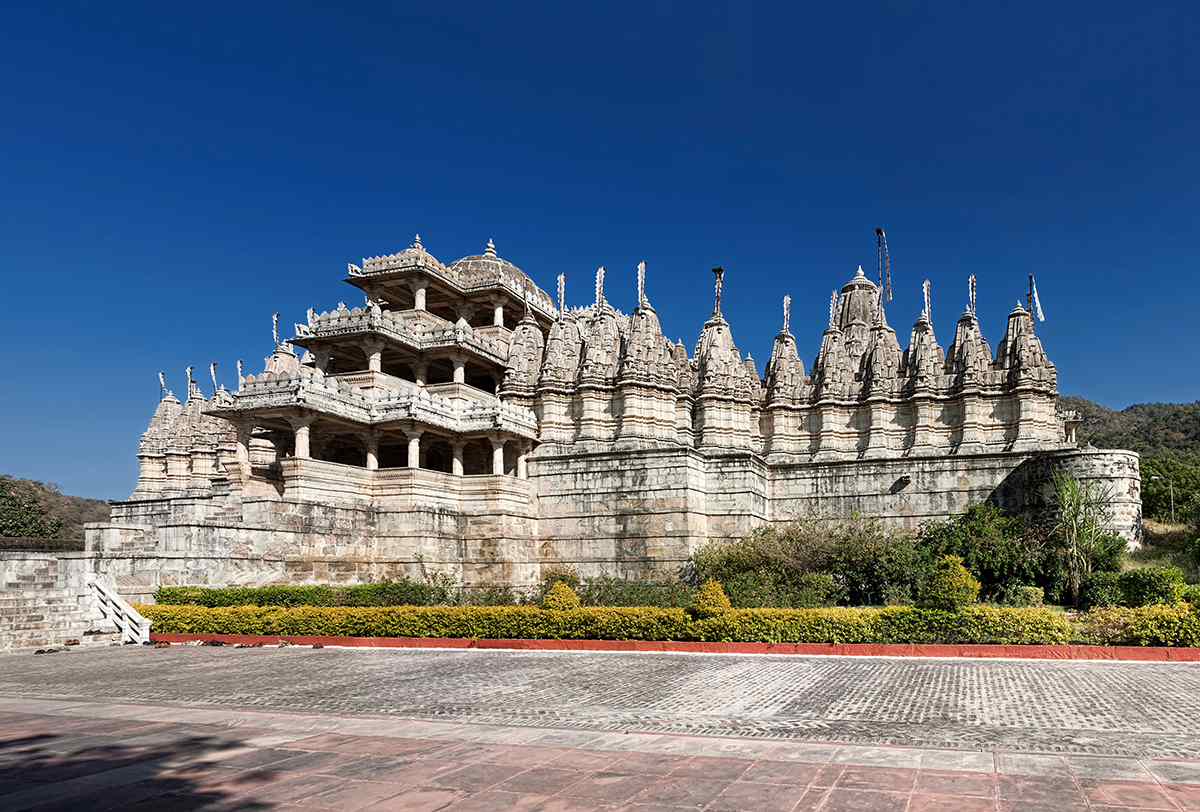
Photo: ranakpur-jain-temple.jpg
Ranakpur Jain Temple, Ranakpur
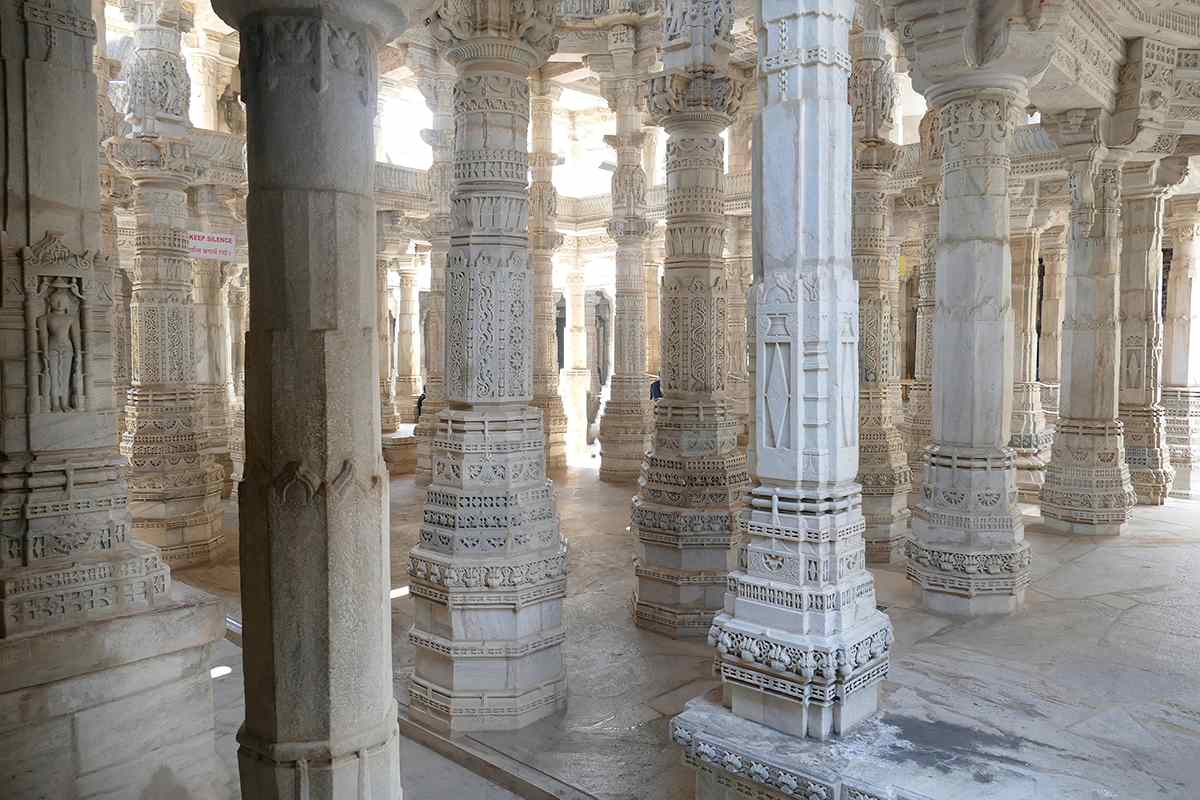
Photo: ranakpur-temple-pillars.jpg
Carved Pillars, Ranakpur
Drive south through the Aravalli hills to Ranakpur, home to one of the finest Jain temples in India. Built in the 15th century from pale marble, the Chaumukha Temple is famous for its 1,444 intricately carved pillars, no two of which are alike. Explore it at your own pace with an audio guide.
Continue to Udaipur, the City of Lakes, and check in to your hotel. The evening is free, with the car at your disposal.
Overnight: UdaipurDrive: about 256 kmPlease note: the Ranakpur temple is open to visitors from 12 noon
Day 16
Udaipur – the City of Lakes
Photo: udaipur-city-palace.jpg
City Palace, Udaipur
Photo: lake-pichola-udaipur.jpg
Lake Pichola, Udaipur
Photo: folk-dance-udaipur.jpg
Folk Dance Show, Udaipur
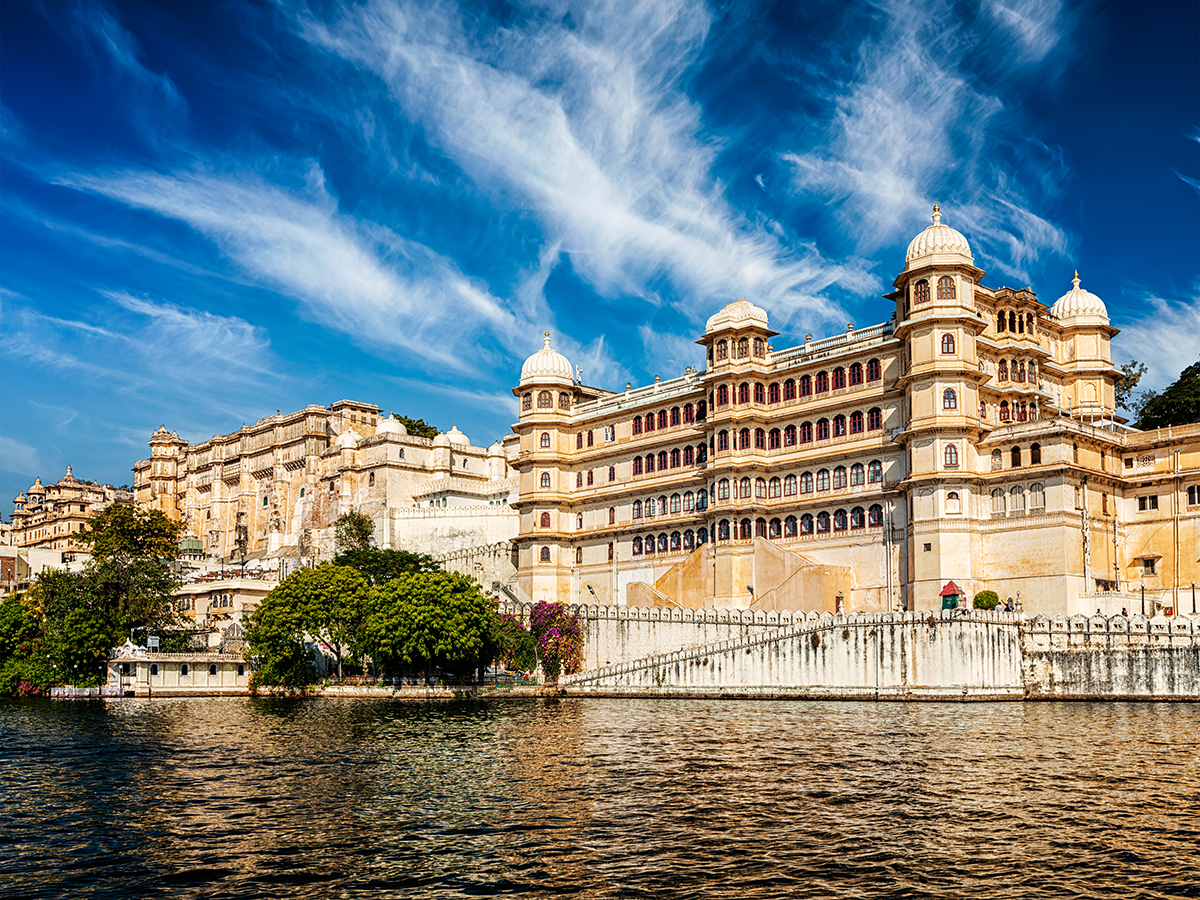
Spend the morning discovering Udaipur, founded by Maharana Udai Singh II in the 16th century. Visit the vast City Palace, a complex of courtyards, balconies and towers overlooking the lake, and the Jagdish Temple with its finely carved stonework. Stroll through Saheliyon-ki-Bari, the Garden of the Maidens, with its fountains, lotus pools and marble elephants.
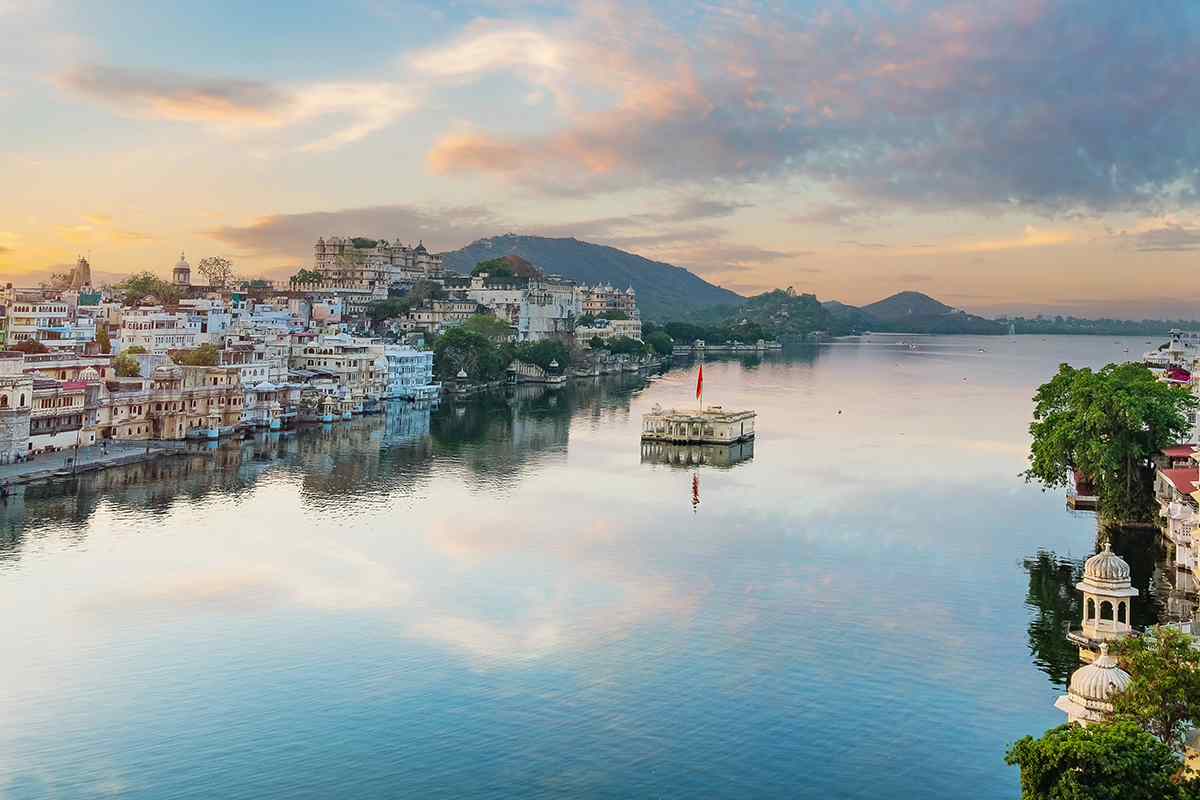
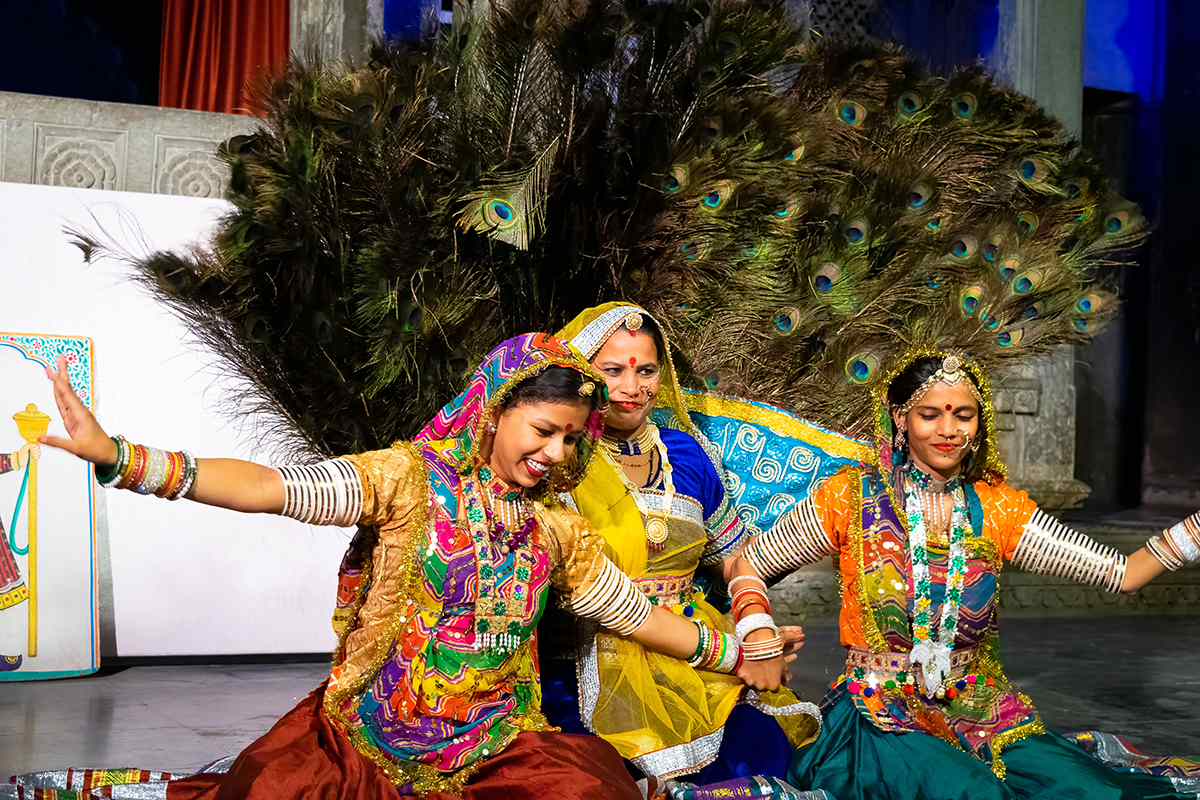
In the late afternoon, enjoy a boat ride on Lake Pichola, gliding past bathing ghats, the white Lake Palace and the island palace of Jag Mandir as the city glows in the setting sun. In the evening, watch a lively folk dance show with traditional Rajasthani music, dance and puppetry.
Overnight: UdaipurIncludes: guide, car, boat ride, show tickets
Day 17
Udaipur to Delhi by flight
Transfer to Udaipur airport for your flight to Delhi. On arrival, you are met and transferred to your hotel. The rest of the day is free for last-minute shopping or relaxing before your journey home.
Overnight: DelhiIncludes: airport transfers
Day 18
Depart Delhi
Transfer to Delhi International Airport in time for your flight home, or onward to your next destination in India. Tour ends with happy memories!
Vehicle: airport transfer
What's included
Package includes
Meet and assist on arrival and departure at airports and railway stations in all cities
17 nights in hotels of your chosen category, with daily breakfast
Private air-conditioned car with driver for all transfers and sightseeing as per itinerary
English-speaking local guides for sightseeing in Delhi, Omkareshwar, Maheshwar, Mandu, Indore, Ujjain, Bhopal, Gwalior, Agra, Fatehpur Sikri, Jaipur, Jodhpur and Udaipur
Cycle rickshaw ride in Chandni Chowk
Boat ride on the Narmada, Maheshwar
Visit to the Rehwa Society weaving centre, Maheshwar
Vande Bharat Express, Indore to Bhopal, AC Executive Chair Car
Shatabdi Express, Bhopal to Gwalior, AC Executive Chair Car
Vande Bharat Express, Gwalior to Agra, AC Executive Chair Car
Jeep ride at Amber Fort
Evening bazaar, food and crafts walk in Jaipur
Ranikhet Express, Jaipur to Jodhpur, AC First Class
Visit to the Bishnoi villages, Jodhpur
Audio guide at Ranakpur Jain Temple
Boat ride on Lake Pichola, Udaipur
Tickets for the folk dance show, Udaipur
Entrance fees to monuments as per itinerary
All applicable taxes
Package excludes
International airfares and airport taxes
Domestic airfares (Delhi to Indore and Udaipur to Delhi), quoted separately as fares can change at the time of booking
India visa fees and travel insurance
Lunches, dinners and drinks
Camera and video fees at monuments
Tips to guides and drivers
Personal expenses such as laundry, telephone and shopping
Anything not mentioned under “Package includes”
Train numbers and timings are indicative and confirmed at the time of booking. Itineraries can be adjusted for monument closing days, your travel dates and special interests.
A private tour, quoted individually for 1 traveller or more. Tell us your dates and preferred hotels, and we will send a detailed quote, usually within 24 hours.