27 Nights / 28 DaysPrivate tour with car & driverNorth & South IndiaTaj Mahal, Ganges & backwaters
Our grand tour of India, from the Mughal and Rajput north to the temples and backwaters of the south. Begin in Delhi, then fly to Varanasi for the ghats of the sacred Ganges and Sarnath, and on to the temples of Khajuraho. Visit medieval Orchha on the way to Agra and the Taj Mahal, then continue to Jaipur, the Pink City, and by train to Udaipur, the City of Lakes.
Fly to Mumbai for the Elephanta Caves and the colonial city, then south to Kerala: Fort Kochi and Kathakali, a houseboat cruise on the backwaters, and the spice hills of Thekkady. Cross into Tamil Nadu for the great temples of Madurai, Trichy and Tanjore, French Pondicherry, the shore temples of Mahabalipuram, the temple town of Kanchipuram and Chennai. Every tour is private and can be tailored to your dates, hotels and interests.
Tour highlights
New and Old Delhi, with a cycle rickshaw ride through Chandni Chowk
A sunrise boat ride on the Ganges and the Ganga Aarti in Varanasi
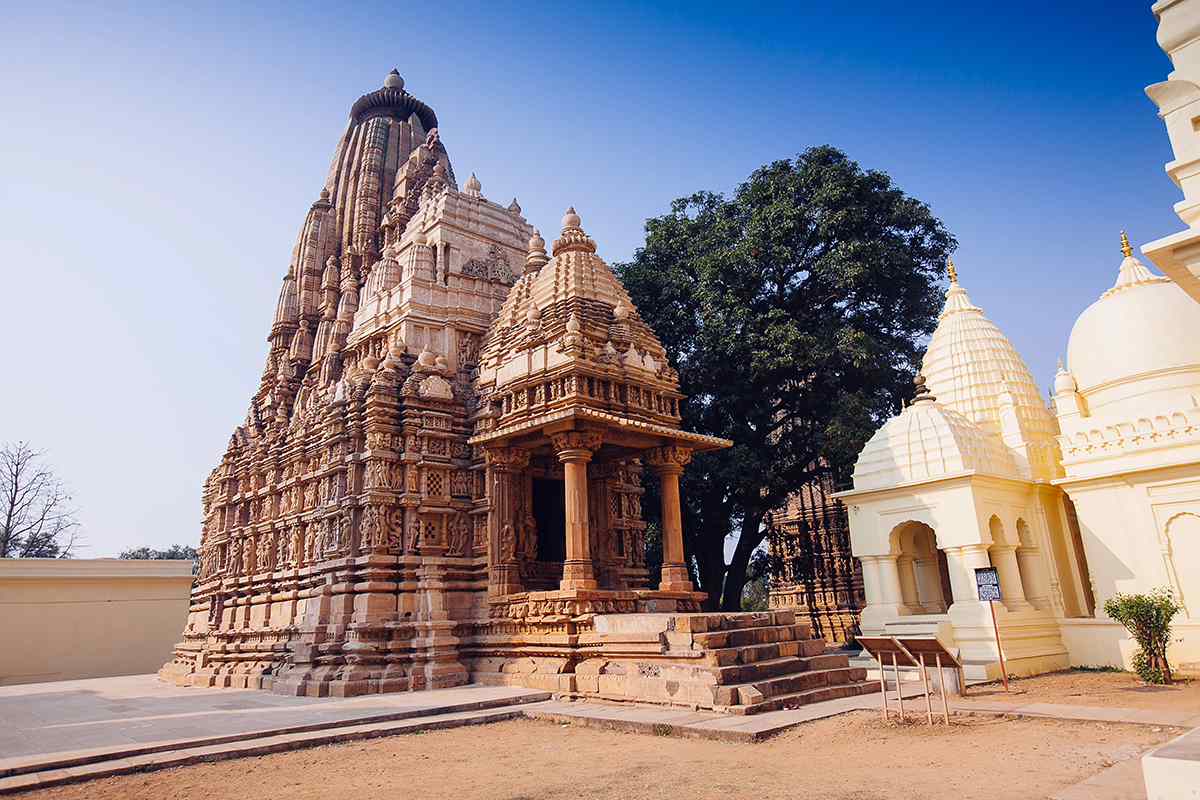
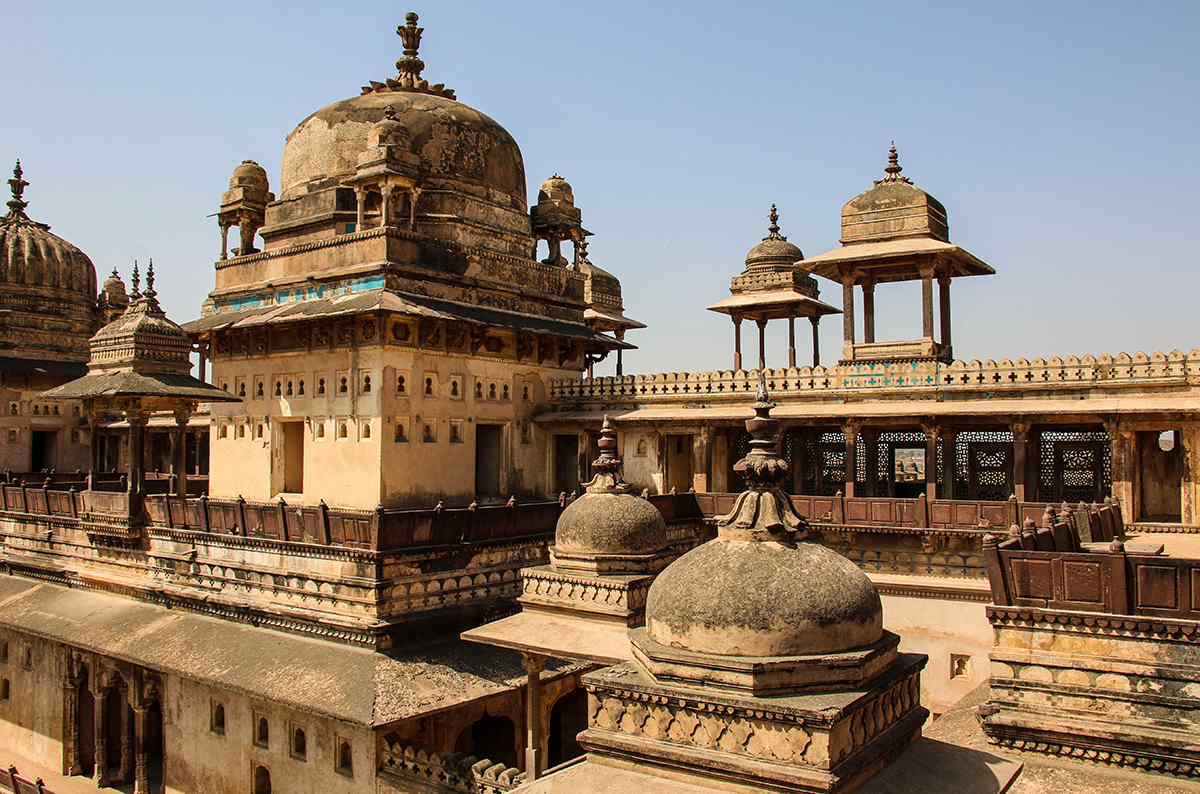
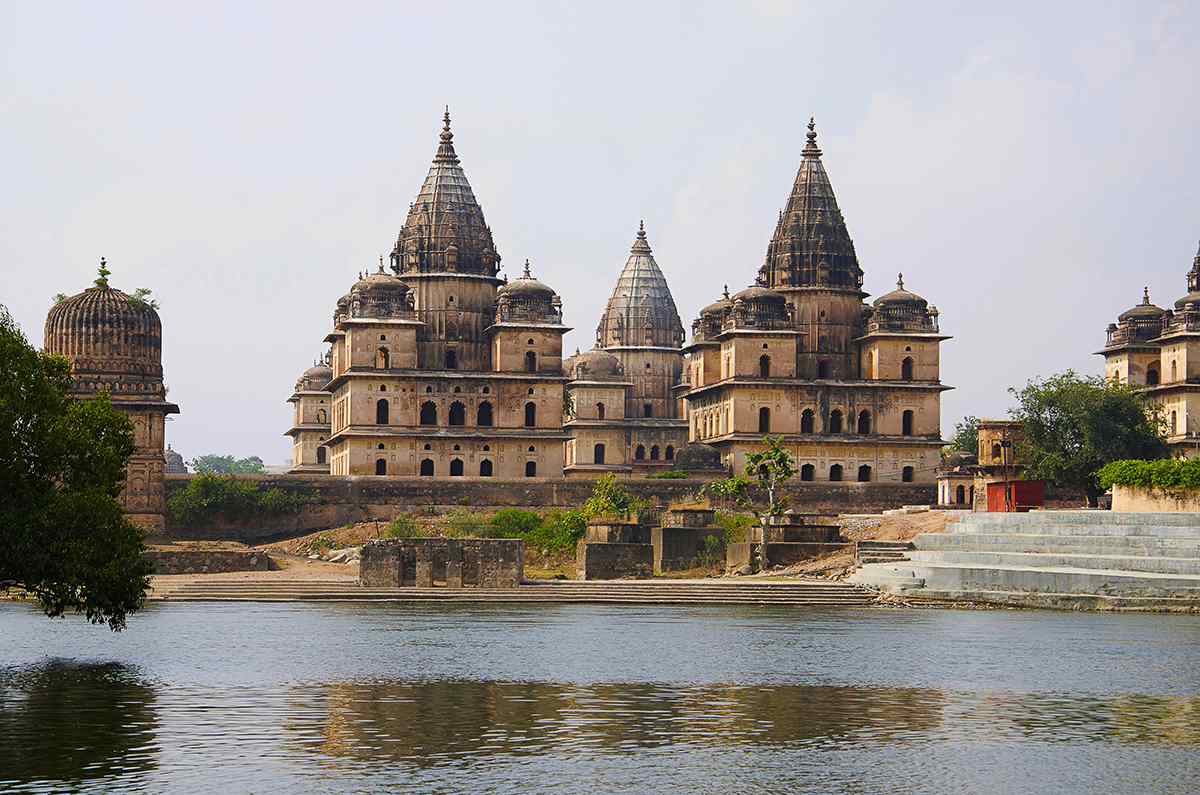
The temples of Khajuraho and the palaces of Orchha
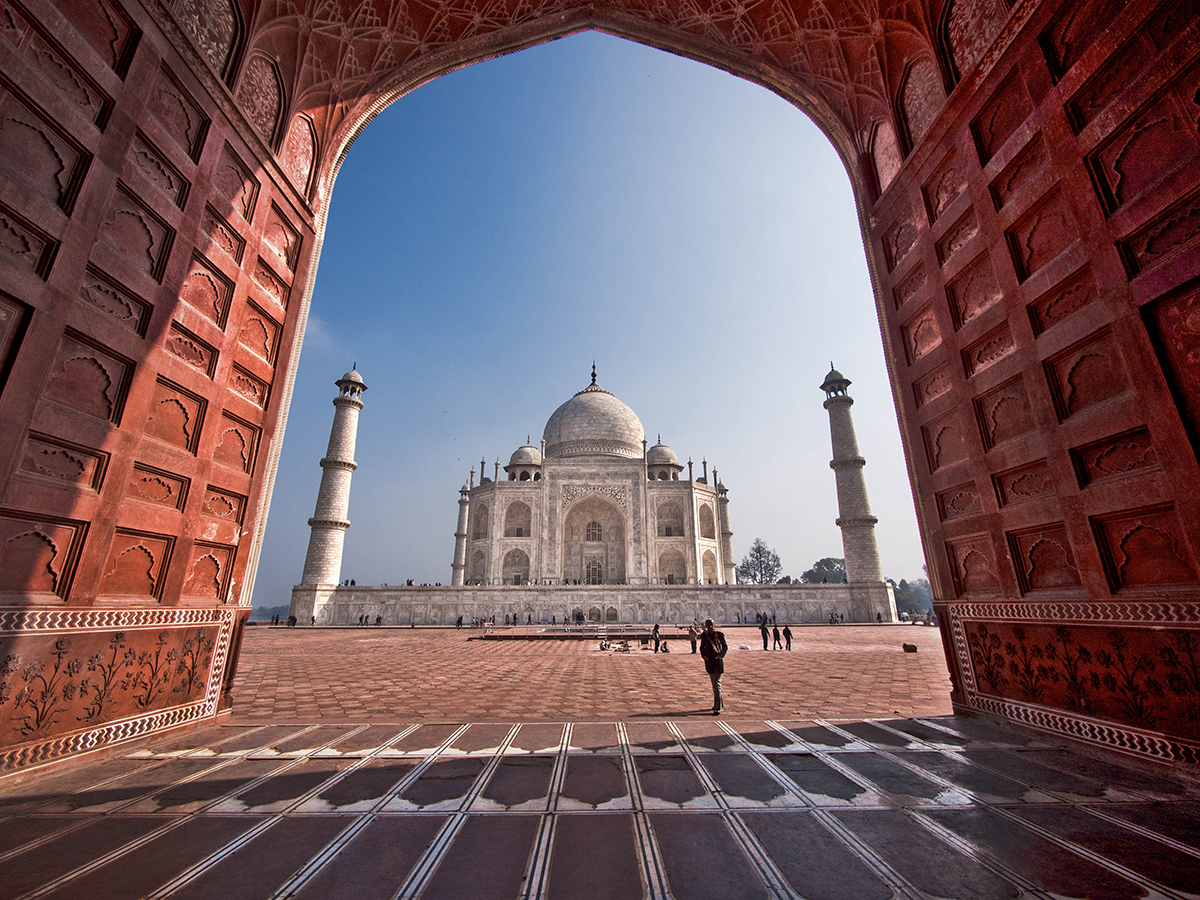
The Taj Mahal at sunrise and sunset
Amber Fort and the Pink City of Jaipur, and Lake Pichola in Udaipur
The Elephanta Caves and the Victorian city of Mumbai
Fort Kochi, Kathakali and an Alleppey houseboat cruise
Spice plantations and Periyar in Thekkady
The Meenakshi Temple, Madurai, and the Big Temple of Tanjore
Pondicherry, Auroville, the shore temples of Mahabalipuram and the temples of Kanchipuram
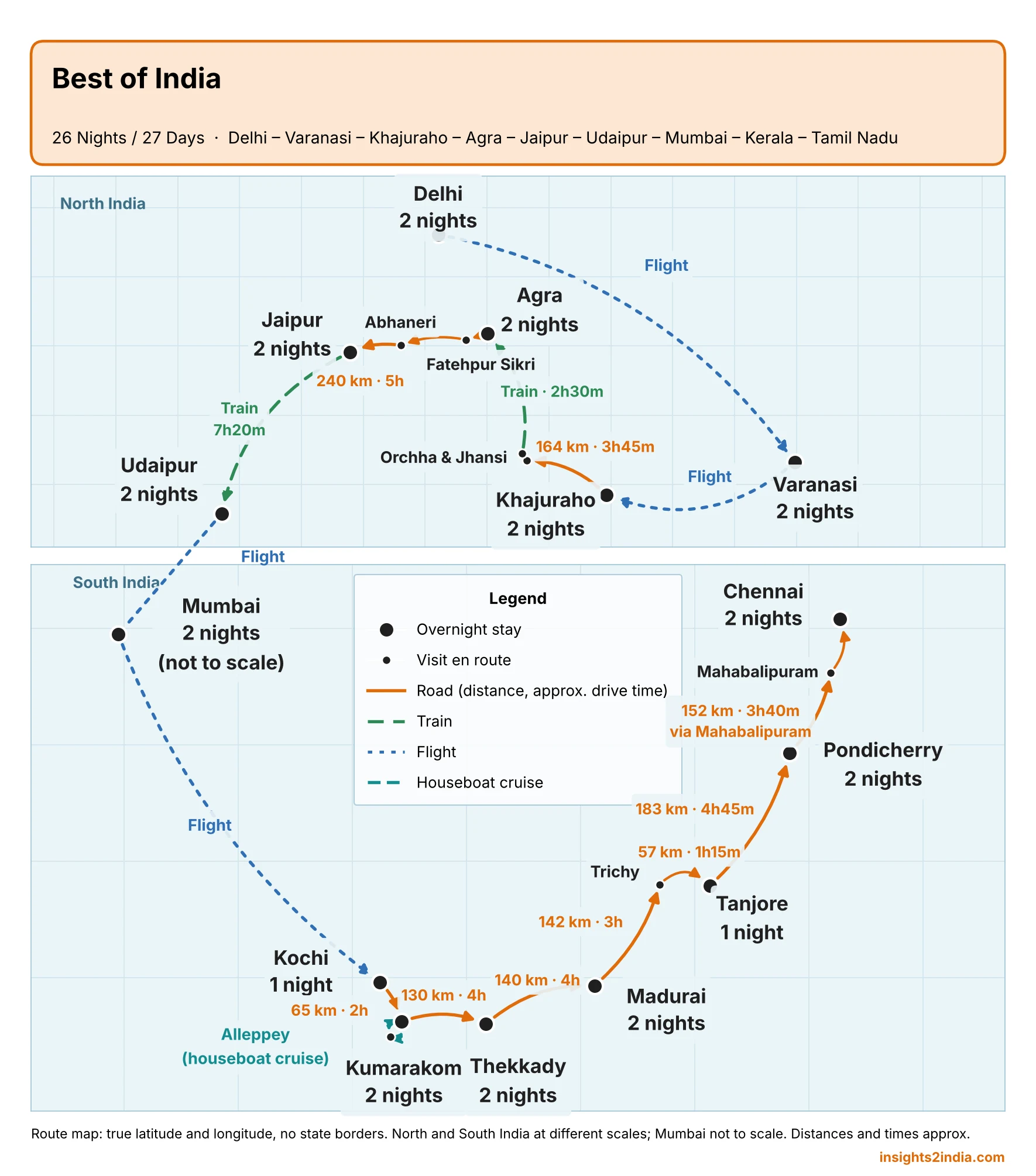
Route Map (click to enlarge)
Day-by-day itinerary
Day 1
Arrive Delhi
Welcome to India! On arrival at Delhi's Indira Gandhi International Airport, our representative meets you after customs and escorts you to your hotel. The rest of the day is free to rest after your journey.
Overnight: DelhiVehicle: airport transfer onlyPlease note: this tour works best arriving on a Thursday, so that the Sarnath Museum (closed on Fridays), the Taj Mahal (closed on Fridays), the Elephanta Caves (closed on Mondays), the Synagogue and Mattancherry Palace in Kochi (closed on Fridays and Saturdays), the Pondicherry Museum (closed on Mondays) and Fort St George in Chennai (closed on Fridays) are open on the days we visit; other arrival days can be arranged with small changes
Day 2
Delhi – New Delhi and Old Delhi
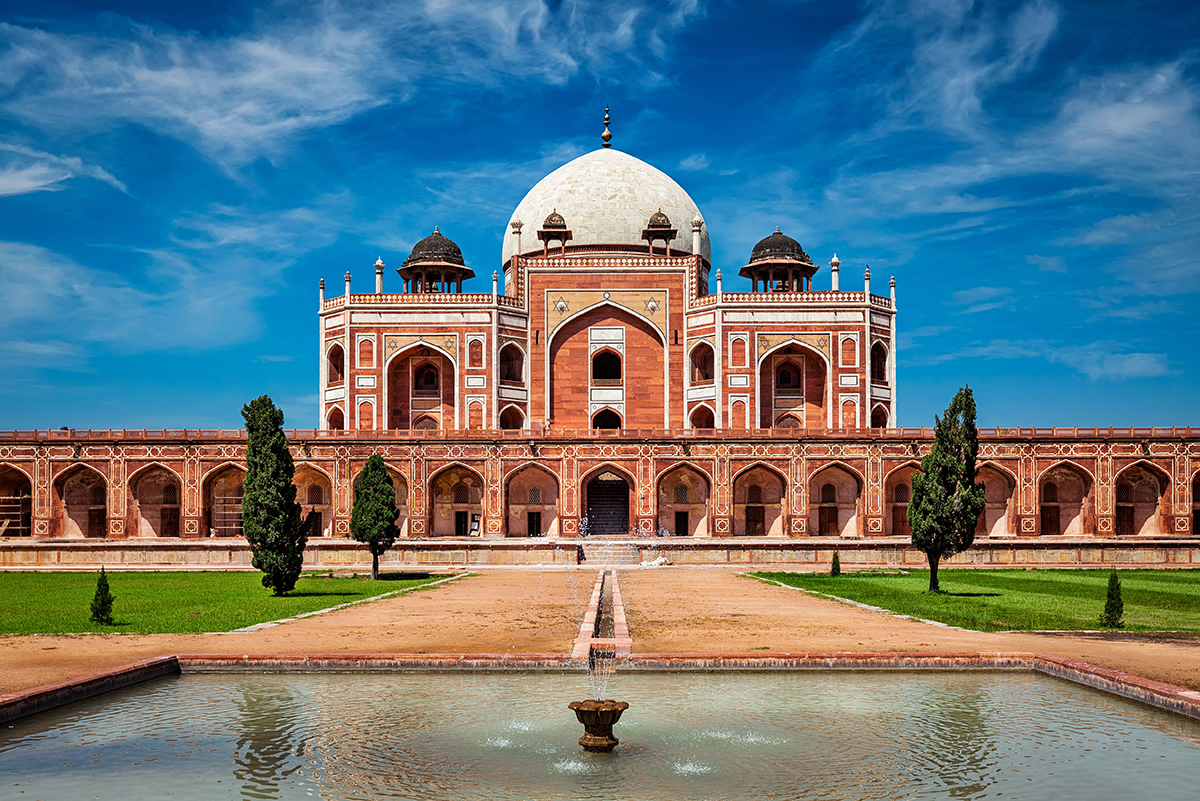
Photo: humayuns-tomb-delhi.jpg
Humayun's Tomb, Delhi
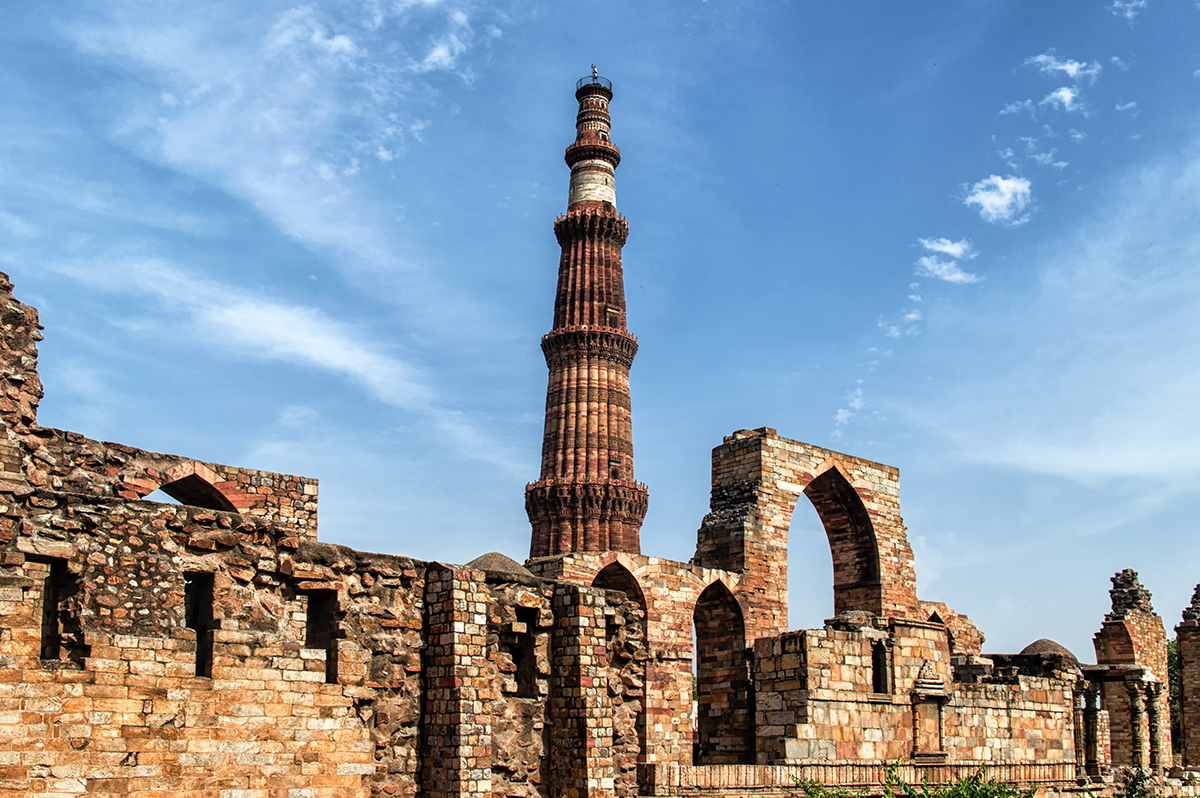
Photo: qutub-minar-delhi.jpg
Qutub Minar, Delhi
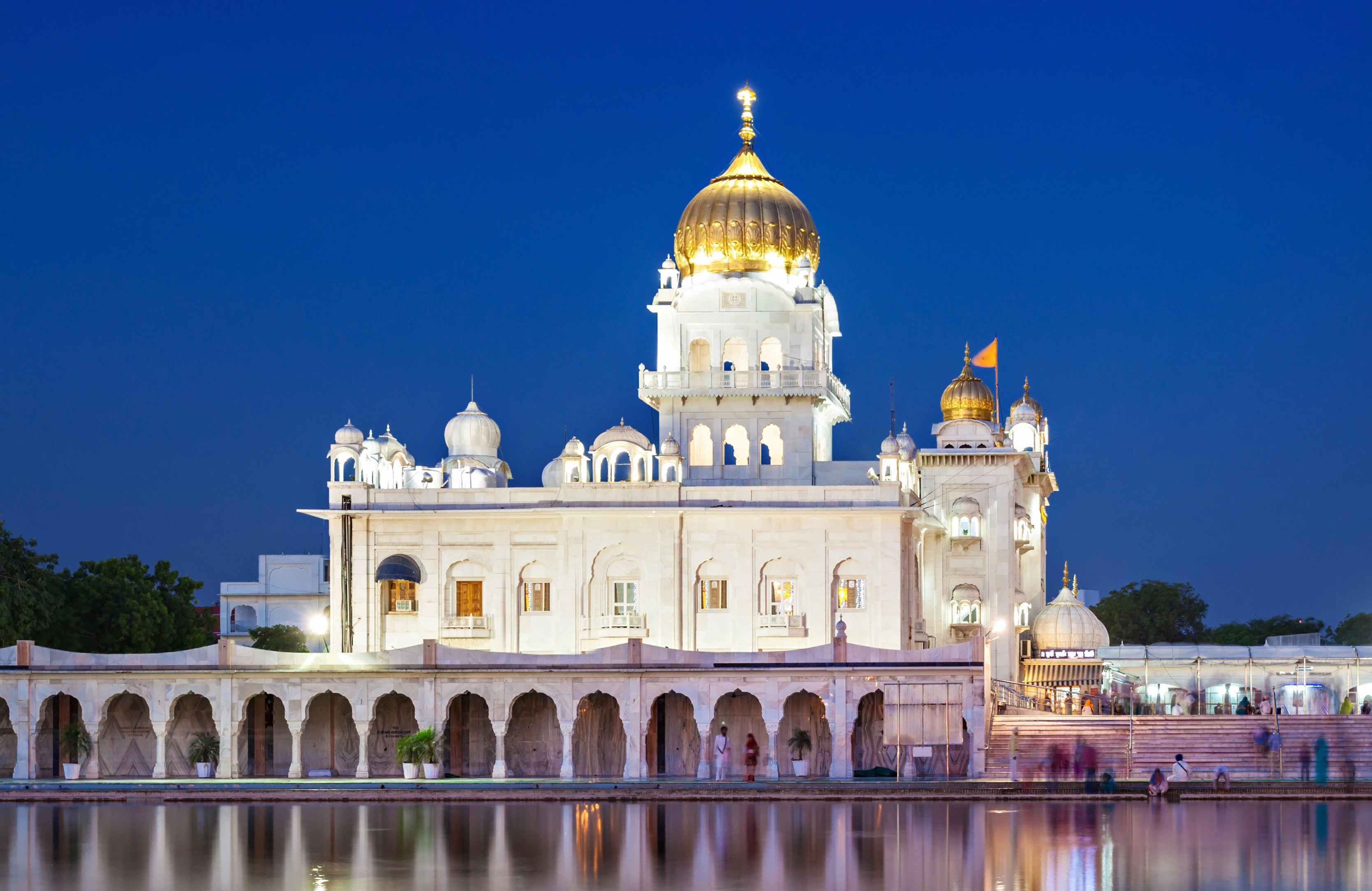
Photo: gurdwara-bangla-sahib-delhi.jpg
Gurdwara Bangla Sahib, Delhi
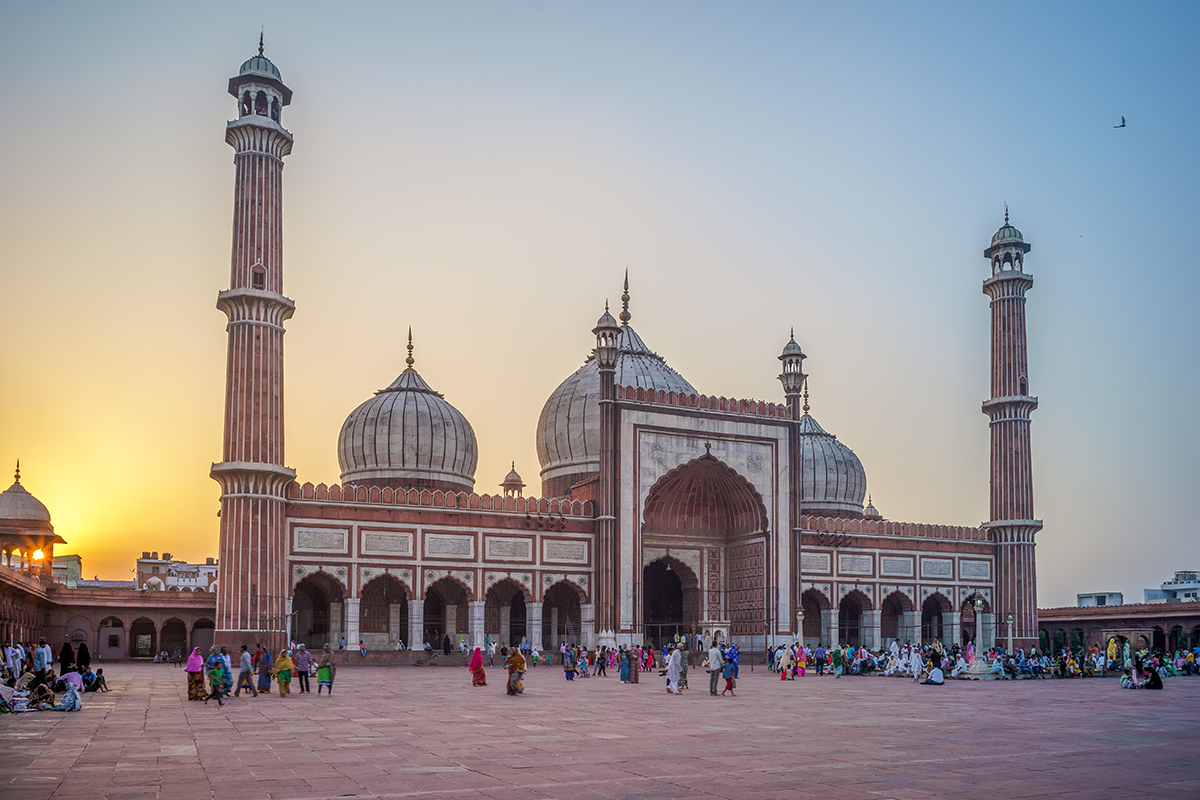
Photo: jama-masjid-delhi.jpg
Jama Masjid, Delhi
A full day with your guide exploring two very different Delhis. The morning is spent in New Delhi. Visit Humayun's Tomb, the 16th-century garden tomb that inspired the Taj Mahal, and the soaring Qutub Minar, a 73-metre tower begun in the 12th century. Drive along Kartavya Path past India Gate, Rashtrapati Bhavan and the Parliament buildings of Lutyens' Delhi.
Then visit Gurdwara Bangla Sahib, Delhi's most important Sikh shrine, with its golden dome and sacred pool. Here you can see the langar, the community kitchen where volunteers prepare free meals for thousands of visitors every day, whatever their faith. Please cover your head and remove your shoes before entering.
In the late afternoon and evening, discover Old Delhi, the walled city of Shahjahanabad built by the Mughal emperor Shah Jahan. Stop at Raj Ghat, the memorial to Mahatma Gandhi, and drive past the red sandstone walls of the Red Fort. Visit Jama Masjid, one of India's largest mosques, then board a cycle rickshaw for a ride through the lanes of Chandni Chowk, alive in the evening with spice sellers, sweet shops and centuries-old havelis.
Transfer to the airport for your flight to Varanasi, one of the oldest living cities in the world and the spiritual heart of India. On arrival, you are met and transferred to your hotel.
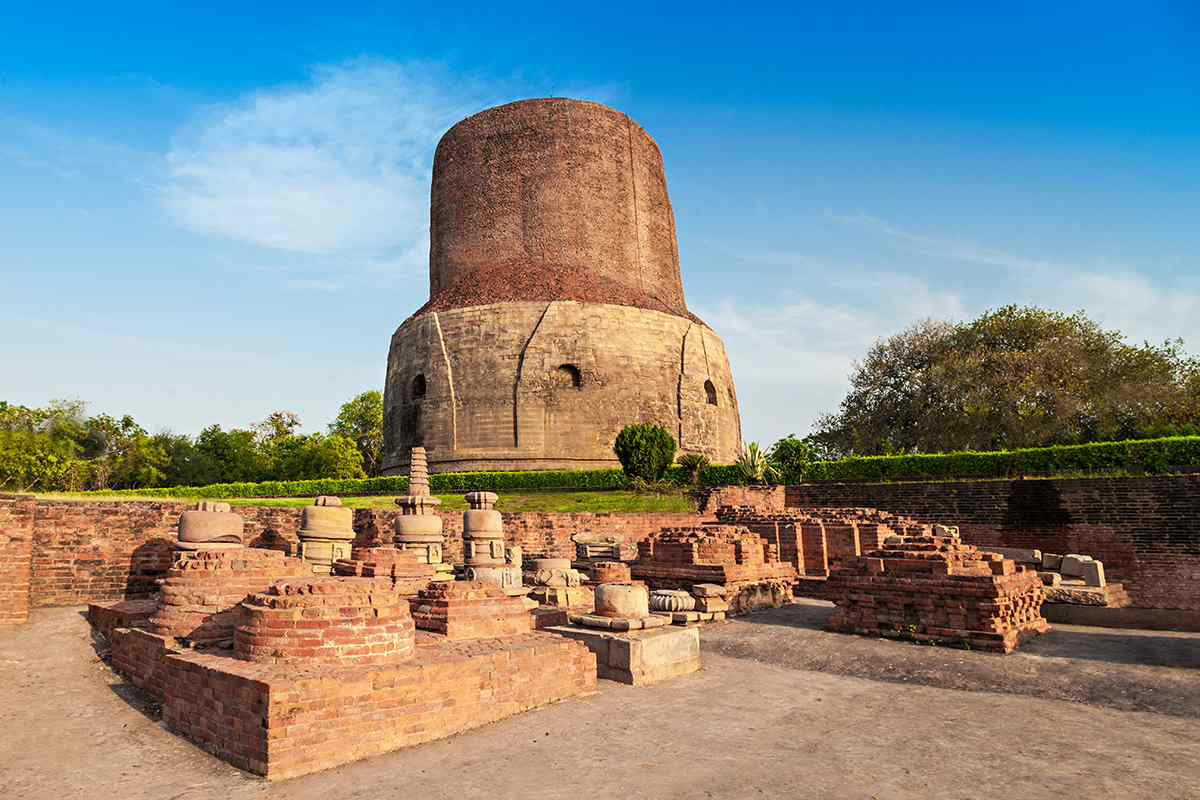
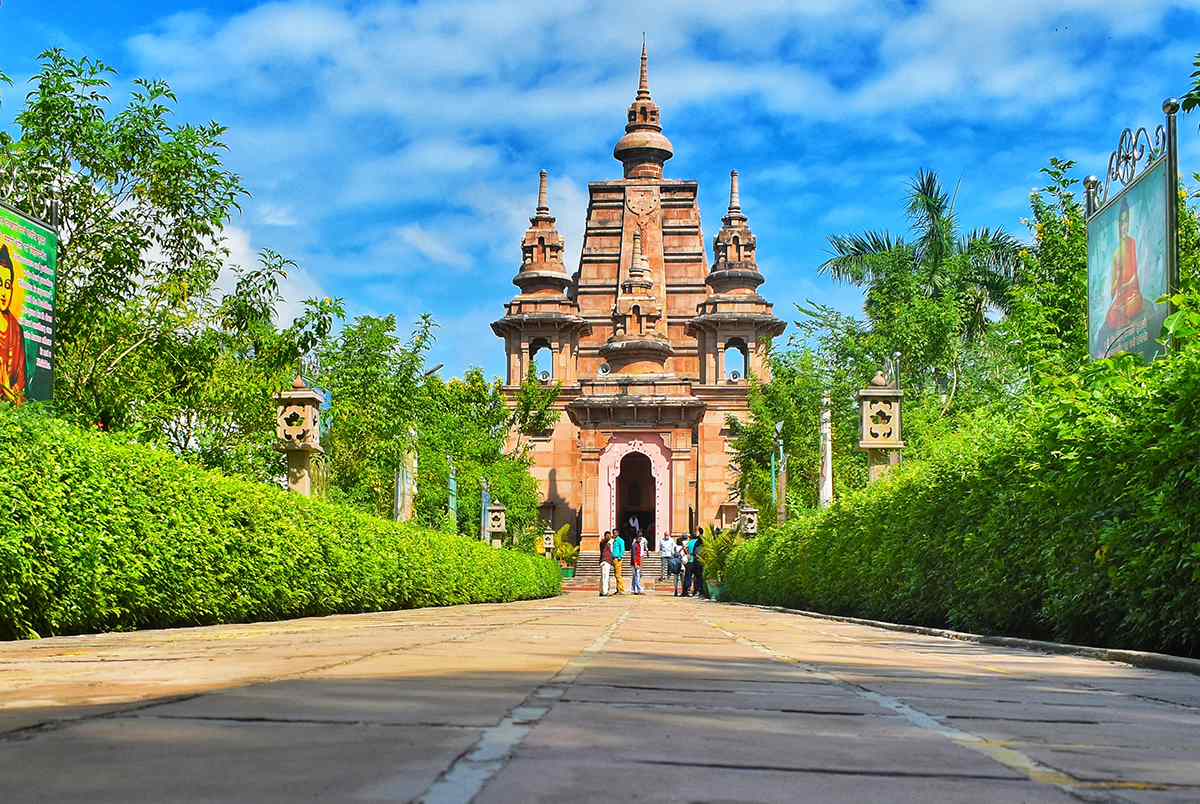
In the afternoon, visit Sarnath, where the Buddha preached his first sermon after attaining enlightenment. See the great Dhamek Stupa, the ruins of ancient monasteries, and the Mulagandha Kuti Vihar, a modern temple with murals of the Buddha's life. The Sarnath Museum holds the famous Lion Capital of Ashoka, India's national emblem.
Overnight: VaranasiIncludes: airport transfers, guide, carPlease note: the Sarnath Museum is closed on Fridays
Day 4
Varanasi – the sacred Ganges
Photo: ganges-boat-ride-varanasi.jpg
Boat Ride on the Ganges, Varanasi
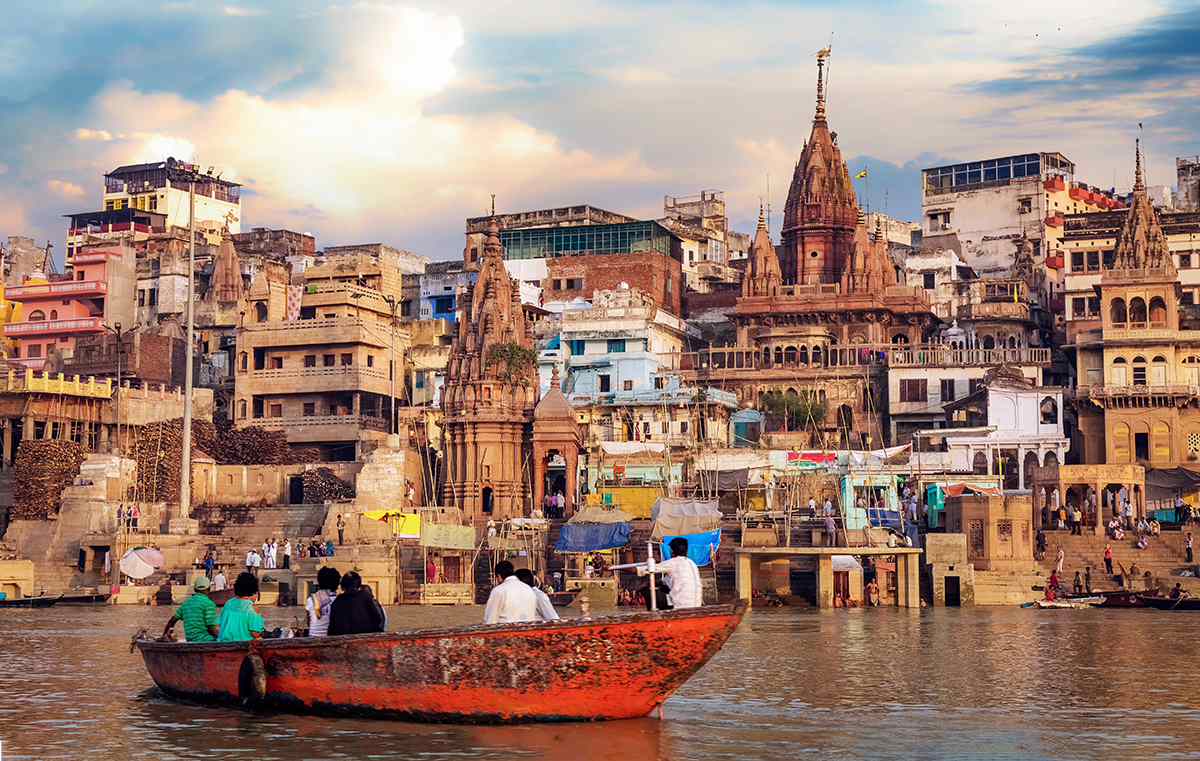
Photo: ghats-varanasi.jpg
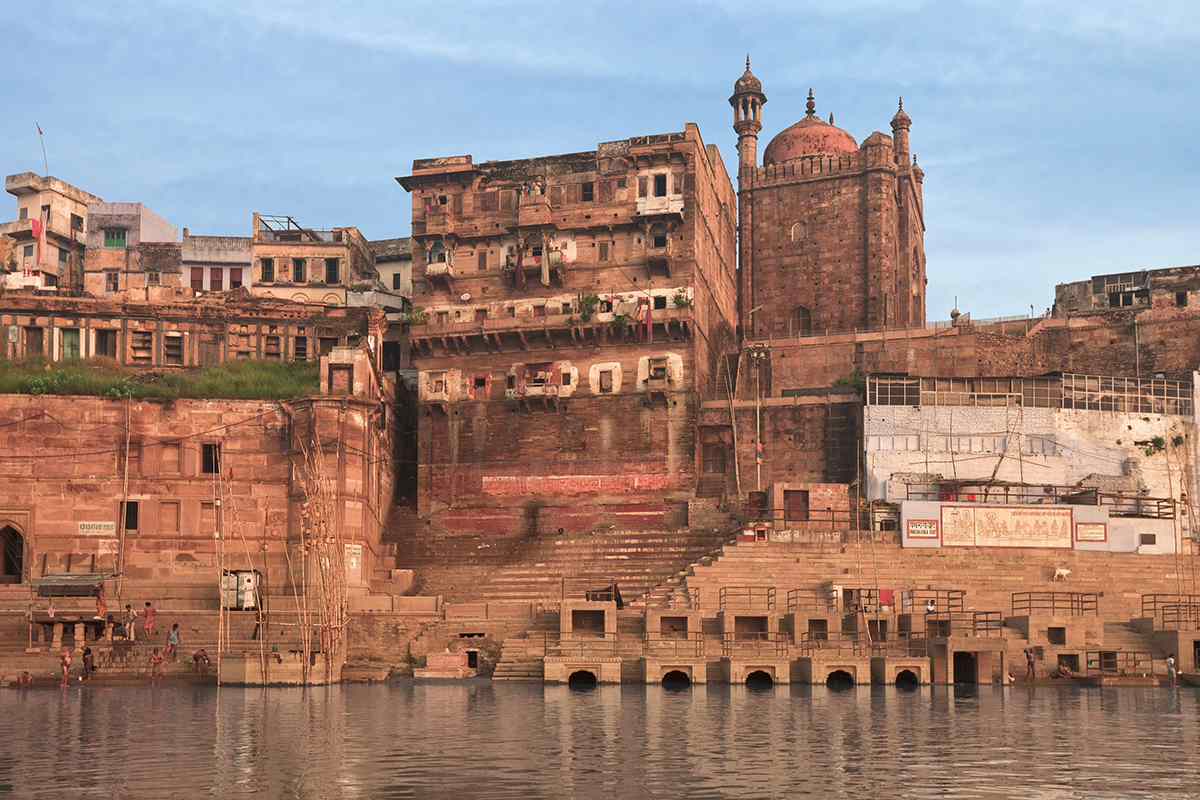
Ghats of Varanasi
Photo: ganga-aarti-varanasi.jpg
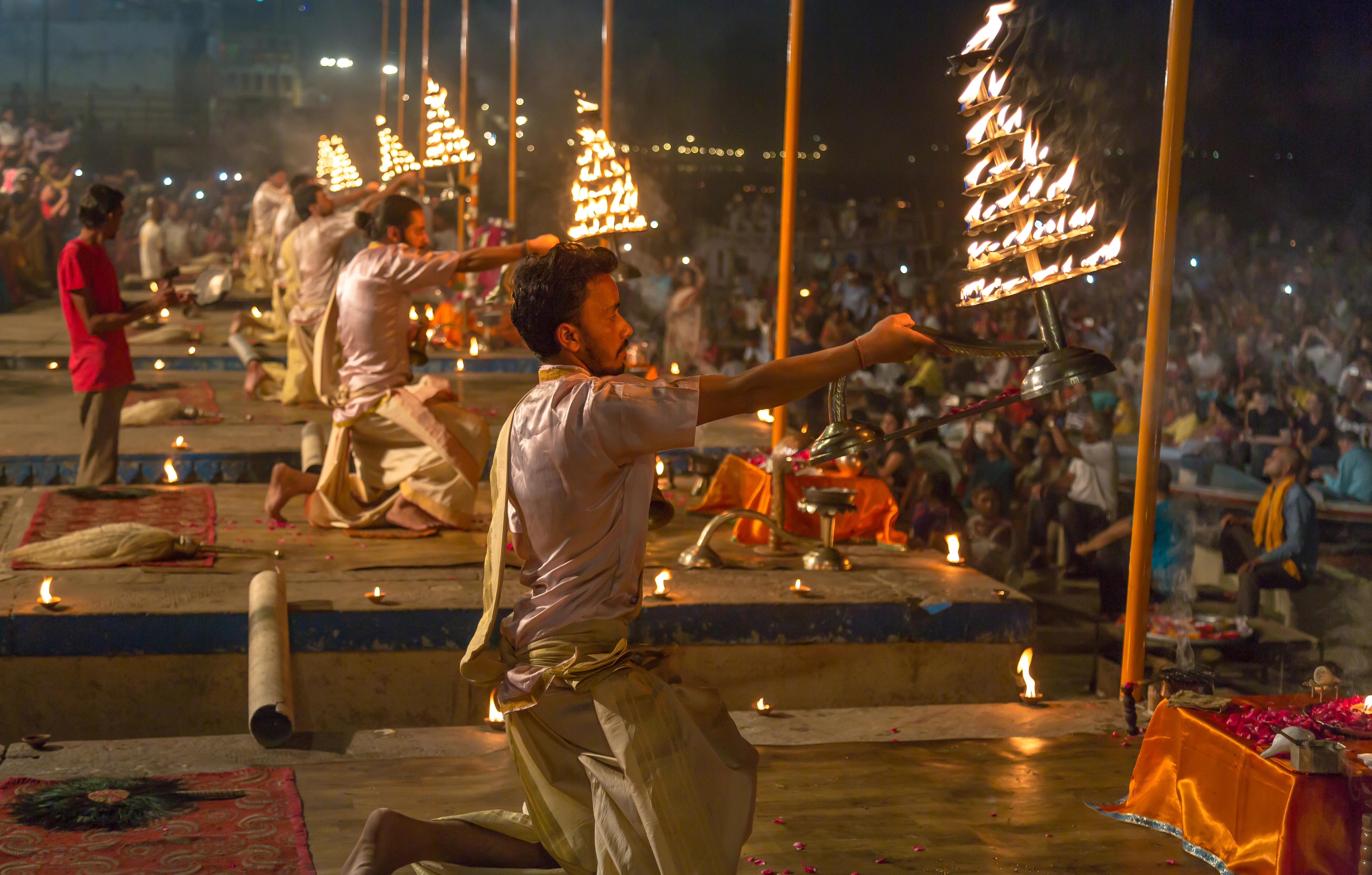
Ganga Aarti, Varanasi
Before dawn, take a boat ride on the River Ganges. As the sun rises over the river, watch pilgrims bathing and praying on the long stretch of ghats, the stone steps that line the riverbank, while temple bells ring across the water. It is one of the most moving sights in India.
After breakfast, tour the city. Walk through the narrow lanes of the old town towards the Kashi Vishwanath Temple and its new corridor, visit the Bharat Mata Temple, with its large relief map of India carved in marble, and the leafy campus of Banaras Hindu University. The afternoon is free, with the car at your disposal. In the evening, return to the river to watch the Ganga Aarti at Dashashwamedh Ghat, a beautiful ceremony of fire, chanting and bells.
Overnight: VaranasiIncludes: guide, car, boat ride, seat for the evening Aarti
Day 5
Varanasi to Khajuraho by flight
Transfer to the airport for your flight to Khajuraho, a peaceful village in Madhya Pradesh famous for its temples. On arrival, you are met and transferred to your hotel. The rest of the day is free to relax.
Overnight: KhajurahoIncludes: airport transfers
Day 6
Khajuraho – the temple town
Photo: lakshmana-temple-khajuraho.jpg
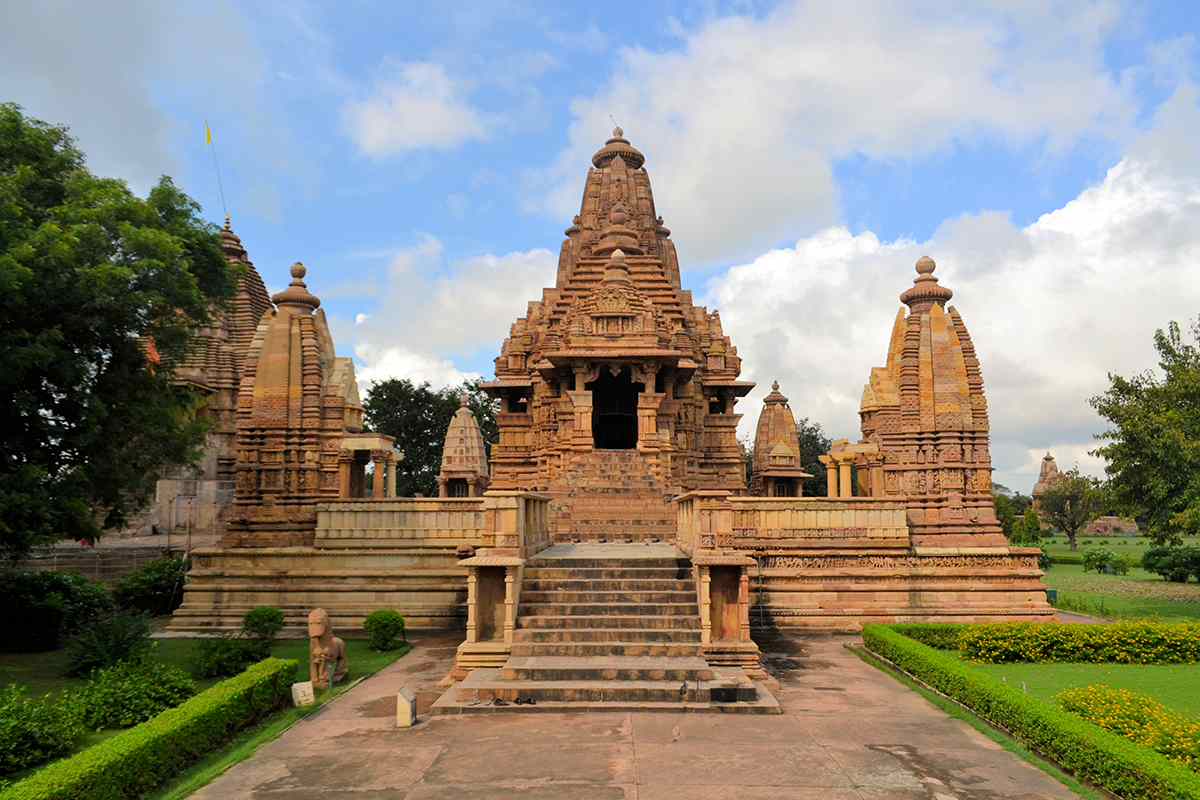
Lakshmana Temple, Khajuraho
Photo: khajuraho-temple-carvings.jpg
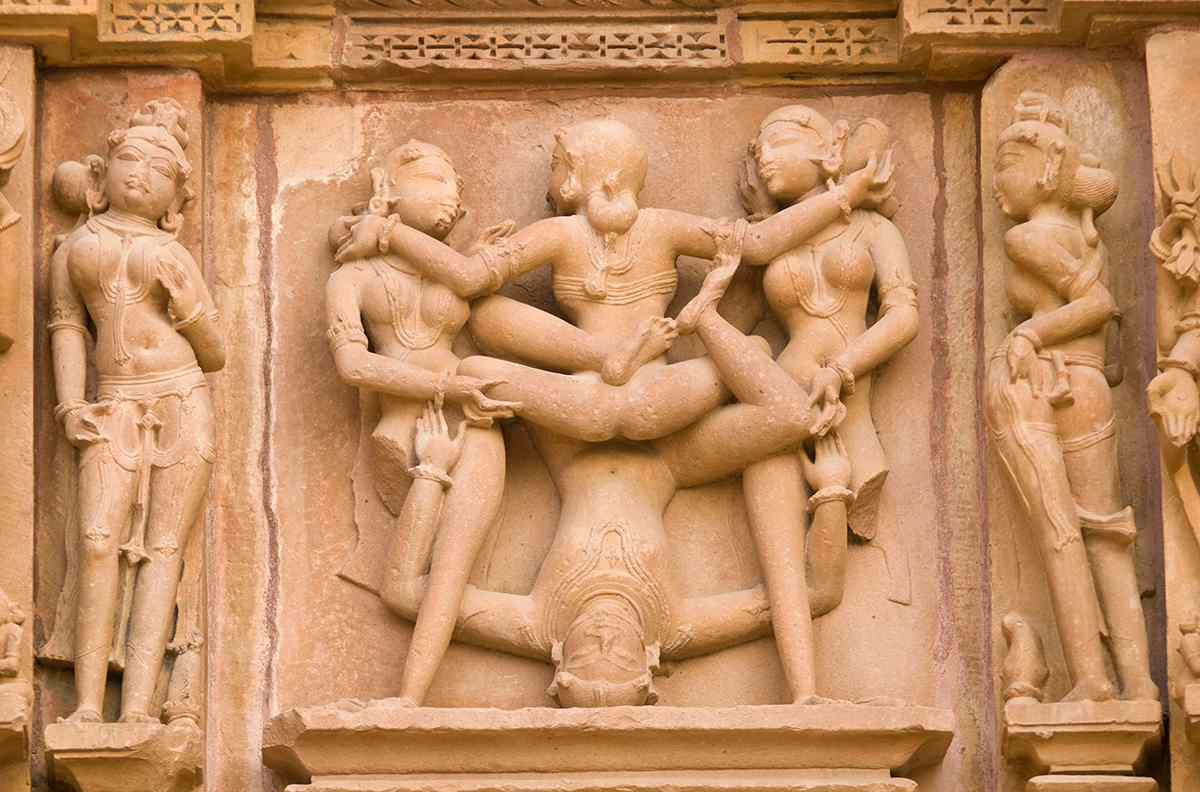
Temple Carvings, Khajuraho
Photo: jain-temples-khajuraho.jpg
Jain Temples, Khajuraho
Built by the Chandela kings between about 950 and 1050 AD, the temples of Khajuraho are a UNESCO World Heritage Site, celebrated for their soaring spires and finely carved sculptures of gods, dancers, musicians and everyday life. In the morning, visit the Western Group, the largest and finest, including the magnificent Kandariya Mahadeva Temple and the Lakshmana Temple. Then see the Eastern Group, with its beautiful Jain temples such as the Parsvanatha Temple.
In the afternoon, walk through the nearby village of Jatkara to see rural life, then visit the Southern Group, with the Duladeo and Chaturbhuj temples.
Overnight: KhajurahoIncludes: guide, car
Day 7
Khajuraho to Agra via Orchha and Jhansi
Photo: jahangir-mahal-orchha.jpg
Jahangir Mahal, Orchha
Photo: orchha-chhatris.jpg
Royal Cenotaphs, Orchha
Vande Bharat Express (22469) · Jhansi 18:25 → Agra Cantt 20:55 · Executive Chair Car · not on Mondays
Drive to Orchha (164 km, about 3 hours 45 minutes), a medieval town of palaces and temples on the banks of the Betwa river, once the capital of the Bundela kings. Explore the grand Jahangir Mahal, built to welcome the Mughal emperor Jahangir, the Raja Mahal with its colourful wall paintings, and the towering Chaturbhuj Temple. See the row of royal cenotaphs along the riverbank.
Later, continue to Jhansi station (18 km, about 45 minutes) for the train to Agra. On arrival, you are met and transferred to your hotel.
Overnight: AgraIncludes: guide in Orchha, car, train tickets
Day 8
Agra – Taj Mahal at sunrise and sunset
Photo: taj-mahal-agra.jpg
Taj Mahal, Agra
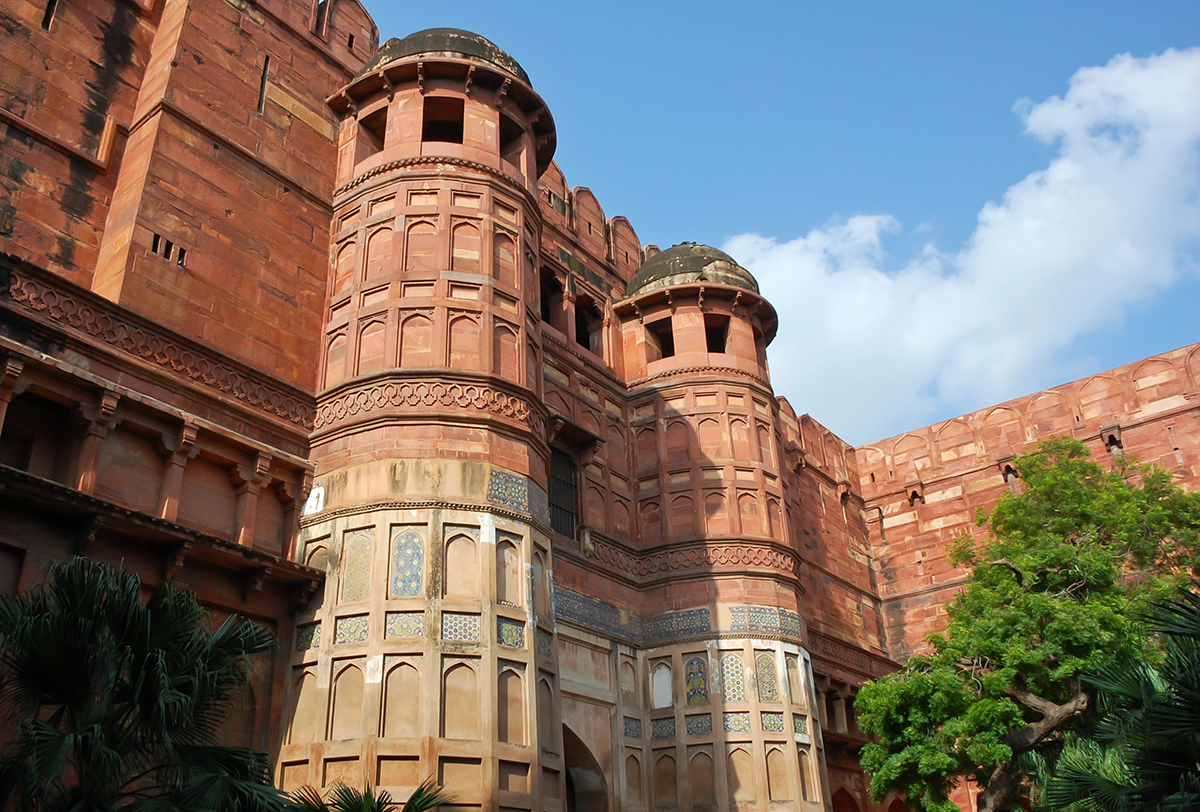
Photo: agra-fort.jpg
Agra Fort, Agra
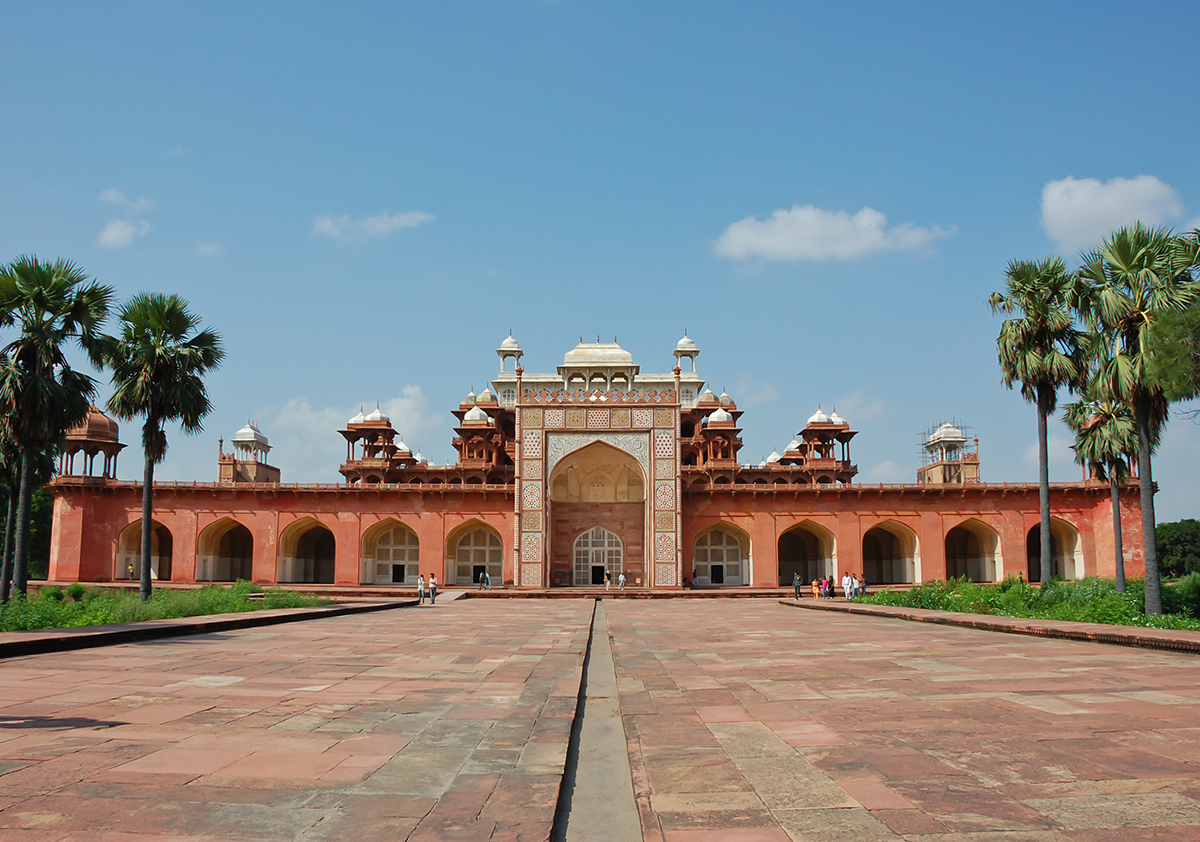
Photo: akbars-tomb-sikandra.jpg
Akbar's Tomb, Sikandra
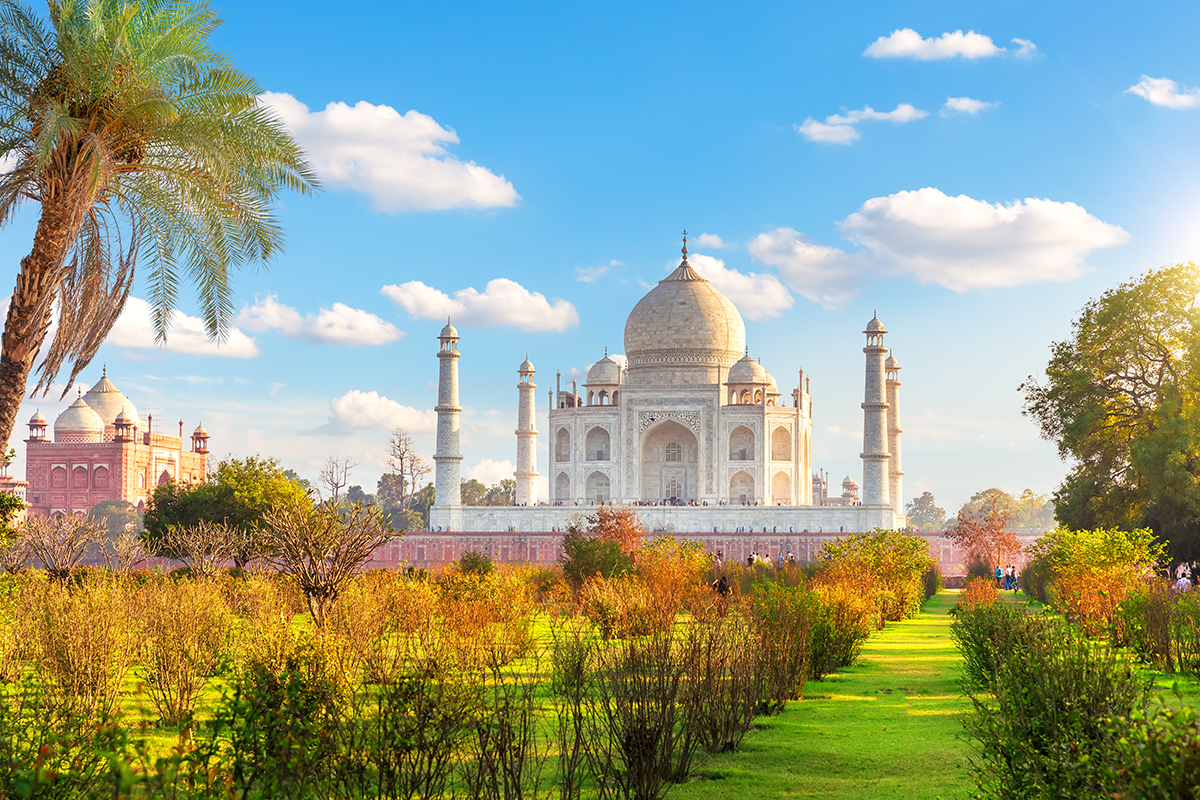
Photo: taj-mahal-mehtab-bagh.jpg
Taj Mahal from Mehtab Bagh, Agra
Rise early for the most magical moment of the tour: the Taj Mahal at sunrise, when the white marble glows soft pink and gold and the gardens are at their quietest. Built by Shah Jahan in memory of his wife Mumtaz Mahal, it took over 20 years and some 20,000 craftsmen to complete. Return to the hotel for breakfast.
Later, visit Agra Fort, the massive red sandstone citadel of the Mughal emperors, and drive to Sikandra to see the tomb of the great emperor Akbar, set in gardens where deer roam freely. In the afternoon, visit the exquisite Tomb of Itimad-ud-Daulah, often called the "Baby Taj", the first Mughal building faced entirely in white marble inlaid with semi-precious stones. As the day ends, cross the Yamuna to Mehtab Bagh, the Moonlight Garden, for a peaceful view of the Taj Mahal at sunset.
Overnight: AgraIncludes: guide, carPlease note: the Taj Mahal is closed on Fridays
Day 9
Agra to Jaipur via Fatehpur Sikri and Abhaneri
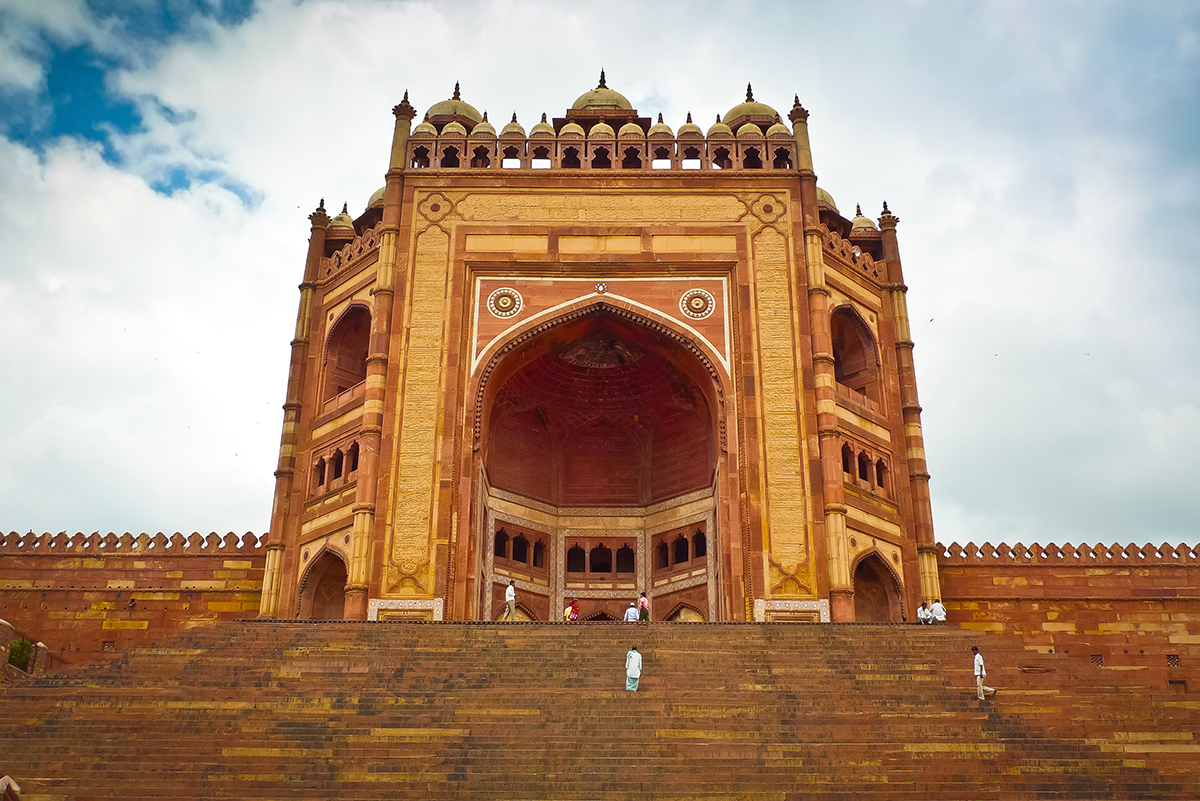
Photo: fatehpur-sikri.jpg
Fatehpur Sikri, Agra
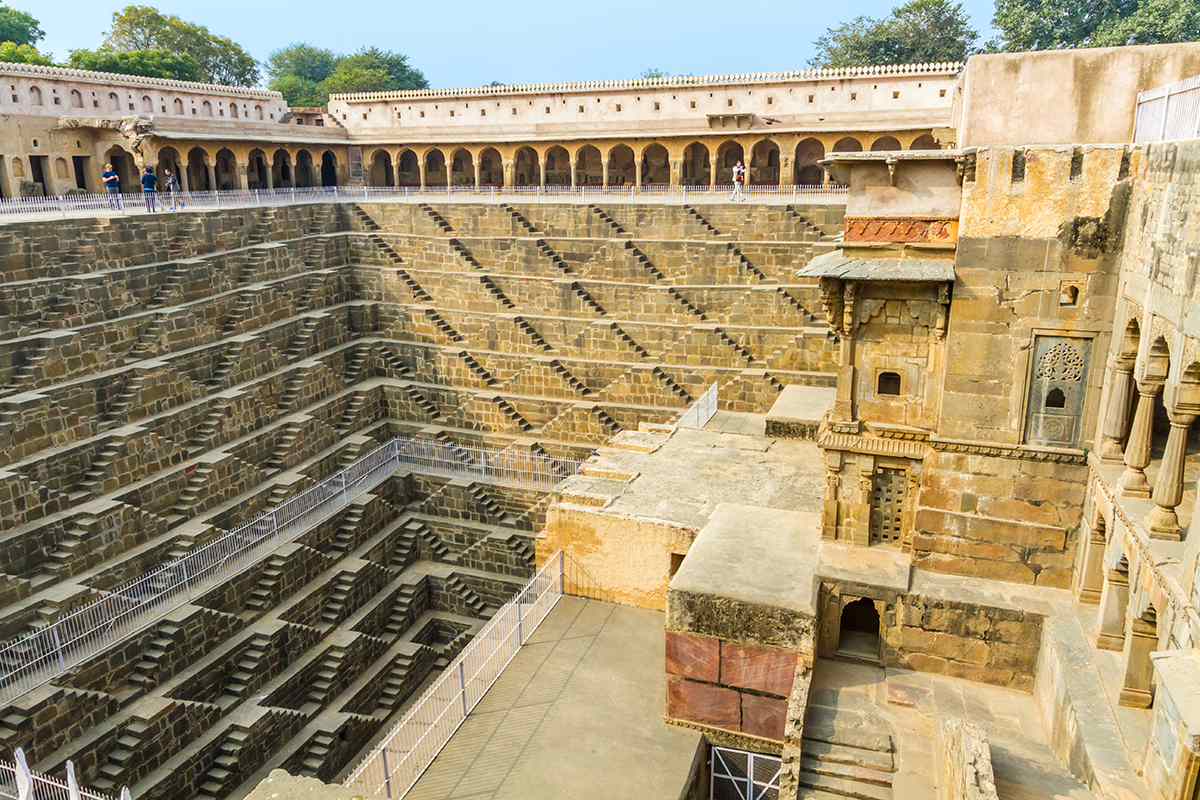
Photo: chand-baori-abhaneri.jpg
Chand Baori Stepwell, Abhaneri
Drive west to Fatehpur Sikri, the red sandstone city built by Akbar as his capital in the 16th century and abandoned only a few years later. Its palaces, courtyards and the great Jama Masjid with the white marble tomb of Sufi saint Salim Chishti remain beautifully preserved.
Continue to the village of Abhaneri to see Chand Baori, one of the deepest and most striking stepwells in India, with thousands of steps descending 13 storeys in perfect symmetry, and the nearby Harshat Mata Temple. Arrive in Jaipur in the late afternoon and check in. The evening is free, with the car at your disposal.
Overnight: JaipurDrive: about 240 km
Day 10
Jaipur – Amber Fort and the Pink City
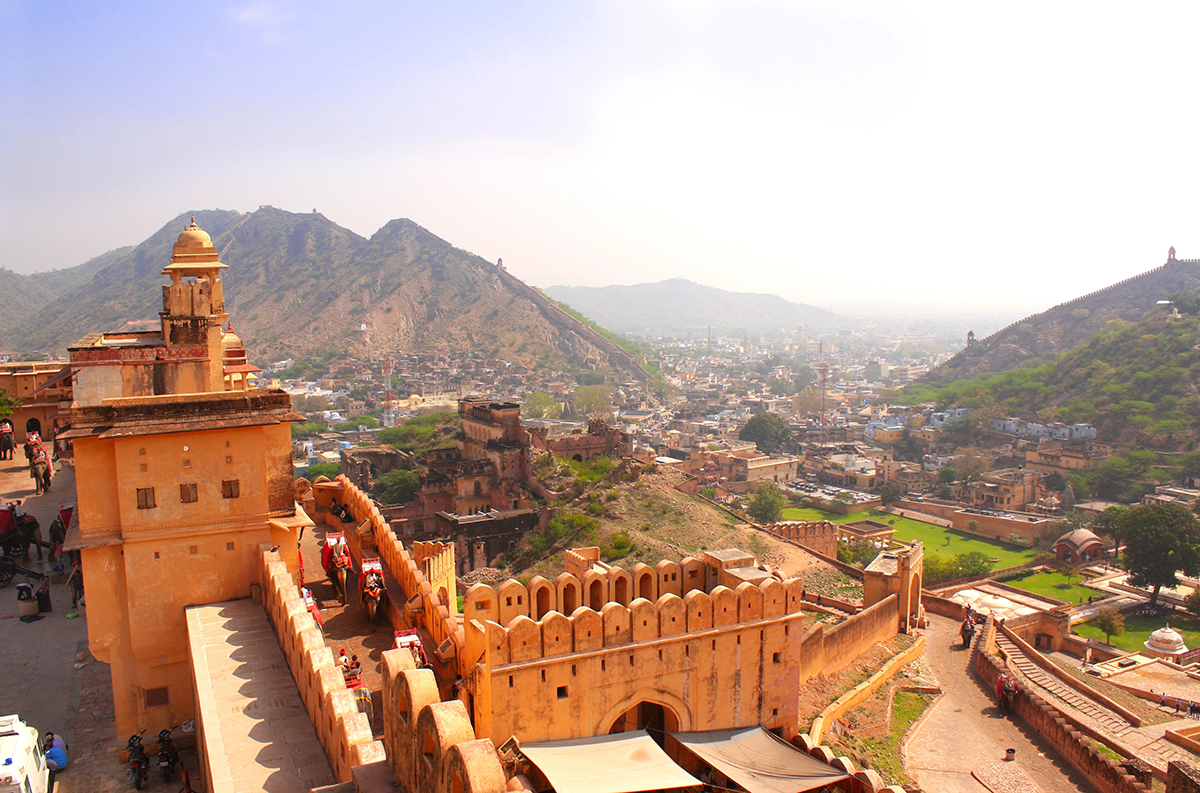
Photo: amber-fort-jaipur.jpg
Amber Fort, Jaipur
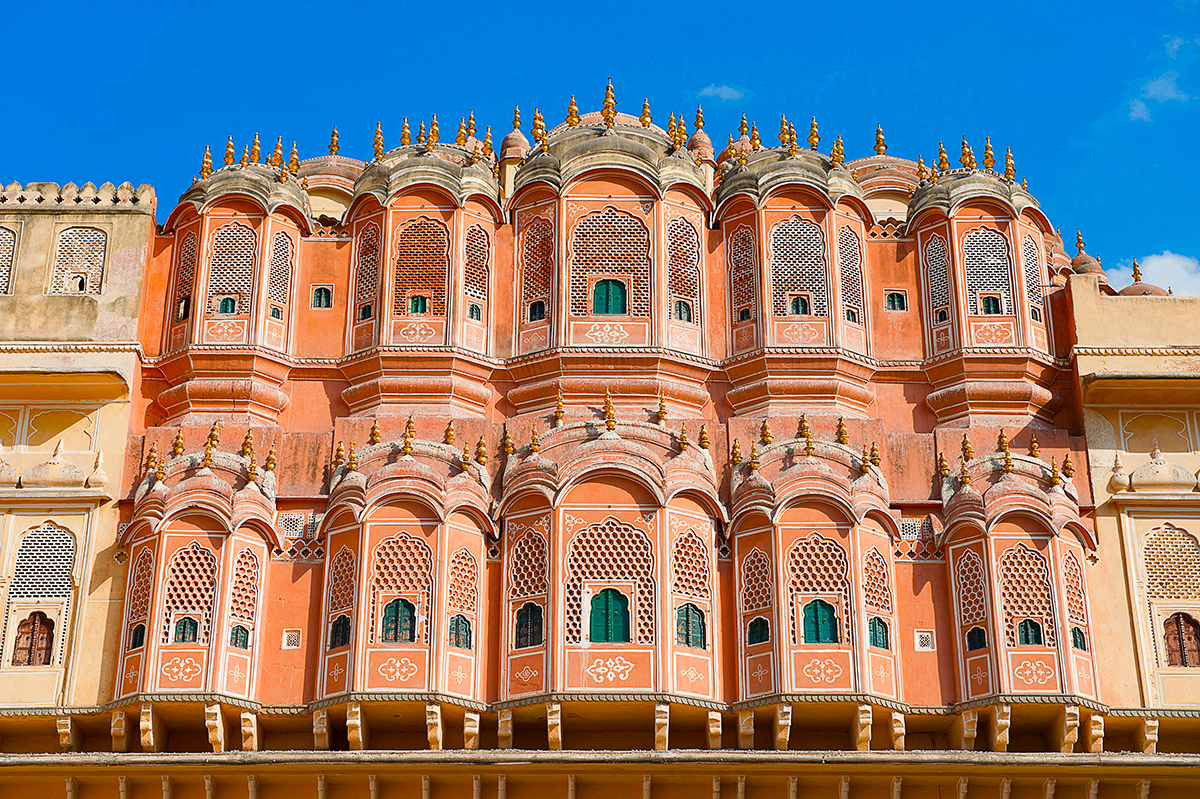
Photo: hawa-mahal-jaipur.jpg
Hawa Mahal, Jaipur
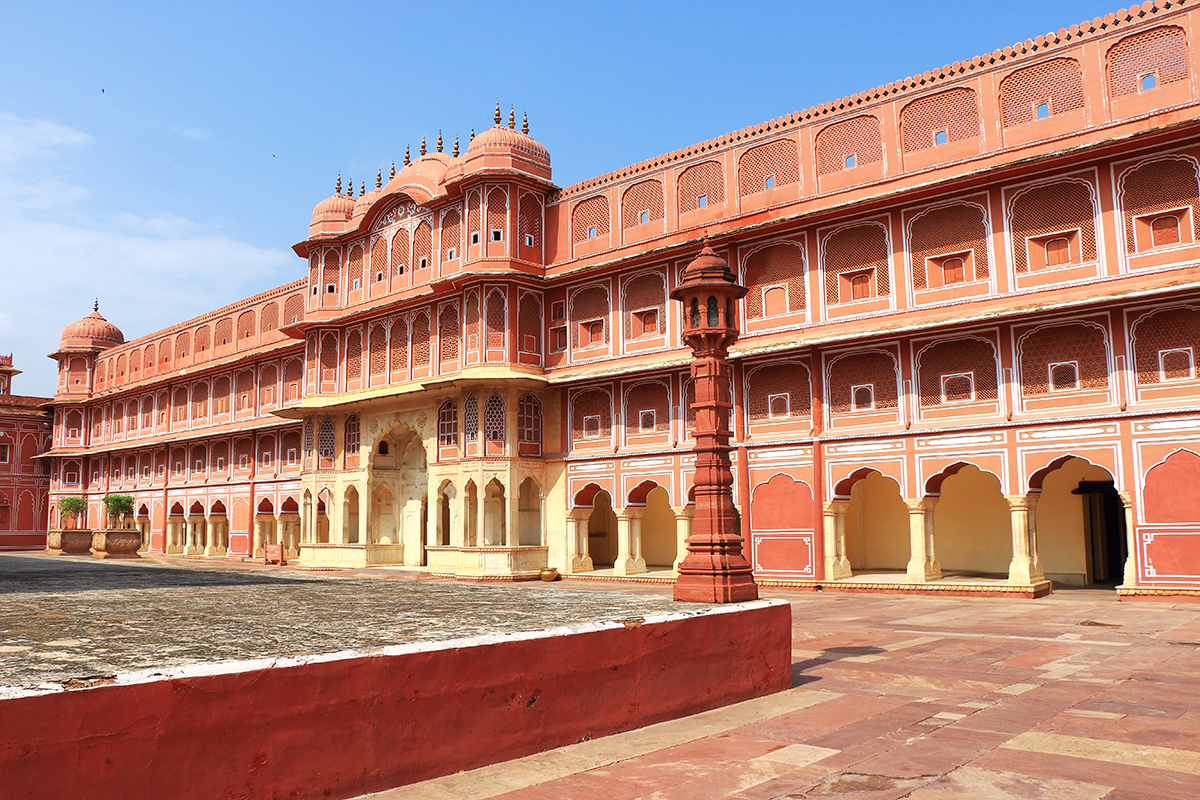
Photo: city-palace-jaipur.jpg
City Palace, Jaipur
In the morning, drive out to Amber Fort, the hilltop palace-fortress of the Kachhwaha Rajput kings, and ride up to its gates by jeep. Inside, wander through courtyards, gateways and the dazzling Sheesh Mahal, the Hall of Mirrors. On the way back, stop to photograph the Jal Mahal water palace.
In the afternoon, tour the Pink City. Visit the City Palace, still home to the royal family, and Jantar Mantar, the 18th-century astronomical observatory and a UNESCO World Heritage Site, then stop for photos of the honeycombed façade of the Hawa Mahal, the Palace of the Winds. In the evening, join a guided walk through Jaipur's bazaars, tasting local food and meeting the craftsmen behind its famous jewellery, textiles and block prints.
Overnight: JaipurIncludes: guide, car, jeep at Amber Fort, evening walk
Day 11
Jaipur to Udaipur by train
JP UDZ Superfast (20993) · Jaipur Jn 06:10 → Udaipur City 13:30 · AC Chair Car · runs daily
Early in the morning, transfer to Jaipur station for the train to Udaipur. The journey runs south through the heart of Rajasthan, past villages, fields and the Aravalli hills. On arrival in the early afternoon, you are met and transferred to your hotel. The rest of the day is free, with the car at your disposal.
Overnight: UdaipurIncludes: station transfers, train tickets
Day 12
Udaipur – the City of Lakes
Photo: udaipur-city-palace.jpg
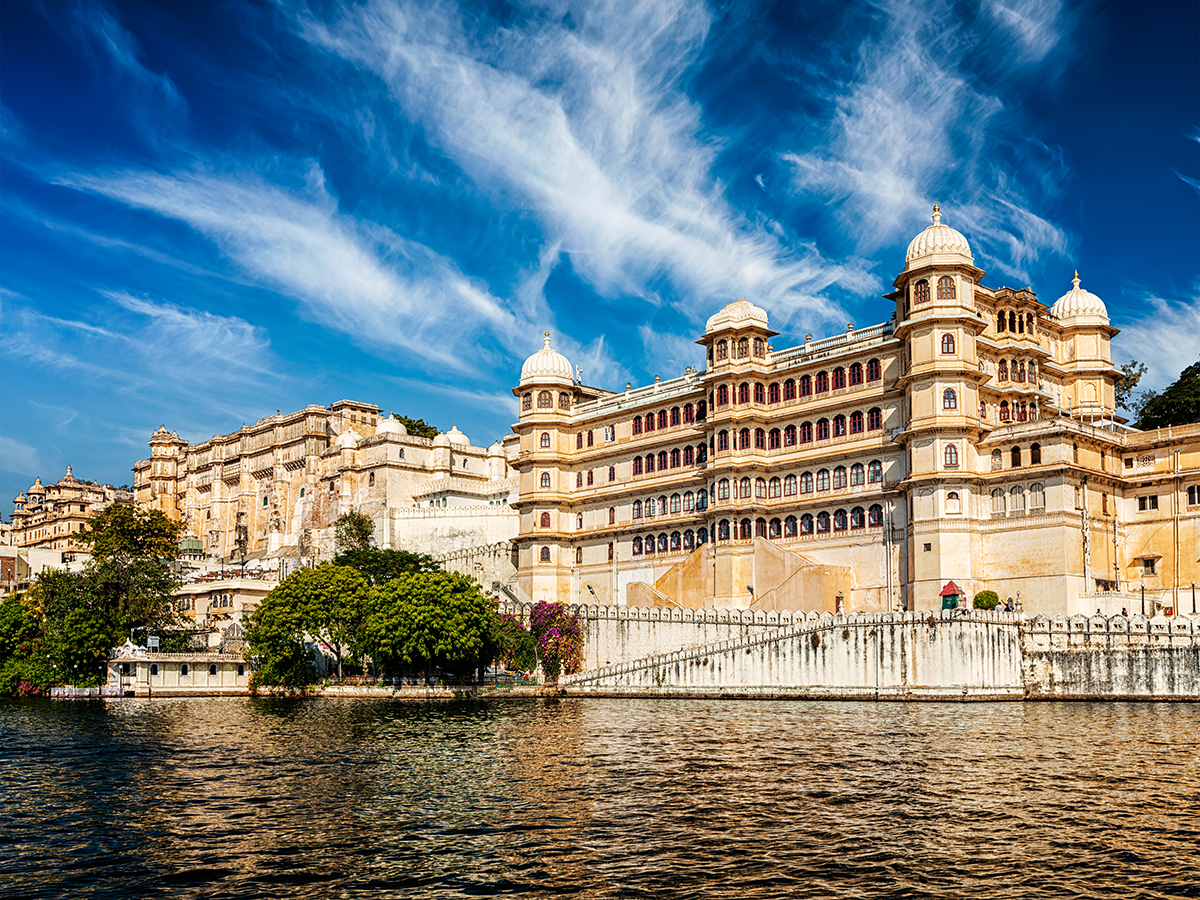
City Palace, Udaipur
Photo: lake-pichola-udaipur.jpg
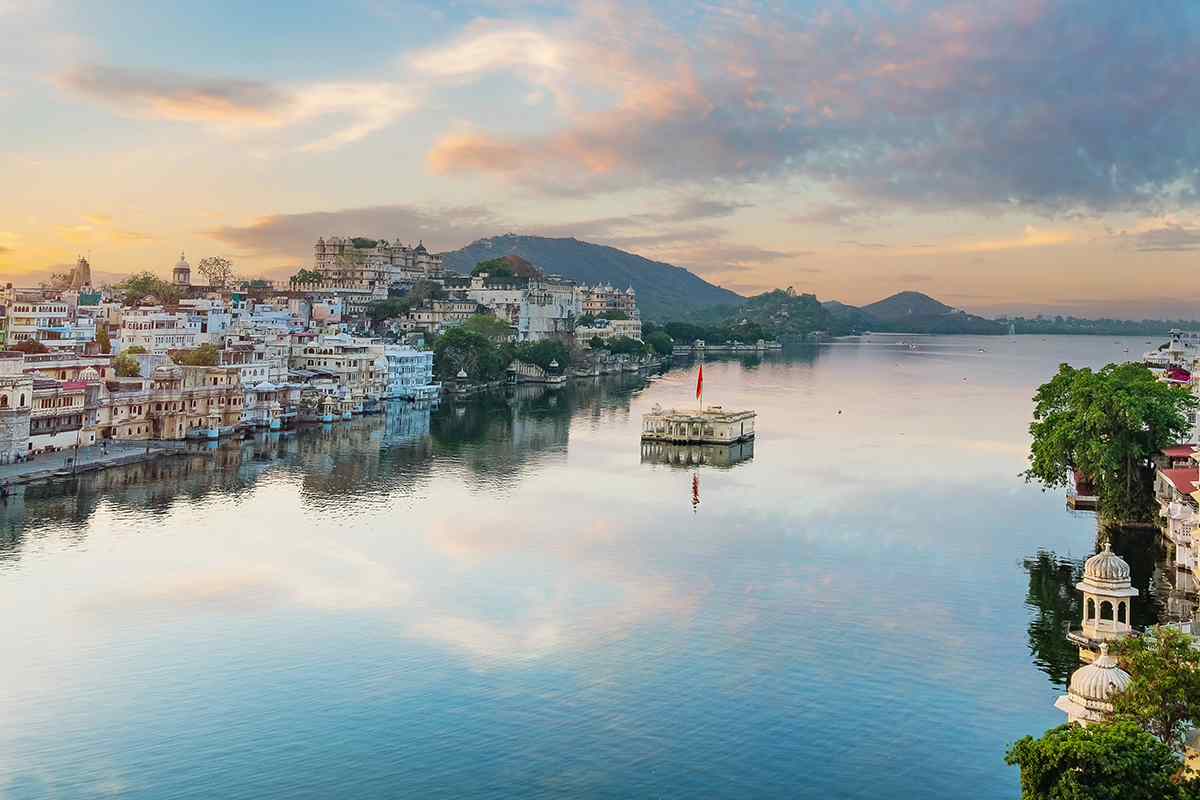
Lake Pichola, Udaipur
Photo: folk-dance-udaipur.jpg
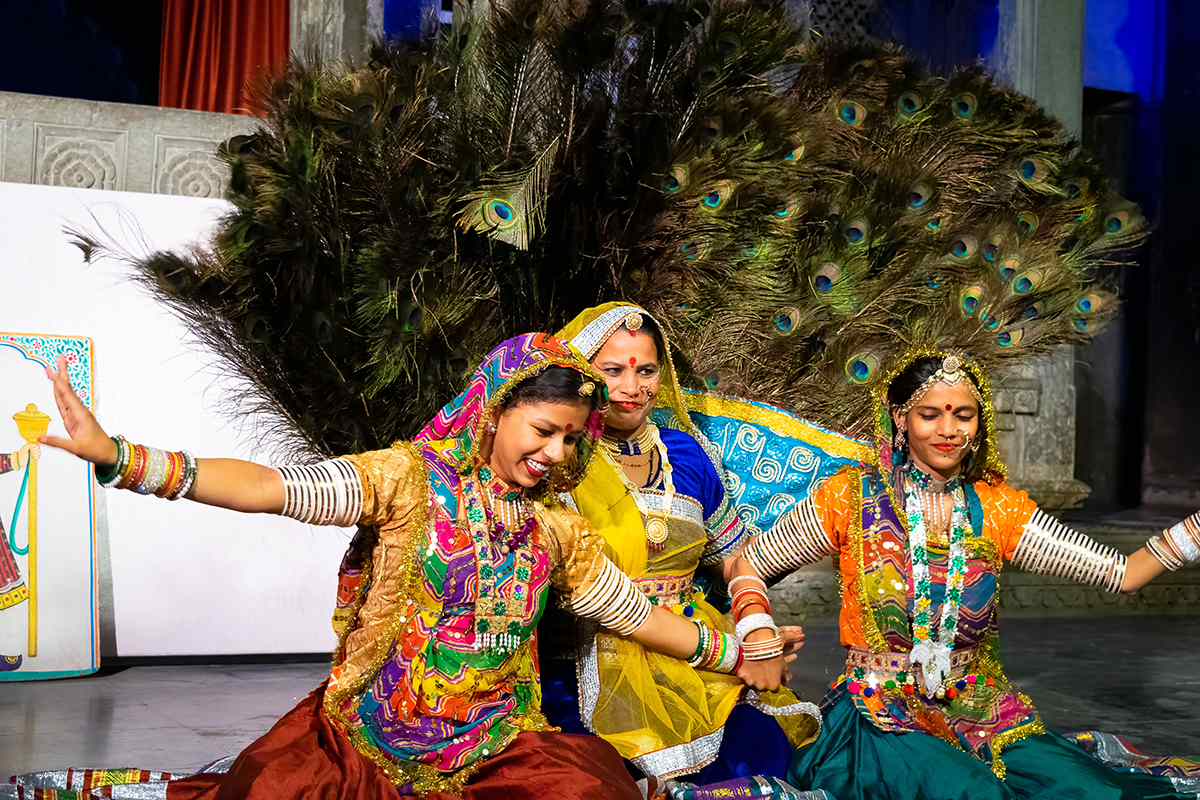
Folk Dance Show, Udaipur
Spend the morning discovering Udaipur, founded by Maharana Udai Singh II in the 16th century. Visit the vast City Palace, a complex of courtyards, balconies and towers overlooking the lake, and the Jagdish Temple with its finely carved stonework. Stroll through Saheliyon-ki-Bari, the Garden of the Maidens, with its fountains, lotus pools and marble elephants.
In the late afternoon, enjoy a boat ride on Lake Pichola, gliding past bathing ghats, the white Lake Palace and the island palace of Jag Mandir as the city glows in the setting sun. In the evening, watch a lively folk dance show with traditional Rajasthani music, dance and puppetry.
Overnight: UdaipurIncludes: guide, car, boat ride, show tickets
Day 13
Udaipur to Mumbai by flight
Transfer to Udaipur airport for your flight to Mumbai. On arrival, you are met and transferred to your hotel. The rest of the day is free to relax.
Mumbai is the commercial capital of India, a fast-paced, cosmopolitan city on the shores of the Arabian Sea.
Overnight: MumbaiIncludes: airport transfers
Day 14
Mumbai – Elephanta Caves and city tour
Photo: gateway-of-india-mumbai.jpg
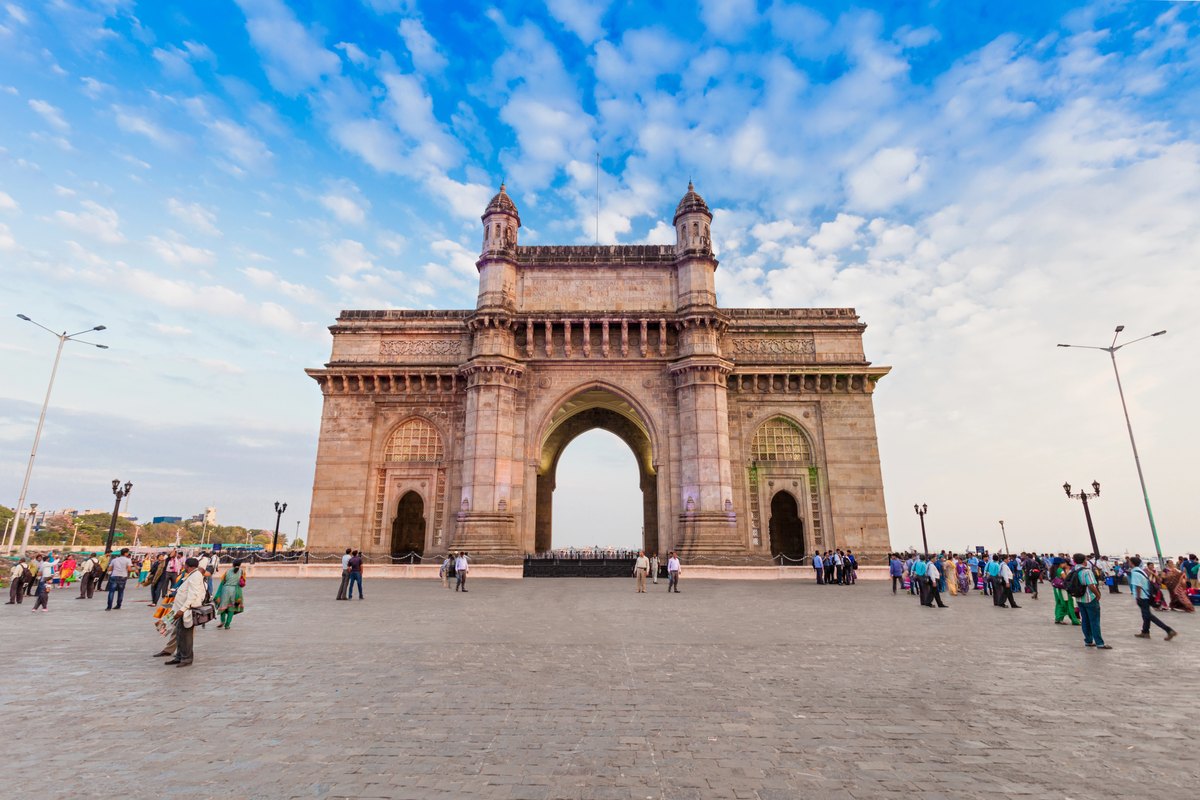
Gateway of India, Mumbai
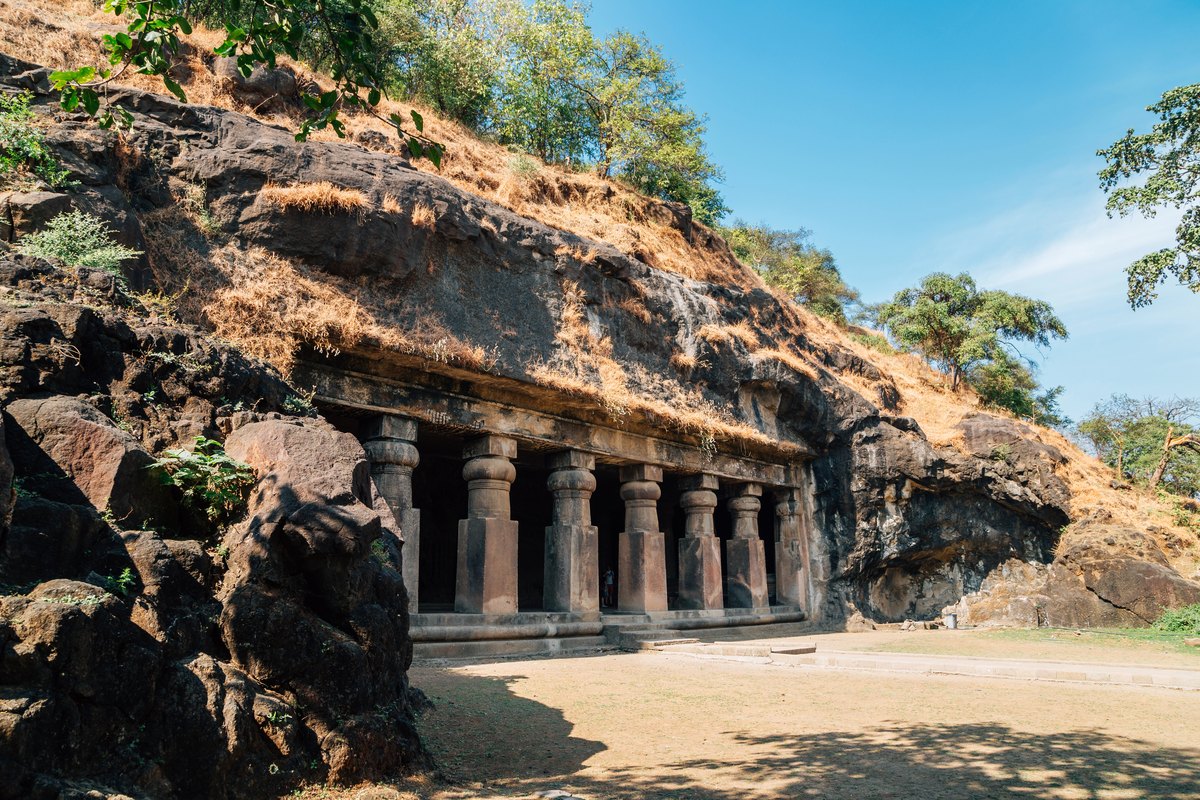
Photo: elephanta-caves-mumbai.jpg
Elephanta Caves, Mumbai
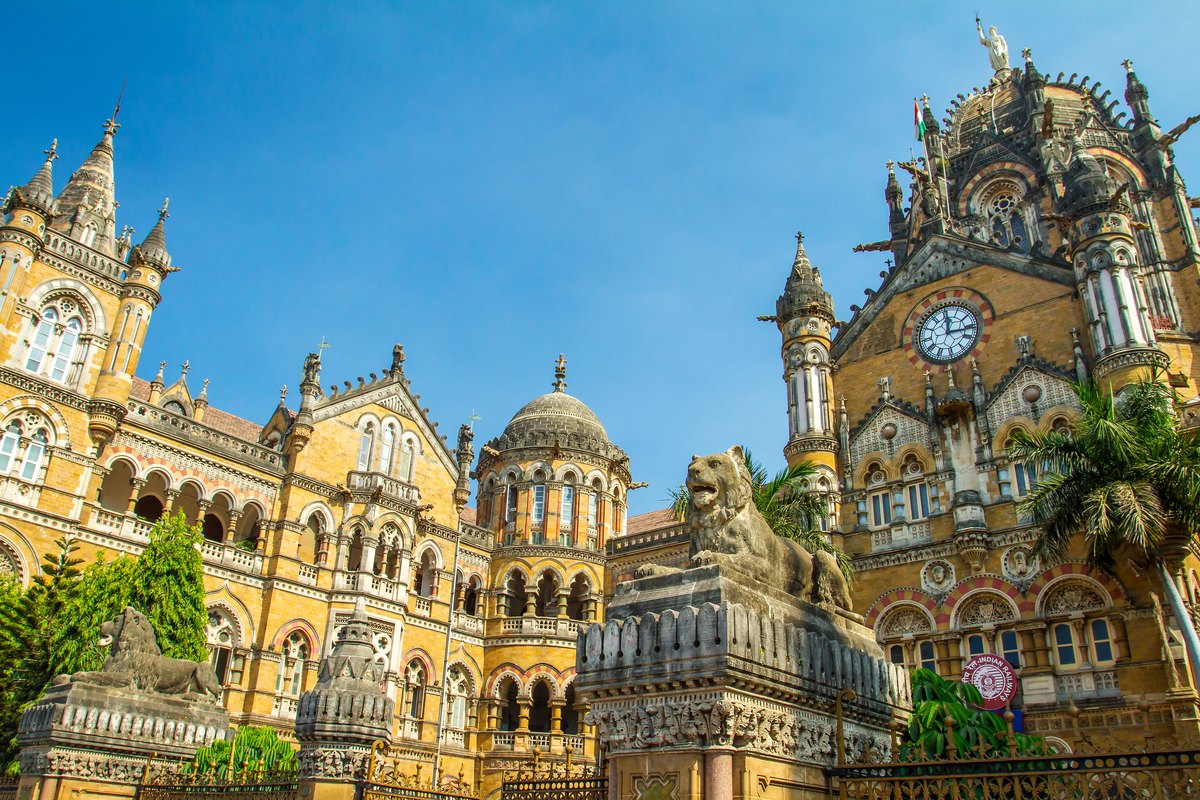
Photo: chhatrapati-shivaji-terminus-mumbai.jpg
Chhatrapati Shivaji Terminus, Mumbai
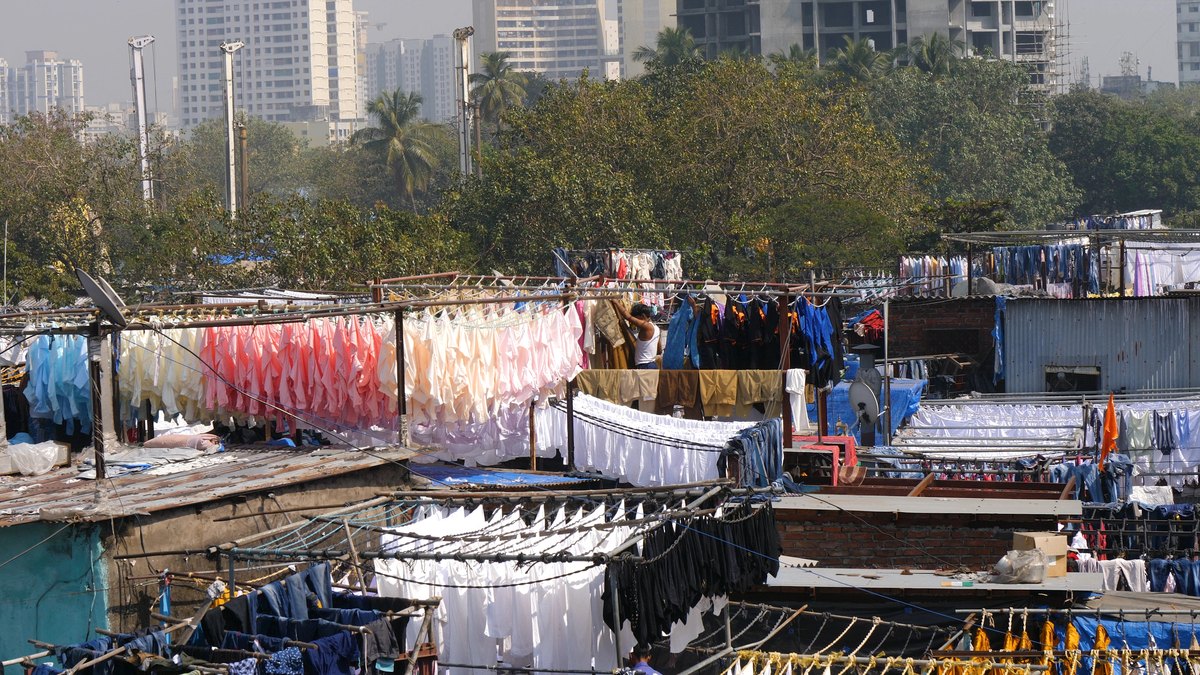
Photo: dhobi-ghat-mumbai.jpg
Dhobi Ghat, Mumbai
Visit the Gateway of India, built to commemorate the visit of King George V and Queen Mary to India in 1911.
Later, visit the Elephanta Caves (about 4 hours), on an island about an hour by boat from the Gateway of India. The temple cave on Elephanta Island, dedicated to Lord Shiva, was probably excavated during the 8th century. A climb of about 125 sloping steps leads to the main entrance. The main hall has pillars in a cruciform pattern, and its wall panels depict Shiva in many forms – as Bhairava, Nataraja, Yogi and Ardhanarisvara, the magnificent triple-headed Shiva, and the marriage of Shiva and Parvati.
In the afternoon, set out on a city tour (3–4 hours). Drive past the High Court, Mumbai University and the Rajabai Clock Tower. Visit the Prince of Wales Museum (Chhatrapati Shivaji Maharaj Vastu Sangrahalaya), which houses a priceless collection of art, sculpture, china and other antiques. Make a photo stop at Victoria Terminus (Chhatrapati Shivaji Terminus), and if traffic permits, a short visit to Crawford Market, designed by British architect William Emerson as an early blend of Victorian Gothic architecture with Indian elements. Drive along Marine Drive, past Chowpatty Beach and Malabar Hill, and visit Mani Bhavan, the old Mumbai home of Mahatma Gandhi, which showcases well-preserved memorabilia, including the charkha (spinning wheel) he used. End with a photo stop at Dhobi Ghat, the city’s vast open-air laundry.
Overnight: MumbaiIncludes: guide, ferry to Elephanta, entrance feesPlease note: the Elephanta Caves are closed on Mondays
Day 15
Mumbai to Kochi by flight – Fort Kochi, Mattancherry and Kathakali
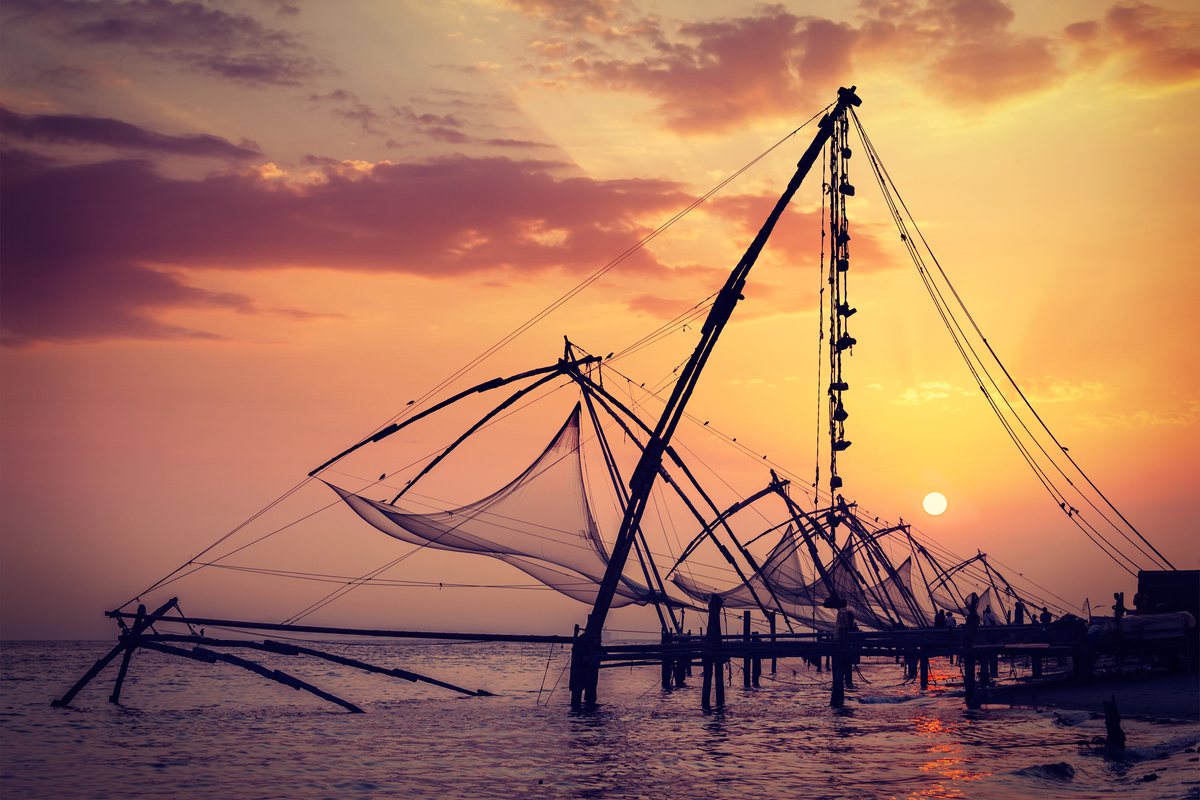
Photo: chinese-fishing-nets-kochi.jpg
Chinese Fishing Nets, Kochi
Photo: paradesi-synagogue-kochi.jpg
Paradesi Synagogue, Kochi
Photo: mattancherry-palace-mural-kochi.jpg
Mural, Mattancherry Palace, Kochi
Photo: kathakali-kochi.jpg
Kathakali Dance, Kochi
Transfer to Mumbai airport for your flight to Kochi. On arrival, you are met and transferred to your hotel. Known in colonial days as Cochin and often called the Gateway to Kerala, this vibrant port city has preserved a remarkable wealth of old Portuguese, Dutch and British architecture in its twin districts of Fort Kochi and Mattancherry.
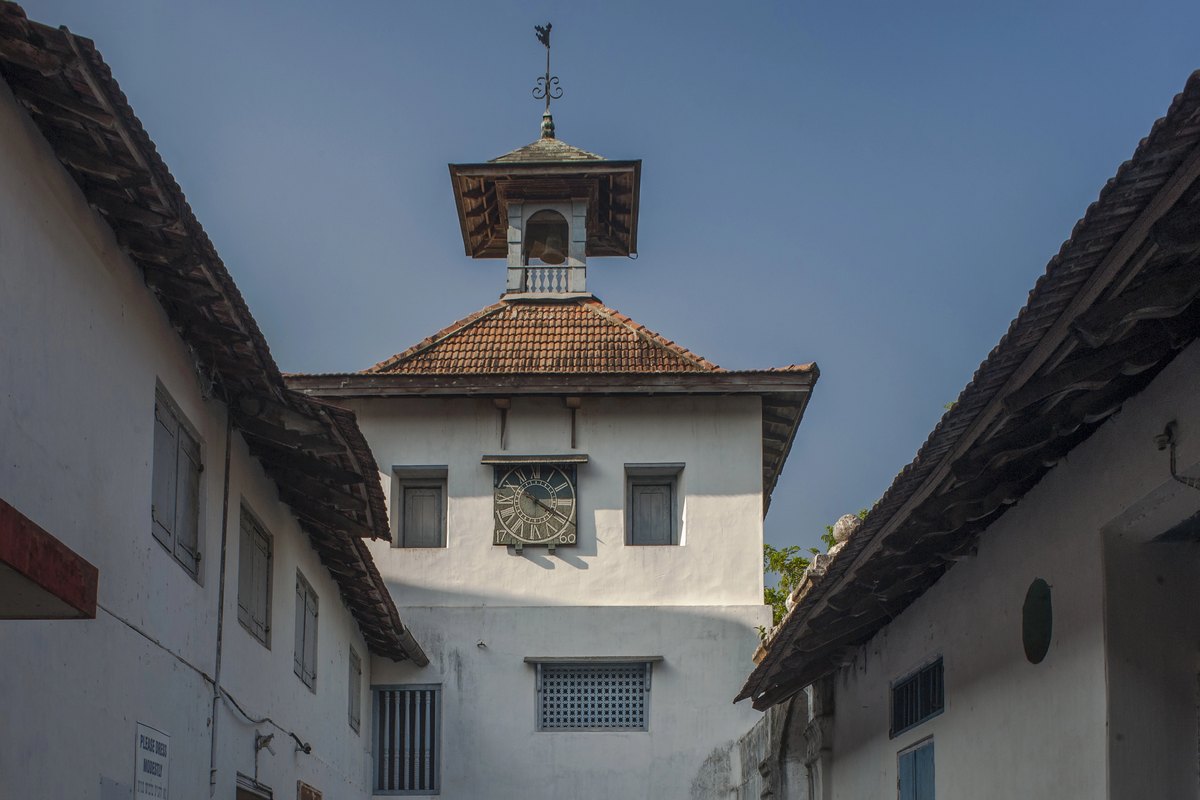
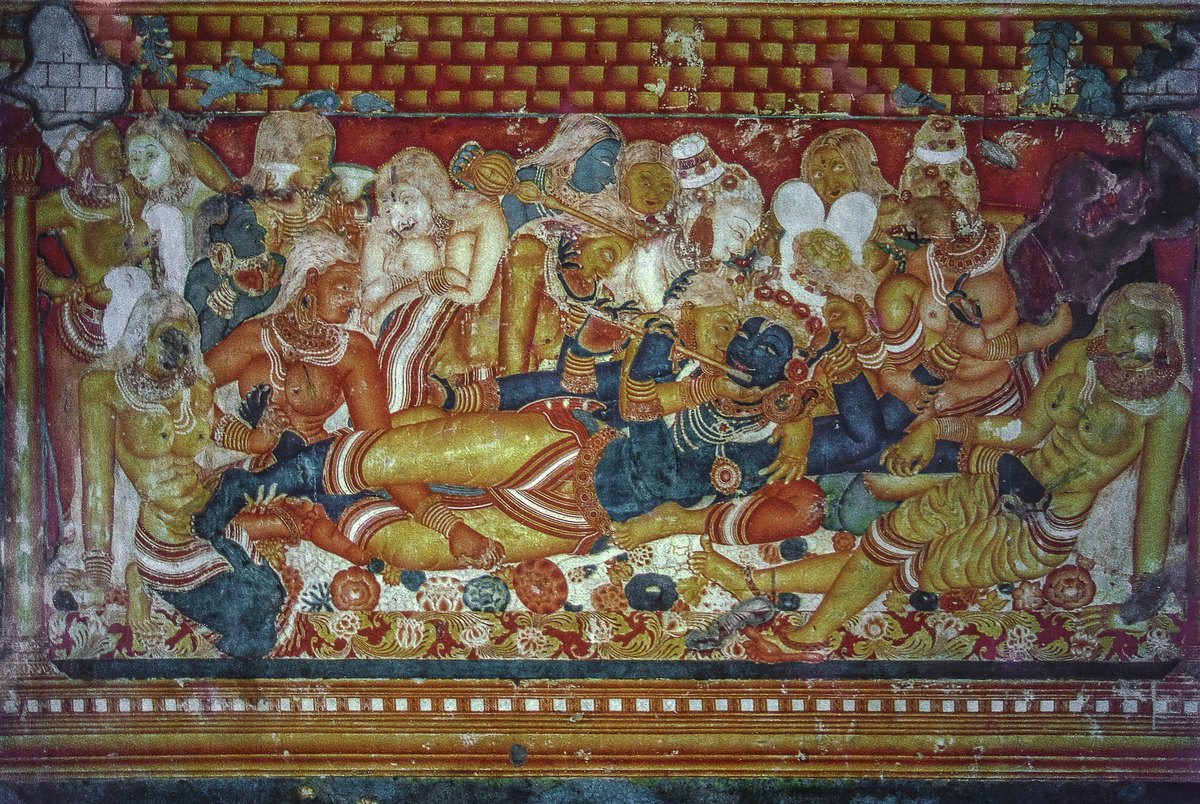
In the afternoon, enjoy a guided tour of Fort Kochi: walk to the Church of St Francis, the oldest European-built church in India, and see the old Dutch Cemetery. In Mattancherry, visit the historic Jewish Synagogue in the Jewish Quarter, built over 400 years ago and beautifully decorated inside, and the Mattancherry Palace (Dutch Palace), built in 1555, with its fine murals of scenes from the Hindu epics. Finish with the famous Chinese Fishing Nets, strung out along the tip of the peninsula, at their most beautiful at sunset.
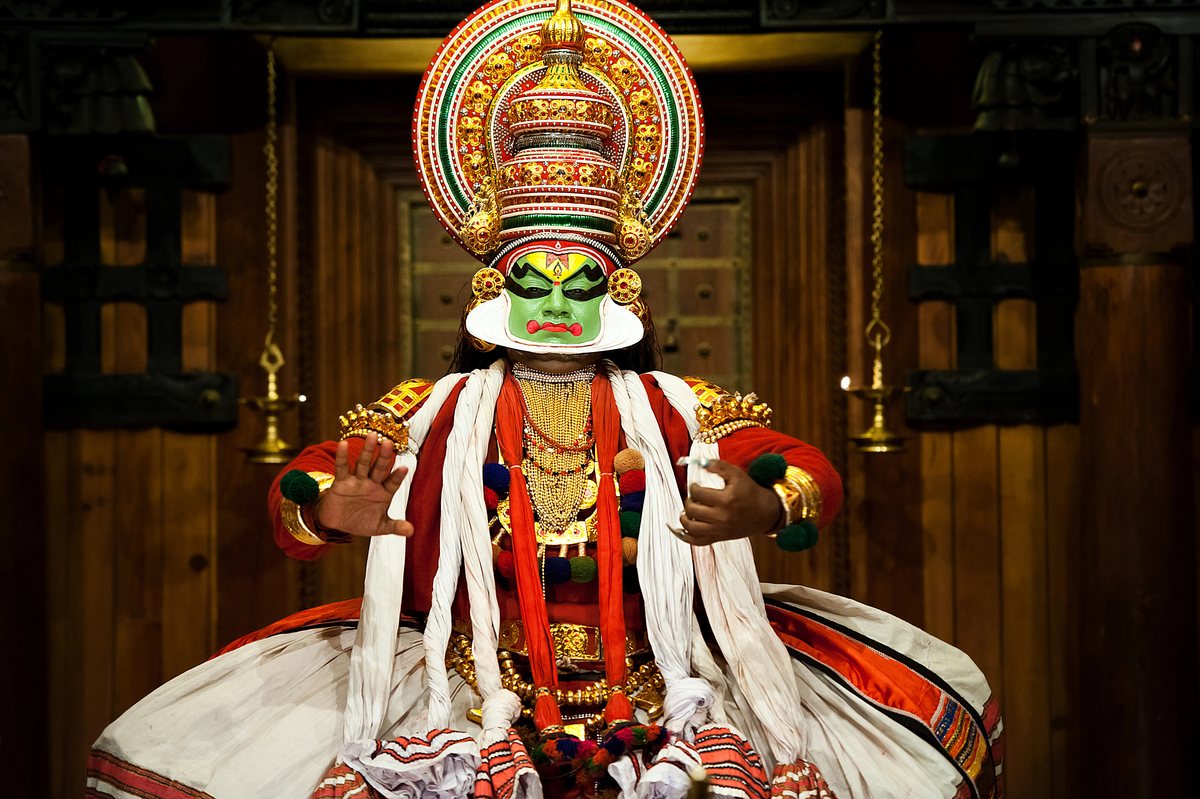
In the evening, watch a Kathakali performance, the most celebrated dance drama of Kerala. Dating back to the seventeenth century, it takes its stories from the Ramayana and the Mahabharata. A traditional performance began at dusk and went on through the night, ending at the auspicious hour of dawn when good finally triumphs over evil; today's shows are much shorter. The striking costumes and make-up, and the intricate gestures and expressions of the dancers, make it unforgettable.
Overnight: KochiIncludes: airport transfers, guide in Kochi, entrance fees, Kathakali performancePlease note: the Synagogue is closed on Fridays and Saturdays, and Mattancherry Palace on Fridays
Day 16
Kochi to Kumarakom
Photo: kumarakom-backwaters.jpg
Backwaters, Kumarakom
After breakfast, drive to Kumarakom (about 65 km, 2 hours) and check in to your backwater resort. The rest of the day is free to relax.
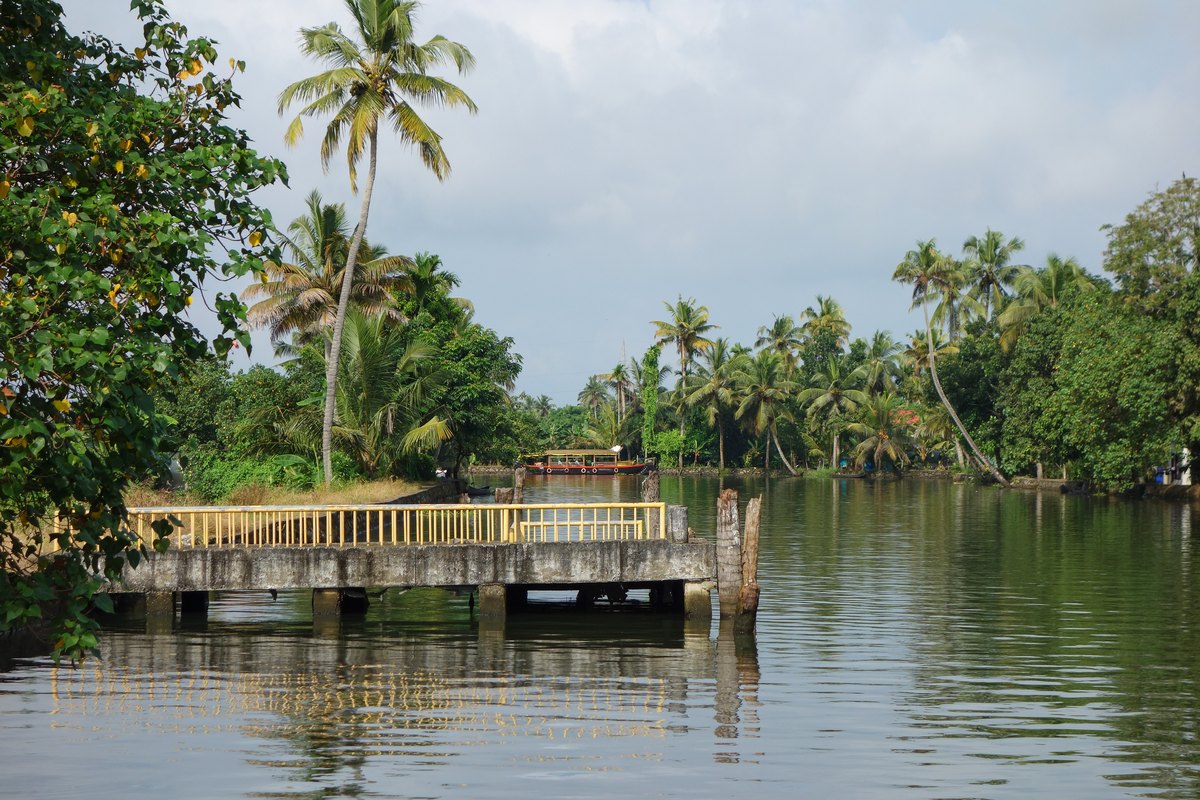
Kumarakom lies on the banks of the vast Vembanad Lake, whose canals, streams and waterways weave an intricate web through the countryside. This peaceful paradise of mangroves, emerald paddy fields and coconut groves, with canals adorned with white water lilies, is wonderful for boating, birdwatching and simply unwinding by the water.
Overnight: KumarakomDrive: about 65 km
Day 17
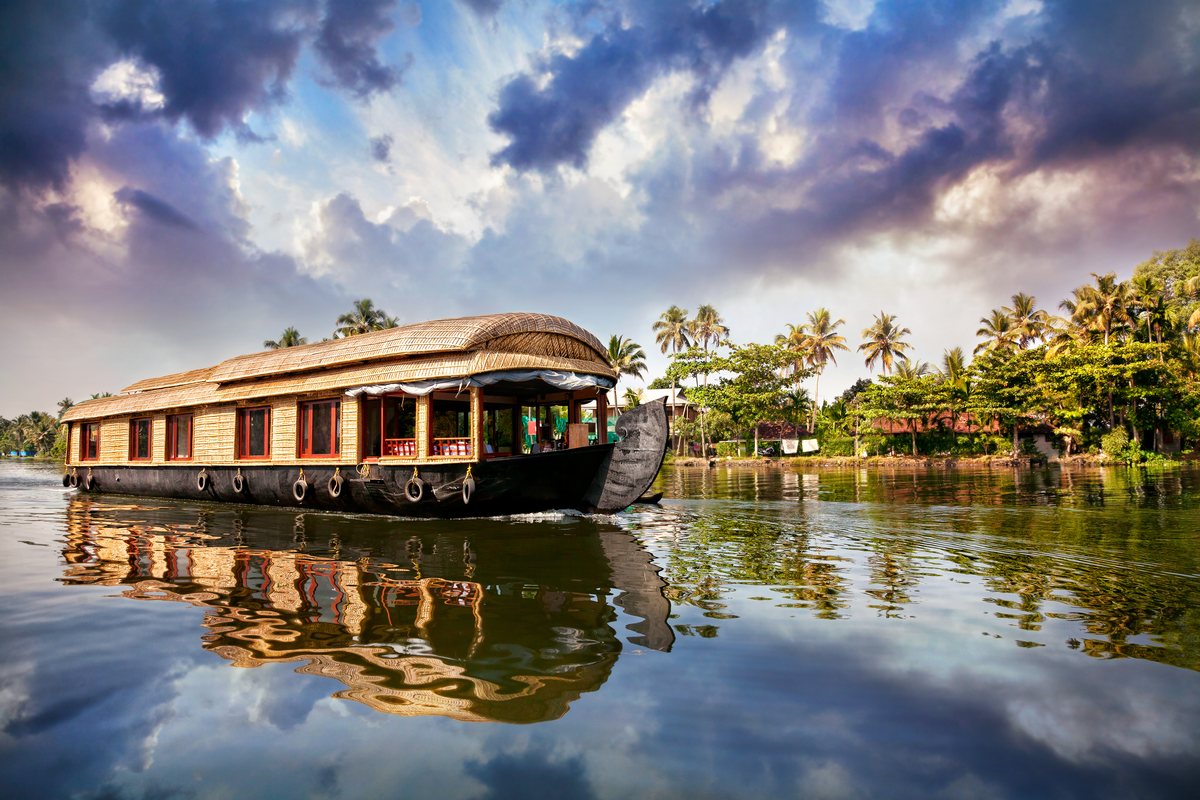
Alleppey houseboat day cruise
Photo: houseboat-alleppey.jpg
Houseboat, Alleppey
After breakfast, drive to the jetty at Alleppey (about 35 km, 1 hour) to board a traditional kettuvallam (houseboat) for a day cruise on the backwaters back to Kumarakom, with lunch, tea and snacks served on board.
Alleppey, the ‘Venice of the East’, has a large network of canals winding through the town and its villages, and is famous for the Snake Boat Race held every August. Glide along palm-fringed canals past vast paddy fields and tiny hamlets, with flocks of ducks along the banks and fishing eagles and kingfishers overhead. You share the water with country boats carrying people from every walk of rural Kerala life, from the milkman and the newspaper boy to priests and wedding parties. The houseboat drops you back at your resort in Kumarakom.
Overnight: KumarakomIncludes: houseboat day cruise with lunch, tea and snacks
Day 18
Kumarakom to Thekkady – spice plantation and Kalaripayattu
Photo: cardamom-plantation-thekkady.jpg
Cardamom Plantation, Thekkady
Photo: kalaripayattu-thekkady.jpg
Kalaripayattu, Thekkady
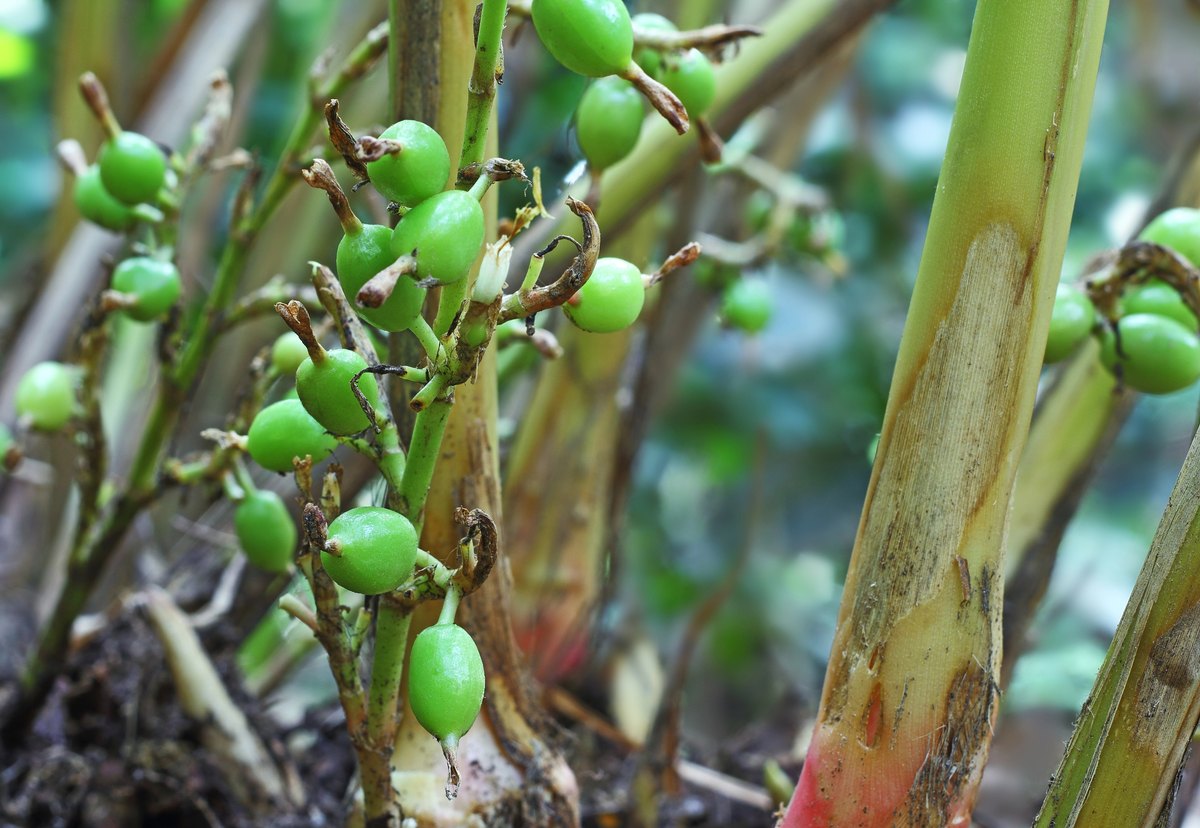
After breakfast, drive east into the hills of the Western Ghats to Thekkady (about 130 km, 4 hours), through rubber, tea and cardamom plantations. Check in to your hotel.
In the afternoon, visit a spice plantation for an introduction to the fascinating range of spices, coffee, cocoa and fruits grown organically on a local estate. Spices grown around Thekkady include pepper, clove, cardamom, nutmeg, ginger, turmeric, vanilla and curry leaves.
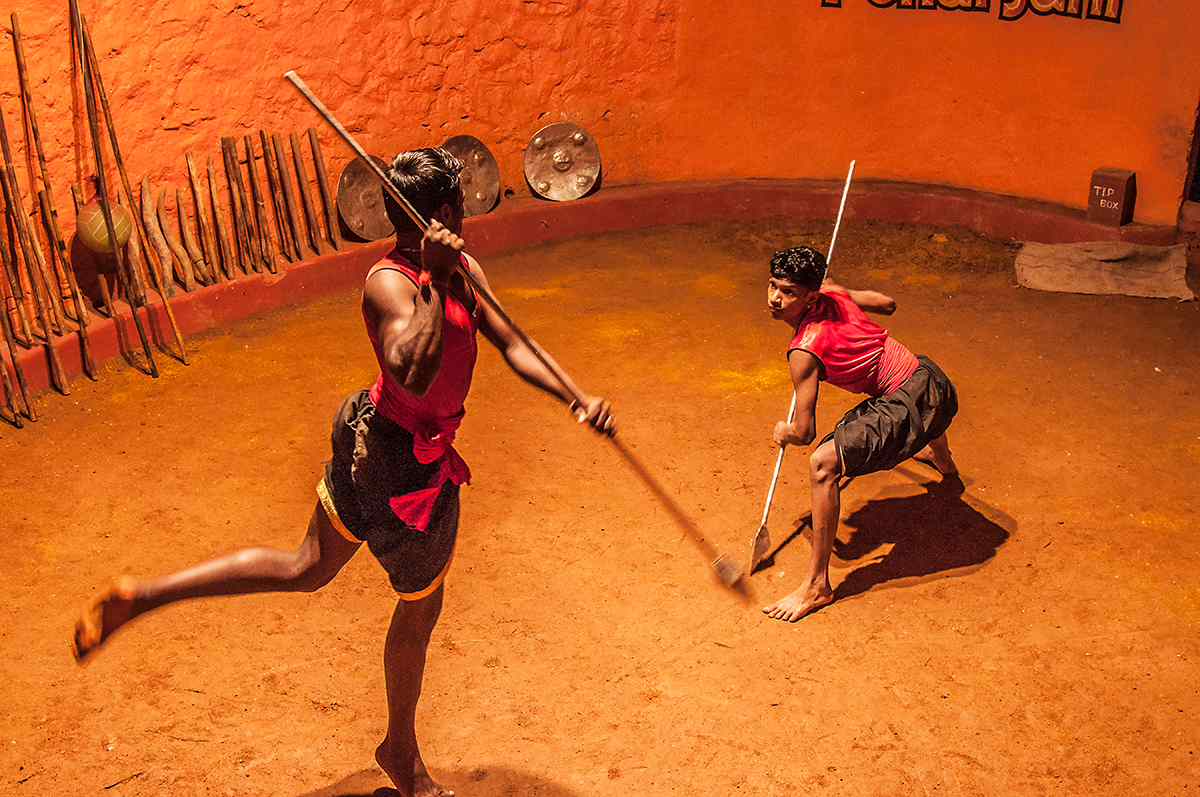
In the evening, watch a Kalaripayattu performance. Kerala’s ancient martial art is counted among the oldest fighting systems in the world, and its agile leaps, kicks and strikes, and its bouts with sticks, swords and shields, are thrilling to watch in the close setting of the kalari arena.
Overnight: ThekkadyDrive: about 130 kmIncludes: spice plantation visit, Kalaripayattu show
Day 19
Thekkady – Periyar nature walk and boat ride
Photo: periyar-boat-ride-thekkady.jpg
Boat Ride on Periyar Lake, Thekkady
Photo: nature-walk-thekkady.jpg
Nature Walk, Thekkady
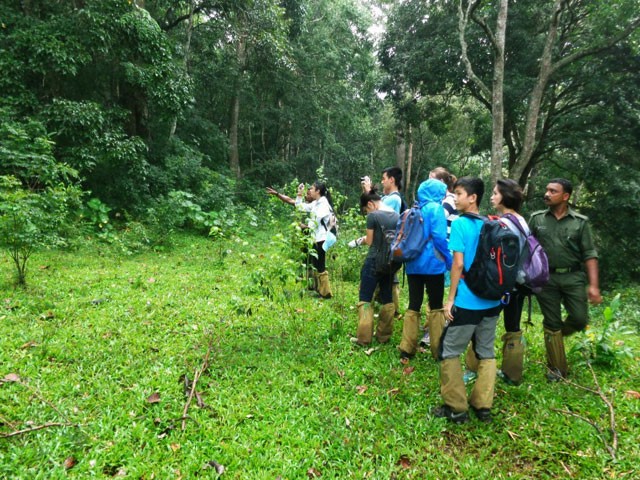
In the morning, set out on a guided nature walk (about 2 hours 30 minutes, 4–5 km) in the Periyar forest, looking for birds, butterflies and other wildlife. The trails pass through evergreen and moist deciduous forest interspersed with grassland.
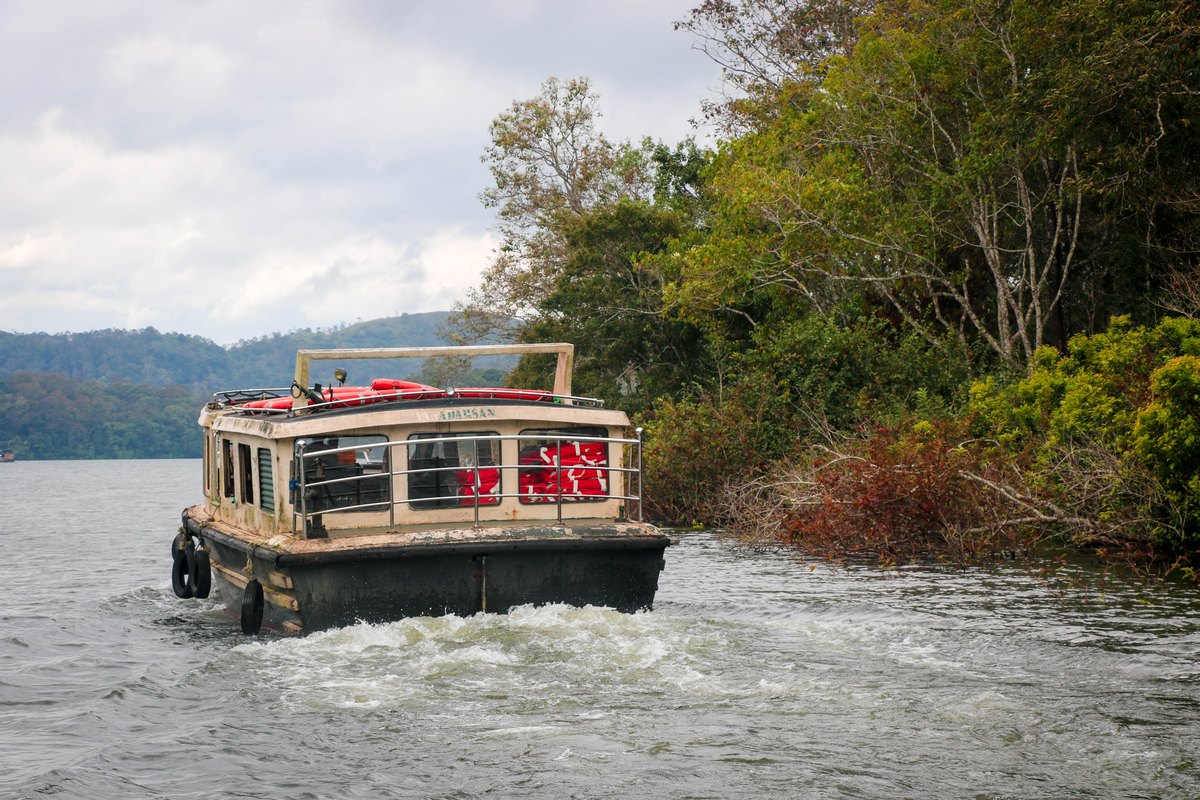
In the afternoon, take a boat ride (about 1 hour 30 minutes) on Periyar Lake to watch wildlife along its banks. Nestled in the southern Western Ghats, Thekkady is home to the Periyar Tiger Reserve, which spreads over 777 sq km of forest and shelters thousands of species of plants and animals, including rare and endangered ones. The lake at its heart, about 26 sq km, was created when the Mullaperiyar dam was built in 1895; it winds around the wooded hills and gives the elephants, gaur, sambar and other wildlife a permanent source of water.
Overnight: ThekkadyIncludes: guided nature walk, boat ride on Periyar Lake
Day 20
Thekkady to Madurai
After breakfast, drive down from the Western Ghats to Madurai (about 140 km, 4 hours), past cardamom hills and the farmlands of Tamil Nadu. Check in to your hotel.
One of South India’s great temple towns, Madurai stands on the banks of the river Vaigai. It was the capital of the Pandya kings and an important cultural and commercial centre as early as 550 AD.
In the evening, return to the Meenakshi Temple to witness the evening prayer ceremony, when the image of Lord Sundareswarar is carried in procession to the shrine of his consort Meenakshi.
Overnight: MaduraiDrive: about 140 km
Day 21
Madurai – Meenakshi Temple
Photo: meenakshi-temple-madurai.jpg
Meenakshi Temple, Madurai
Photo: thirumalai-nayak-palace-madurai.jpg
Thirumalai Nayak Palace, Madurai
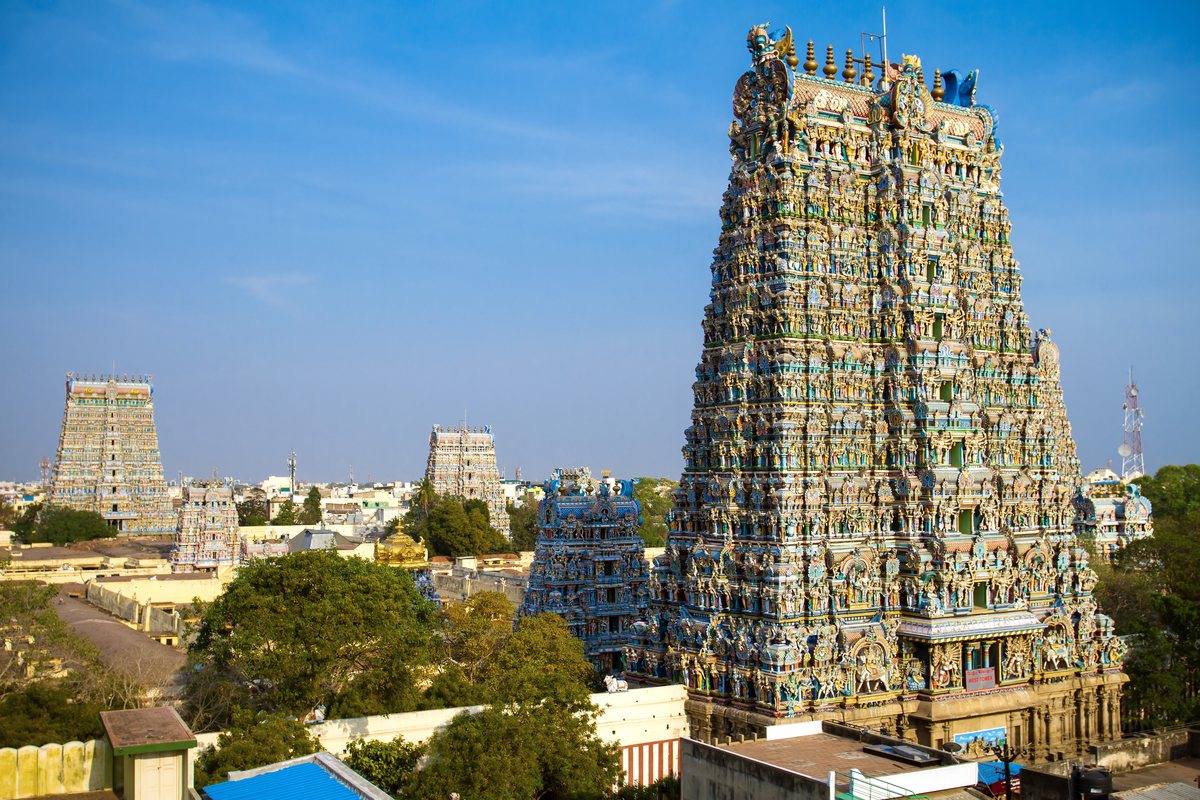
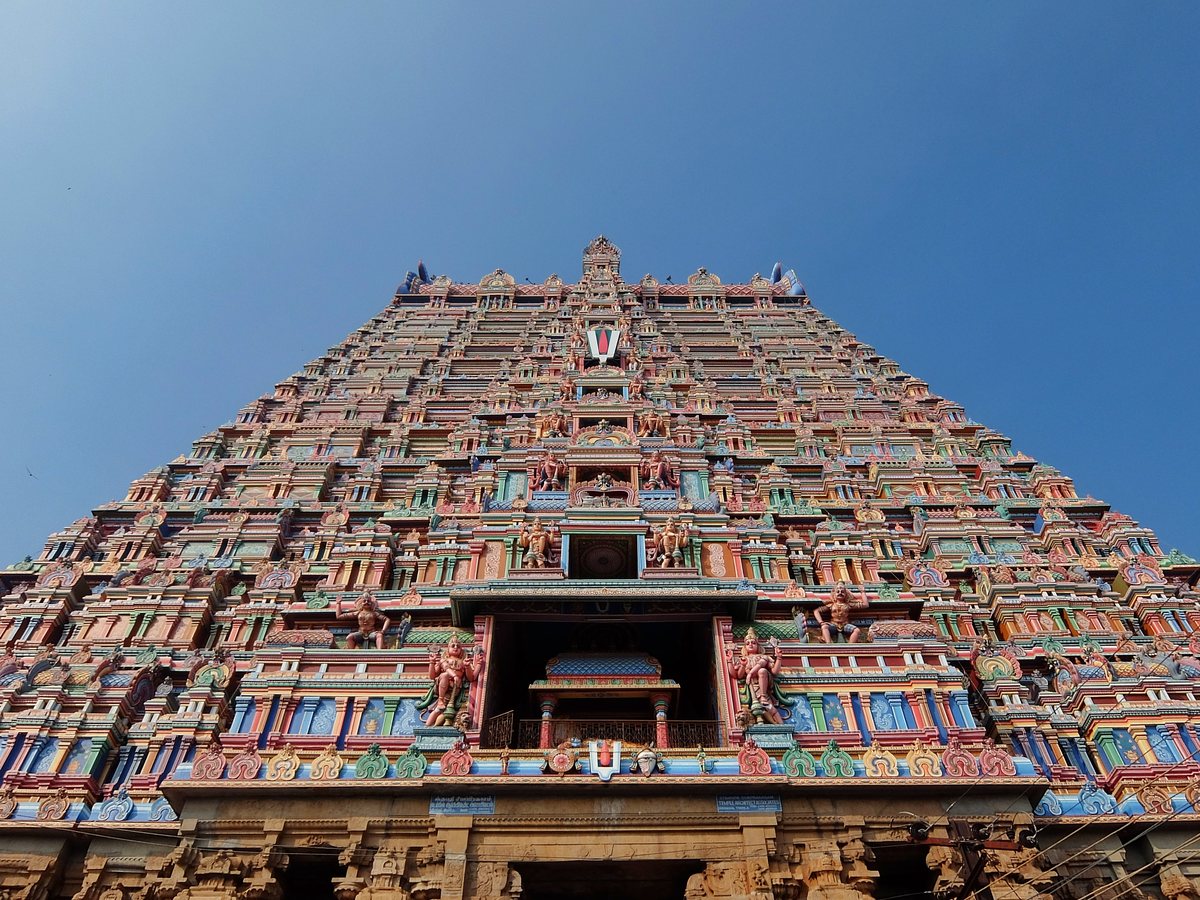
In the morning, enjoy a cycle rickshaw ride through the old city to the Meenakshi Temple, the heart and lifeline of this 2,500-year-old city. The complex has 14 magnificent gopurams (towers), including two golden ones over the main shrines, covered with thousands of brightly painted figures of gods, goddesses and mythical creatures. Ancient Tamil classics describe the temple as the centre of the city, with the streets radiating out from it like the petals of a lotus.
Continue to the Koodal Azhagar Temple, one of the 108 sacred temples of Lord Vishnu, where three shrines show Vishnu standing, sitting and reclining.
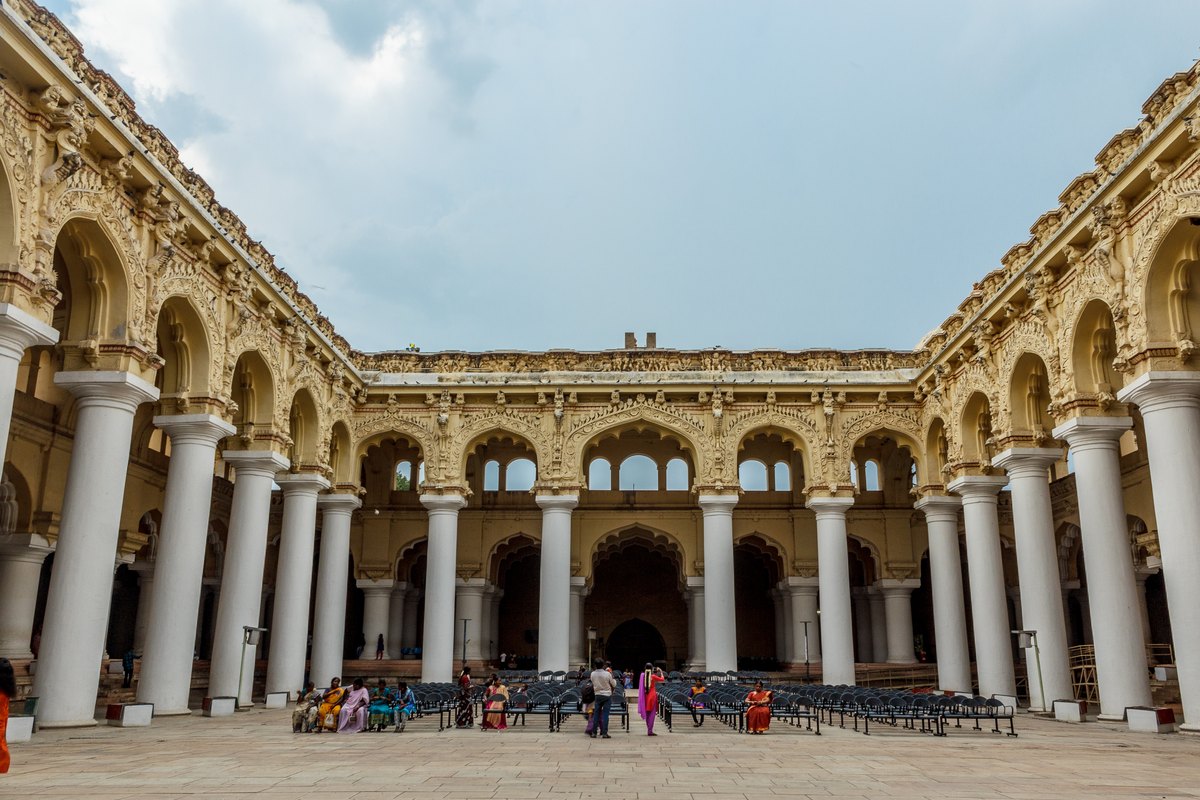
In the afternoon, visit the Thirumalai Nayak Palace, built in 1636 and a classic fusion of Dravidian, Islamic and European styles; the Swarga Vilasam, its audience hall, has a dome that rises 20 metres without any support. Continue to the Gandhi Memorial Museum in the Tamukkam Palace, which tells the story of the freedom movement. It was in Madurai that Gandhi first adopted the simple loincloth he wore for the rest of his life.
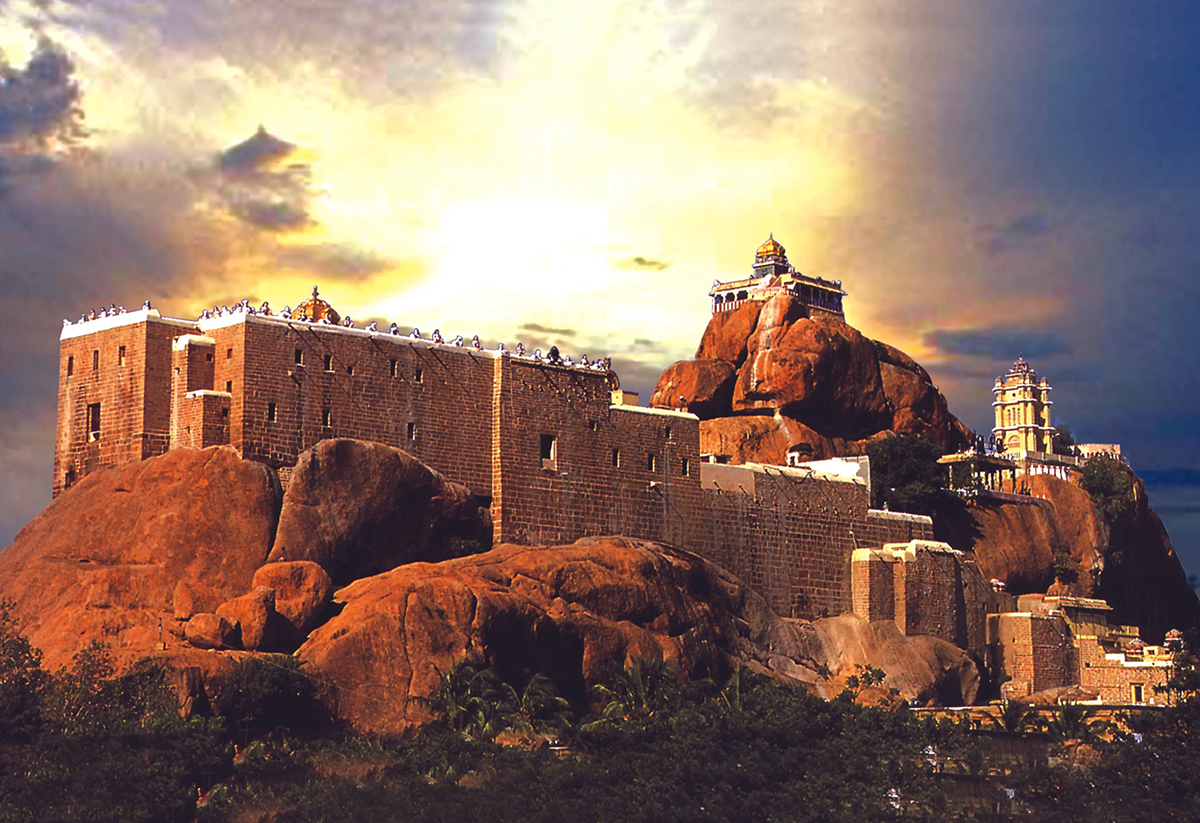
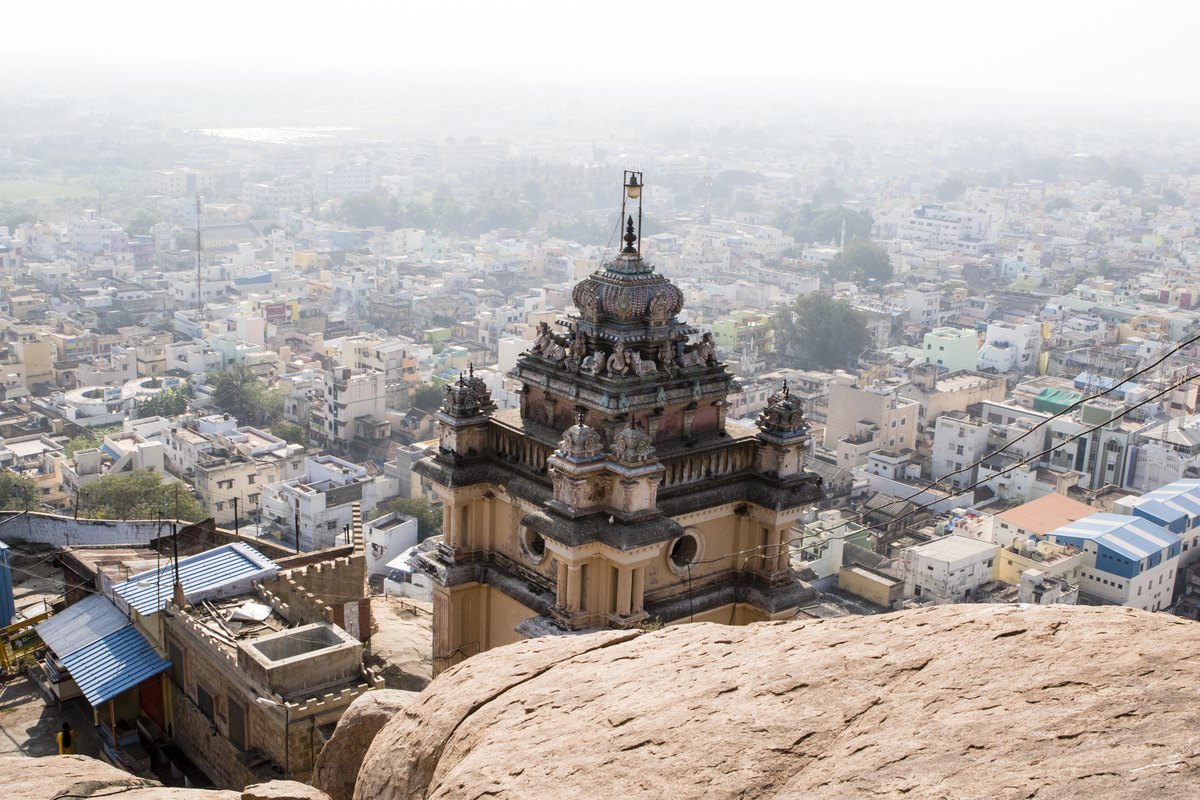
After breakfast, drive to Trichy (Tiruchirappalli) (about 142 km, 3 hours) for a half-day tour. Set on the banks of the river Cauvery, the town and its fort were built by the Nayaks of Madurai. Visit the Rock Fort Temple, a spectacular monument perched on a massive rocky outcrop that rises abruptly from the plain to tower over the old city; at the very top is an ancient temple dedicated to Ganapati.
Continue to Srirangam, the foremost of the eight self-manifested shrines of Lord Vishnu and the most important of the 108 main Vishnu temples. The temple complex covers 156 acres, with seven concentric walls and 21 gopurams (towers). Entry to the innermost sanctum is for Hindus only.
Later, continue to Tanjore (Thanjavur) (about 57 km, 1 hour 15 minutes) and check in to your hotel. The centre of Tamil learning and culture, Tanjore was the royal city of the Cholas, Nayaks and Marathas, the original home of Dravidian art and architecture, and the centre of the classical dance Bharatanatyam.
Overnight: TanjoreDrive: about 199 kmIncludes: guide, entrance fees
Day 23
Tanjore to Pondicherry
Photo: brihadeeswarar-temple-tanjore.jpg
Brihadeeswarar Temple, Tanjore
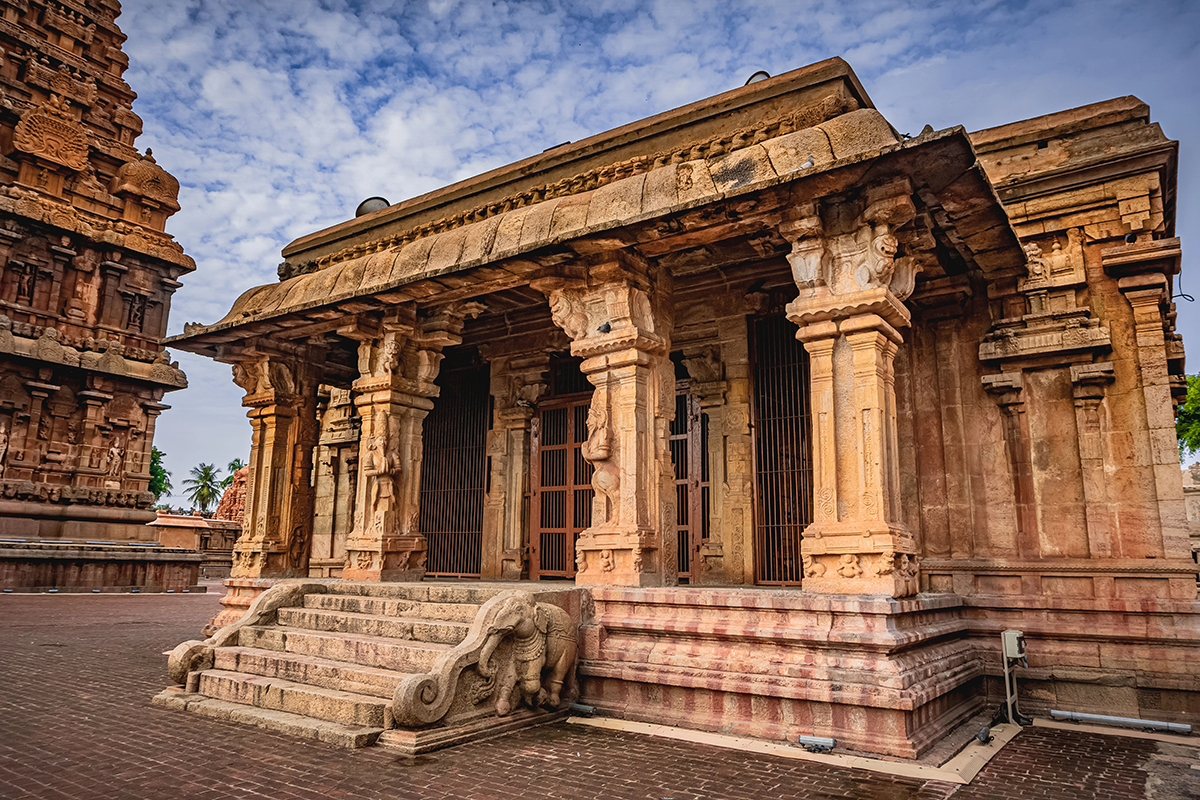
After breakfast, visit the Brihadeeswarar Temple, also known as the Big Temple, the crowning glory of Rajaraja Chola’s reign, completed in 1010 AD and a UNESCO World Heritage Site. Chola art is known for its enormous scale, intricate detailing and outstanding workmanship. The temple has a gigantic lingam about 8.7 metres high, and a huge monolithic Nandi bull guards the shrine. The tower over the sanctum is crowned by a massive dome resting on a single block of granite. Continue to the Tanjore Palace, a vast complex built partly by the Nayaks and partly by the Marathas from around 1550 AD, whose royal museum, art gallery, library, music hall and audience hall display relics of royalty such as clothes, hunting weapons and headgear.
Later, drive to Pondicherry (about 183 km, 4 hours 45 minutes) and check in to your hotel.
Overnight: PondicherryDrive: about 183 kmIncludes: guide, entrance fees
Day 24
Pondicherry – Auroville and French Heritage Walk
Photo: french-quarter-pondicherry.jpg
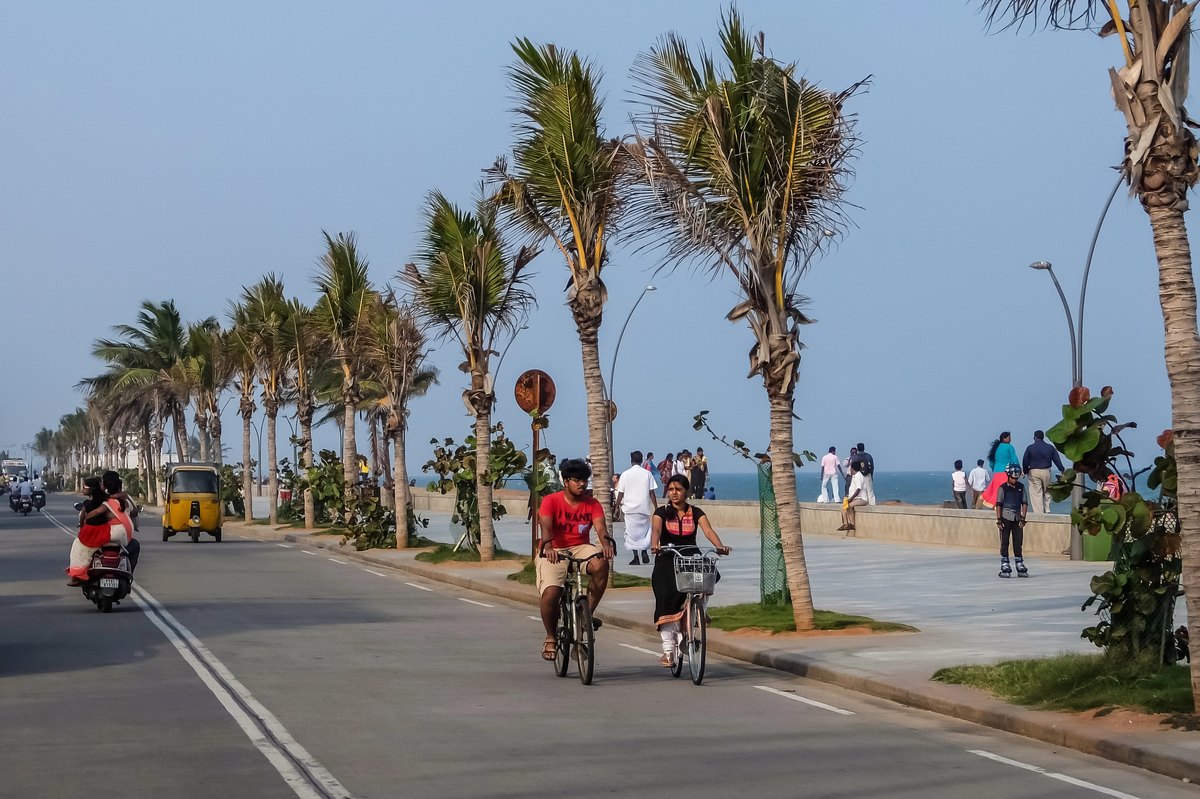
French Quarter, Pondicherry
Photo: beach-promenade-pondicherry.jpg
Beach Promenade, Pondicherry
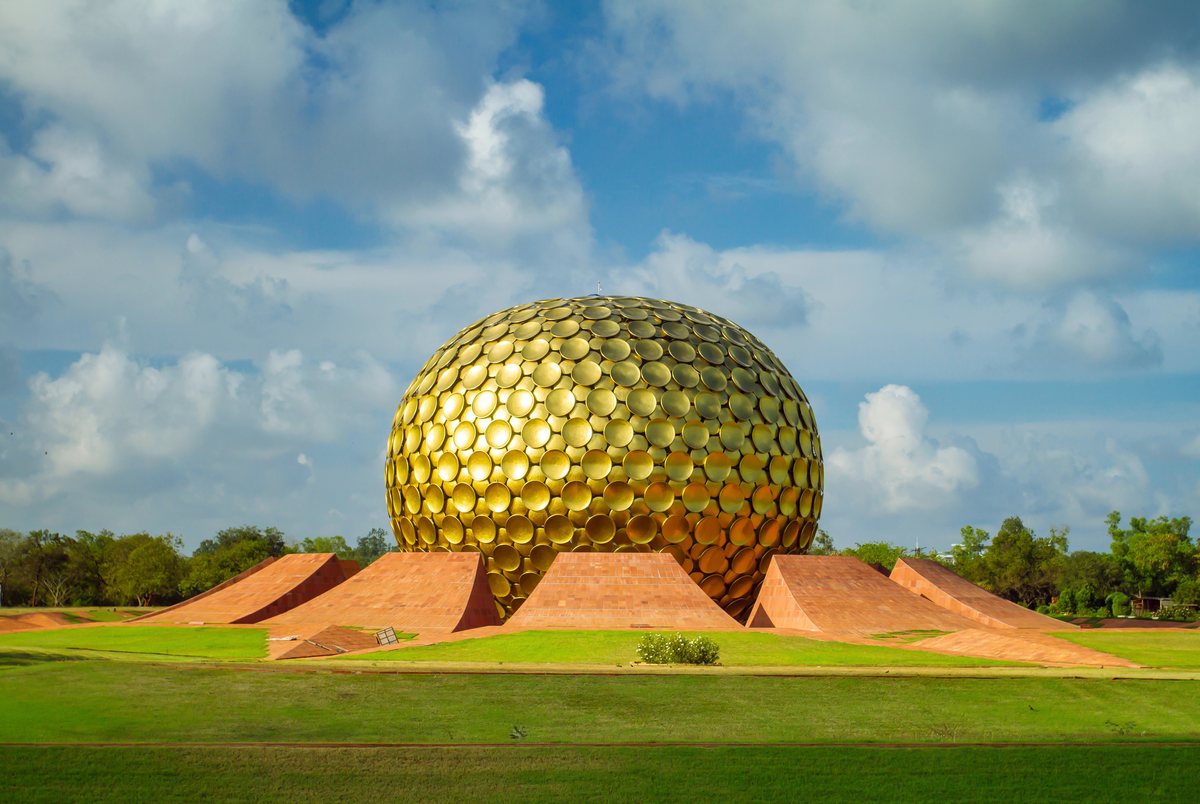
Photo: matrimandir-auroville.jpg
Matrimandir, Auroville
Enjoy a half-day tour of Pondicherry, often called ‘India’s Little France’. This territory was under French rule for around 280 years and still keeps its French flavour in its colonial mansions, boulevards, promenade and street names. Visit the Sri Aurobindo Ashram, founded in 1926 by Sri Aurobindo, a revolutionary turned yogi from Bengal, together with The Mother (Mira Alfassa), a French painter and sculptor; the ashram draws people from all over the world. Continue to the Pondicherry Museum, which houses sculptures from Pallava, Chola and Vijayanagara temples, and terracotta figures, amphorae, burial urns and glass beads excavated nearby, then drive past the beach promenade.
Later, visit Auroville, ‘the City of Dawn’, founded in 1968 as a universal township where people of all countries can live together in peace and harmony, above all creeds, politics and nationalities. At its heart stands the Matrimandir (Temple of the Mother), a great golden sphere that seems to rise out of the earth, symbolising the birth of a new consciousness; the outside is plated with gold, while the inside is stark white with a gigantic crystal at the centre.
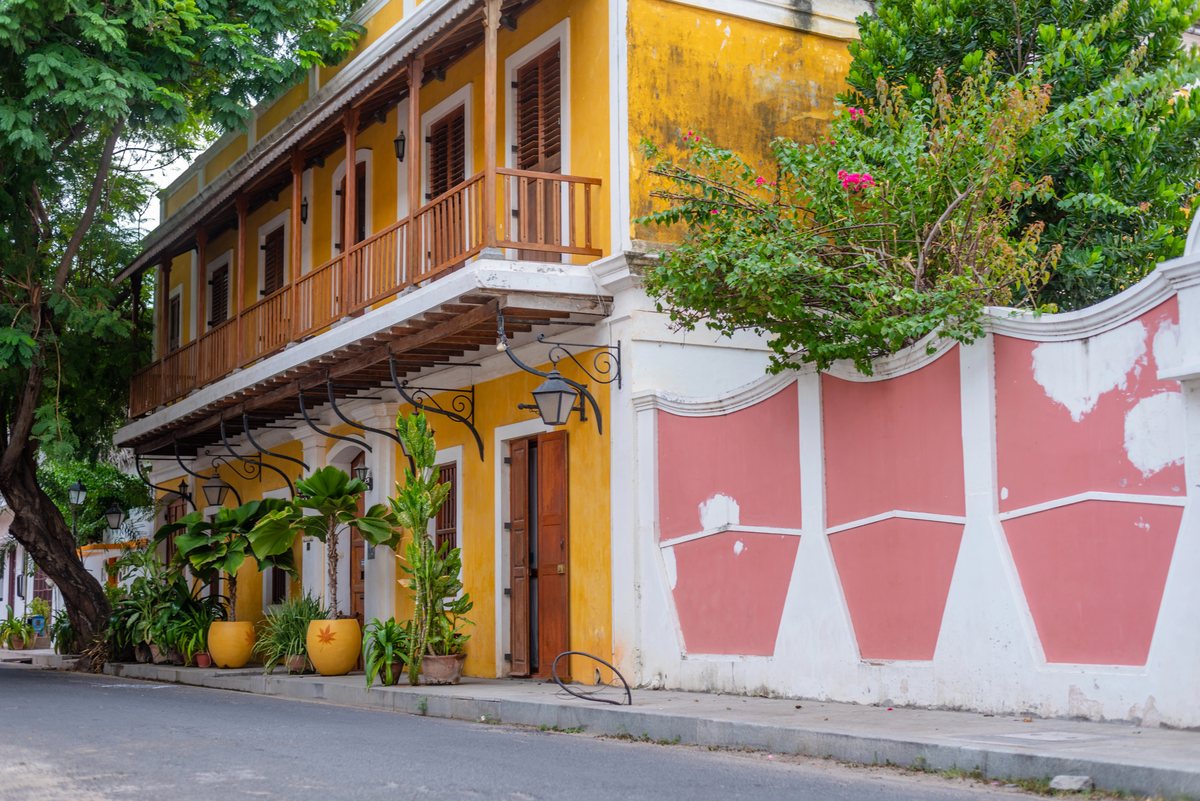
In the evening, enjoy a French Heritage Walk (about 2 km, 1 hour 30 minutes) through the French Quarter, laid out in a neat grid of streets. Its buildings are easily recognised by their ornate gateways and arches, garden courtyards with colourful bougainvillea, and walls painted in soft shades of lime and peach. The walk passes sites such as the Hotel de Ville, the French War Memorial, the Romain Rolland Library, Aayi Mandapam, the Lycée Français and Raj Niwas.
Overnight: PondicherryIncludes: guide, French Heritage Walk, entrance fees
Day 25
Pondicherry to Mahabalipuram
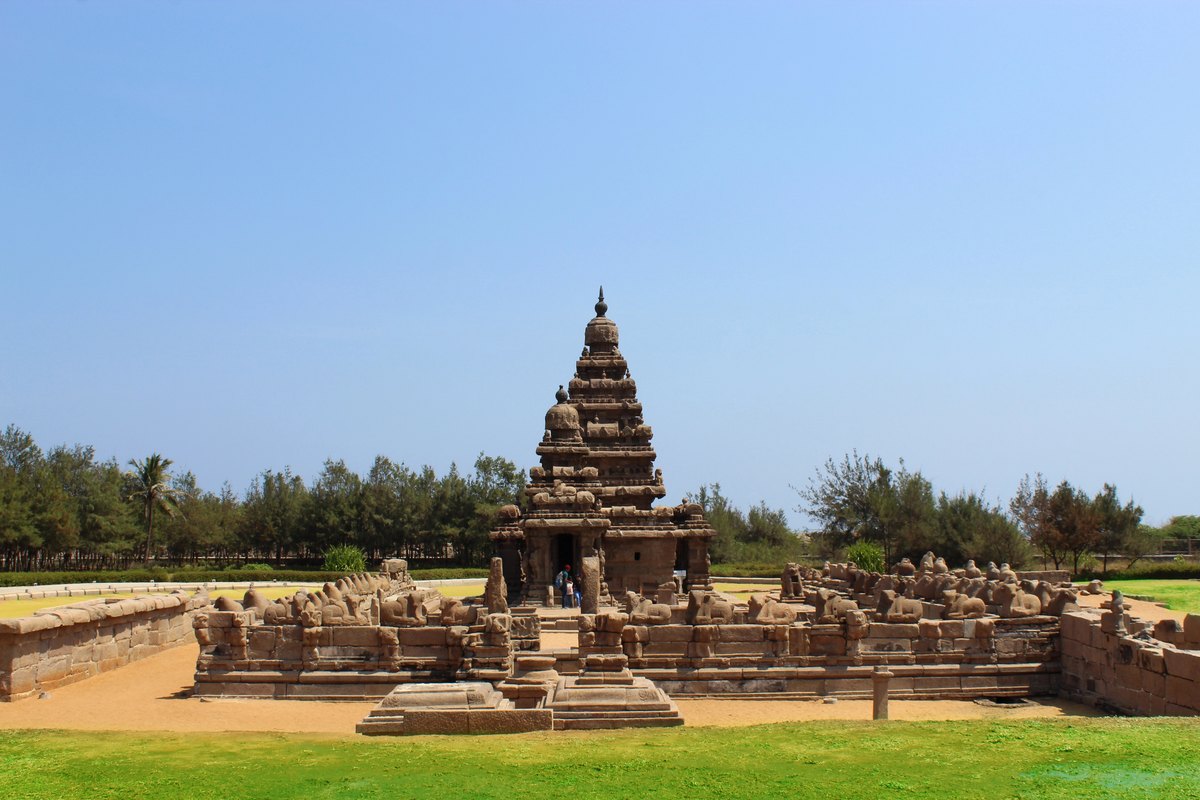
Photo: shore-temple-mahabalipuram.jpg
Shore Temple, Mahabalipuram
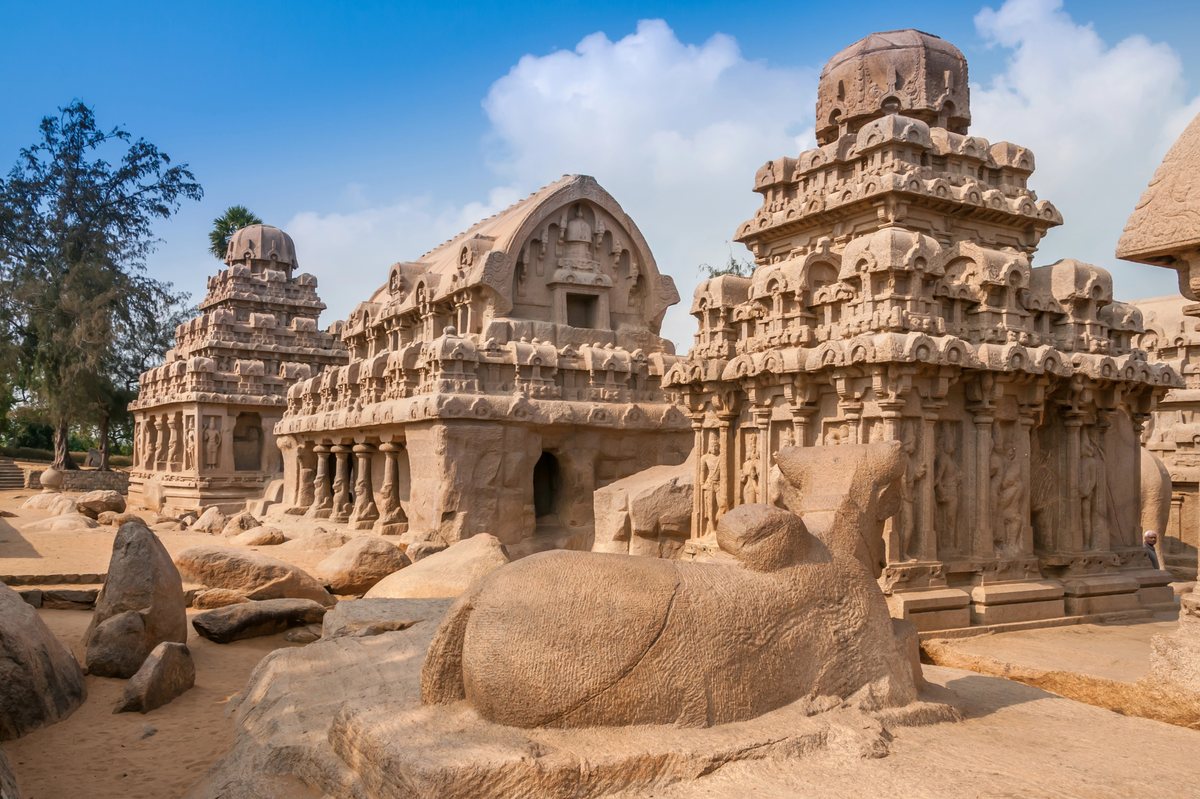
Photo: five-rathas-mahabalipuram.jpg
Pancha Rathas, Mahabalipuram
Photo: arjunas-penance-mahabalipuram.jpg
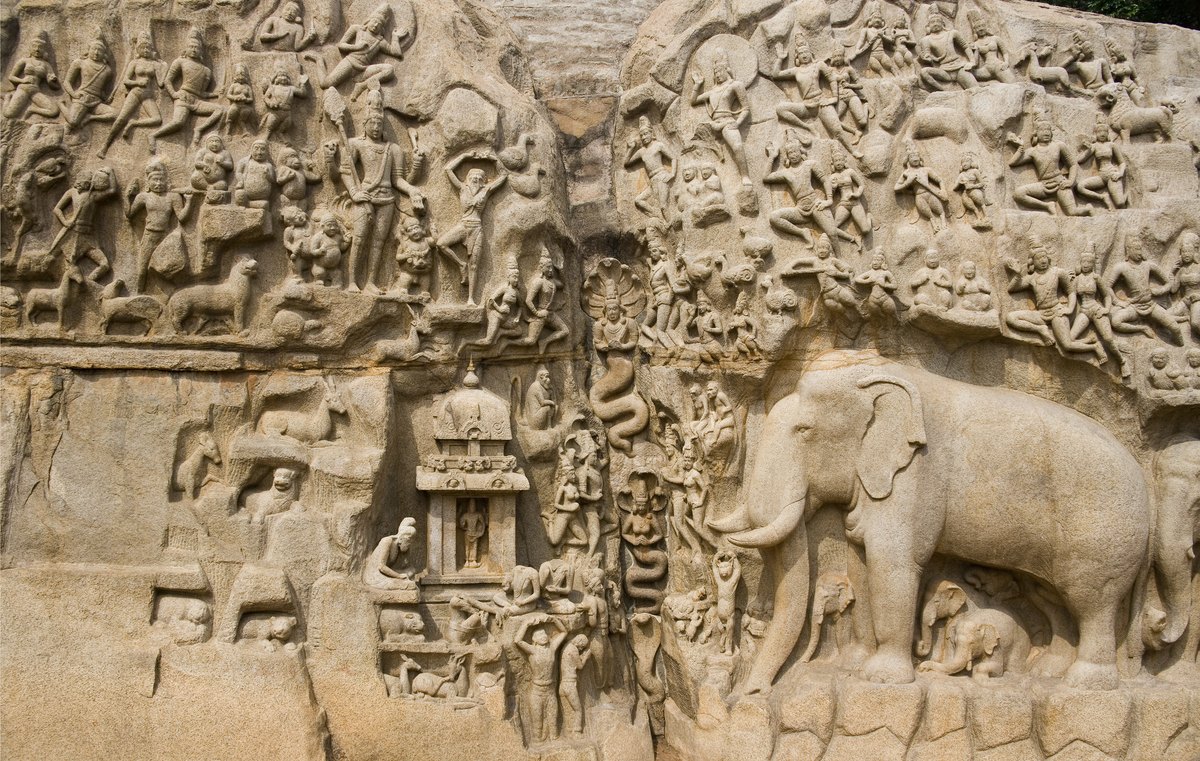
Arjuna’s Penance, Mahabalipuram
After breakfast, drive north along the coast to Mahabalipuram (about 96 km, 2 hours 10 minutes) and check in to your hotel by the sea.
In the afternoon, explore Mahabalipuram, a well-established seaport on the Coromandel Coast between the 7th and 10th centuries. Visit the Pancha Rathas, the most important of the nine monolithic rock-cut temples here, dedicated to the five Pandava brothers of the Mahabharata; the Dharmaraja Ratha, named after the eldest Pandava, is the largest. See Arjuna’s Penance, a massive rock-cut bas-relief 27 metres long and 9 metres high, and the Shore Temple, a five-storeyed structure of finely cut granite and one of the earliest structural temples in South India. The monuments of Mahabalipuram are a UNESCO World Heritage Site.
Overnight: MahabalipuramDrive: about 96 kmIncludes: guide, entrance fees
Day 26
Mahabalipuram to Chennai via Kanchipuram
Photo: kailasanathar-temple-kanchipuram.jpg
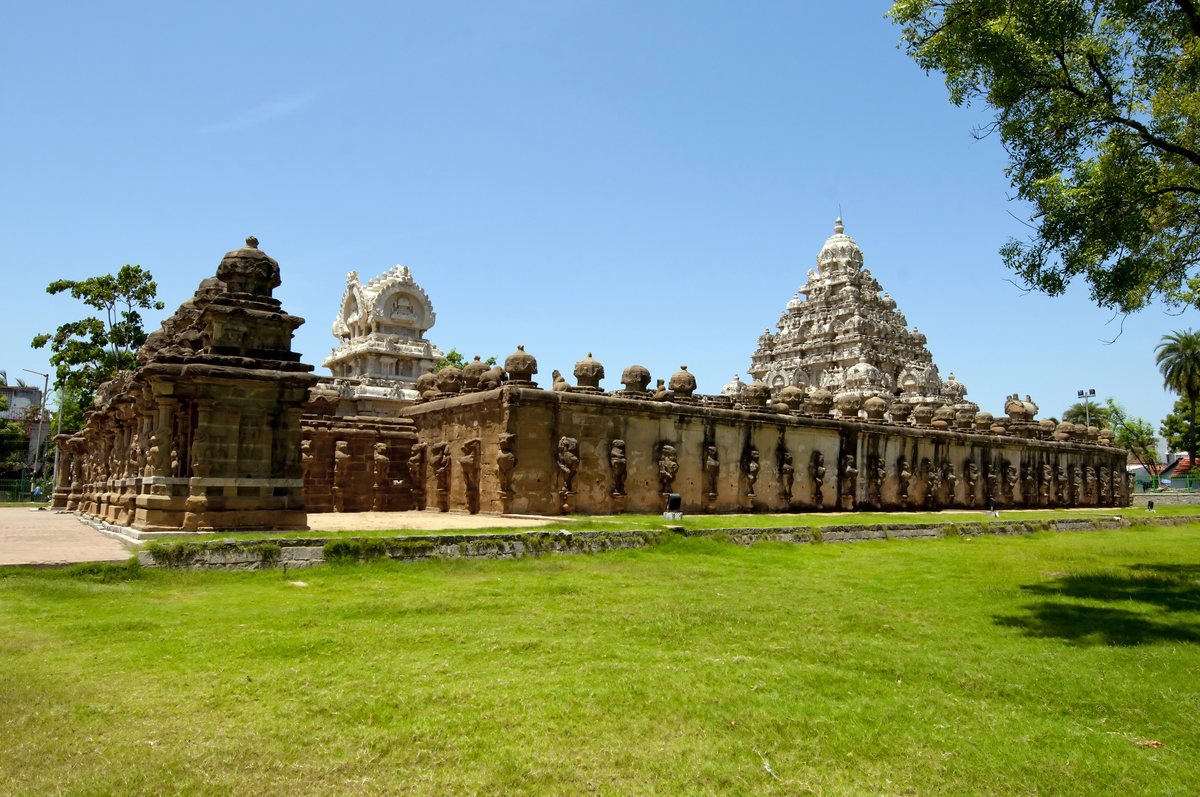
Kailasanathar Temple, Kanchipuram
Photo: silk-weaving-kanchipuram.jpg
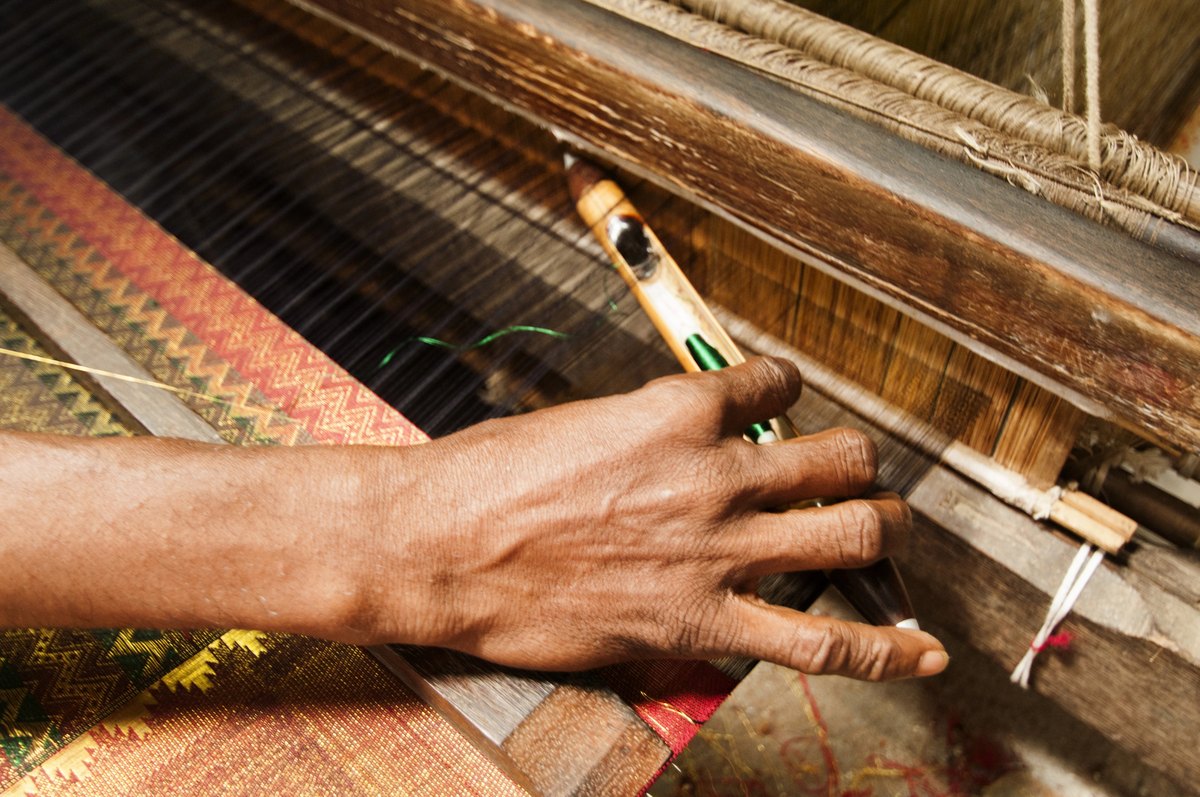
Silk Weaving, Kanchipuram
After breakfast, drive to Kanchipuram (about 65 km, 1 hour 45 minutes), one of the seven sacred cities of Hinduism and the capital of the Pallava kings between the 6th and 8th centuries. Known as the city of a thousand temples, it is also famous across India for its fine handwoven silk saris.
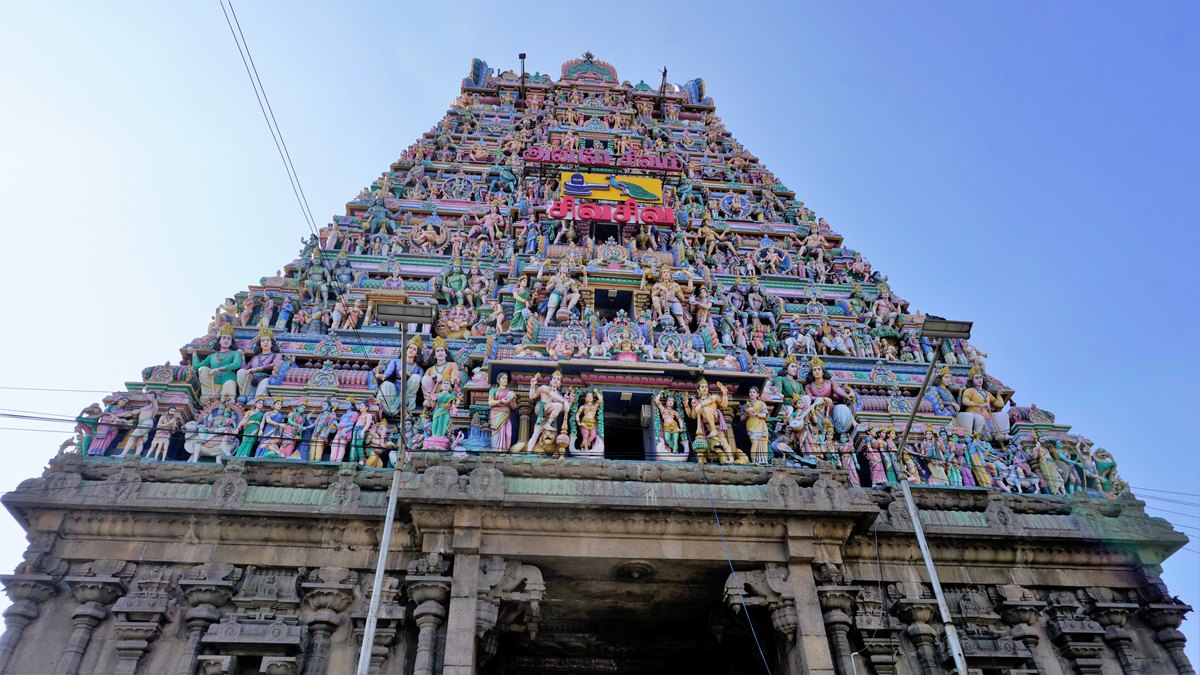
Visit the Kailasanathar Temple, built in the early 8th century and the oldest temple in the town, its sandstone walls lined with small shrines and carvings of Shiva and rearing lions. See the Ekambareswarar Temple, dedicated to Shiva, with its towering gopuram and a hall of carved pillars, and the Varadaraja Perumal Temple, dedicated to Vishnu, known for its hall of finely sculpted pillars. Watch the weavers at work on their looms in one of the town’s silk-weaving homes.
Later, continue to Chennai (about 75 km, 2 hours) and check in to your hotel.
Overnight: ChennaiDrive: about 140 kmIncludes: guide, entrance fees
Day 27
Chennai – full-day city tour
Photo: kapaleeshwarar-temple-chennai.jpg
Kapaleeshwarar Temple, Chennai
Photo: san-thome-cathedral-chennai.jpg
San Thome Cathedral, Chennai
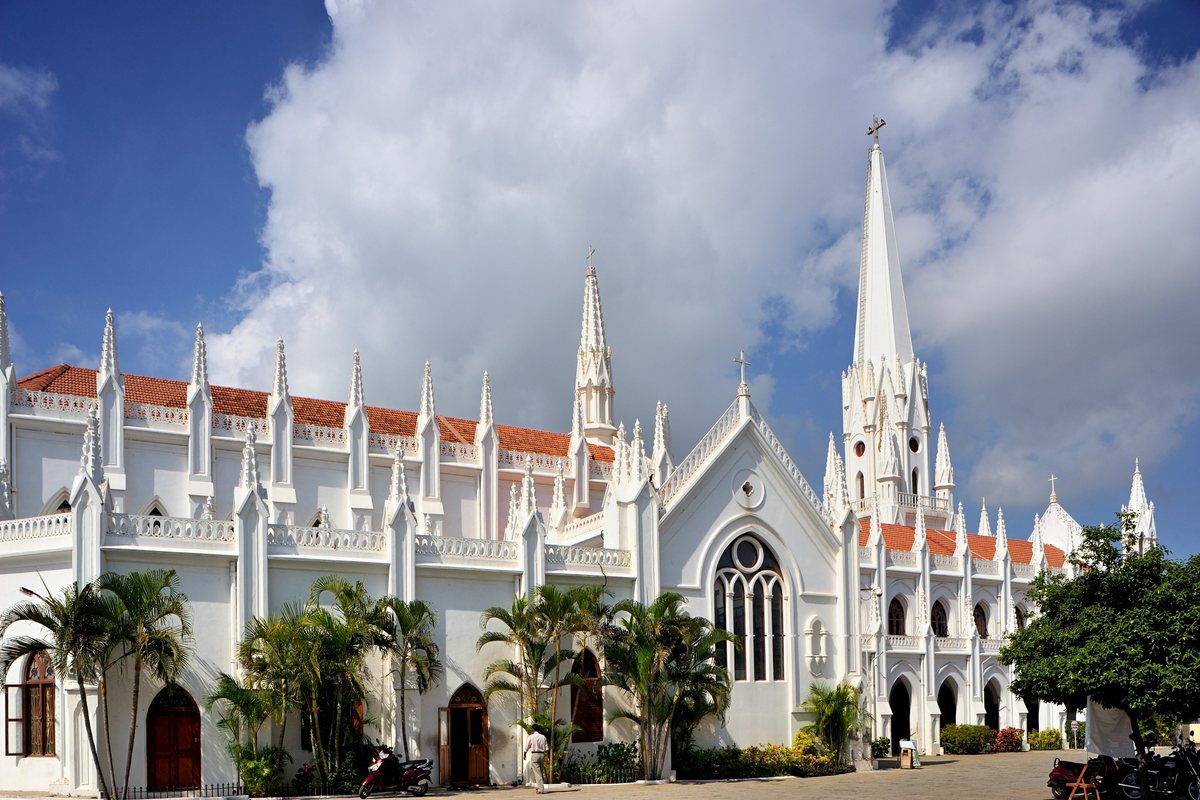
Today, enjoy a full-day tour of Chennai. Visit Fort St George, built in the 17th century, which houses St Mary’s Church, the oldest Anglican church in India with some of the oldest British tombstones in the country, and a museum of paintings and rare military paraphernalia such as weapons, uniforms, coins and medals. Continue to the Kapaleeshwarar Temple, dedicated to Lord Shiva, whose gopuram (entrance tower) rises to about 120 feet, covered with sculptures from Puranic legends; its outer courtyard is adorned with bronze images of the 63 Nayanmars (Shaivite saints). Next, visit the San Thome Cathedral, named after St Thomas the Apostle, at the southern end of Marina Beach, with a beautiful stained-glass window telling his story.
In the afternoon, visit the Government Museum, one of the oldest museums in India, whose bronze gallery holds a superb collection of Chola bronzes, including graceful images of Shiva as Nataraja, the Lord of Dance. End the day with a drive along Marina Beach, one of the longest urban beaches in the world, where the city comes out to stroll in the evening breeze.
Overnight: ChennaiIncludes: guide, entrance feesPlease note: Fort St George and the Government Museum are closed on Fridays
Day 28
Depart Chennai
Transfer to Chennai airport in time for your flight home, or onward to your next destination in India.
Vehicle: airport transfer
What's included
Package includes
Meet and assist on arrival and departure transfers at all airports and railway stations
27 nights in hotels of your chosen category, with daily breakfast
Private air-conditioned car with driver for all transfers and sightseeing as per itinerary
English-speaking local guides for sightseeing as per itinerary
Cycle rickshaw ride in Chandni Chowk, Delhi
Sunrise boat ride on the Ganges and seats for the evening Ganga Aarti, Varanasi
Train tickets from Jhansi to Agra (Executive Chair Car)
Jeep ride at Amber Fort and evening bazaar walk, Jaipur
Train tickets from Jaipur to Udaipur (AC Chair Car)
Boat ride on Lake Pichola and folk dance show, Udaipur
Ferry to the Elephanta Caves, Mumbai
Kathakali performance, Kochi
Houseboat day cruise from Alleppey, with lunch, tea and snacks
Spice plantation visit, Kalaripayattu show, guided nature walk and boat ride on Periyar Lake, Thekkady
Cycle rickshaw ride, Madurai
French Heritage Walk, Pondicherry
Entrance fees to monuments as per itinerary
All applicable taxes
Package excludes
International airfares and airport taxes
Domestic airfares (Delhi to Varanasi, Varanasi to Khajuraho, Udaipur to Mumbai and Mumbai to Kochi), quoted separately as fares can change at the time of booking
India visa fees and travel insurance
Lunches, dinners and drinks (except lunch on the houseboat)
Camera and video fees at monuments
Tips to guides and drivers
Personal expenses such as laundry, telephone and shopping
Anything not mentioned under “Package includes”
Train numbers and timings are indicative and confirmed at the time of booking. Driving times are approximate. Itineraries can be adjusted for monument closing days, your travel dates and special interests.
A private tour, quoted individually for 1 traveller or more. Tell us your dates and preferred hotels, and we will send a detailed quote, usually within 24 hours.